
Stephanie Atkinson, a Montreal, QC based adult Breakthrough T1D Canada ambassador, sat down with the organization to discuss what drew her to volunteering and what it’s like to be diagnosed as a busy mother and businesswoman.
Tell us a little bit more about yourself
My name is Stephanie Atkinson. I’m a mom of four, a skin and beauty expert, founder of Mayfield Glow, and a recent finalist on the Miss Universe Canada stage.
Before anything else, I’m someone who has learned firsthand how fragile life can be — and how powerful resilience is.
I built my career helping women feel confident and cared for through skincare and wellness. But my own health journey shifted my purpose in a deeper way.
Standing on the Miss Universe Canada stage as one of the first finalists openly wearing two visible diabetes devices — an insulin pump and a continuous glucose monitor — wasn’t just about competing. It was about representation. It was about showing that living with a chronic illness does not disqualify you from showing up fully, boldly, and beautifully in the world.
Today, I use my platform to advocate for type 1 diabetes awareness, especially for adults diagnosed later in life, while balancing motherhood, entrepreneurship, and advocacy.
Can you share a little bit about your diagnosis? What do you remember?
Before my diagnosis, I was sick for many days, but it was during COVID and most clinics were closed, so accessing care felt nearly impossible. I was exhausted in a way that didn’t make sense. I now know I was experiencing all the classic “4 Ts” of type 1 diabetes — thirst, tiredness, toilet, and thinner. I was constantly thirsty, extremely fatigued, using the bathroom nonstop, and losing weight rapidly. My vision began to blur, I could barely walk, and deep down I knew something was very wrong — but as a mom, you push through.
When I finally got into a clinic, I was told I had a urinary tract infection. I remember saying I had never had one before, but I was told that strange things happen before turning 30. I left feeling dismissed, even though my body was telling me something much more serious was happening.
The next morning, everything changed.
I woke up to a police officer at my door doing a wellness check. My doctor had reviewed my results and realized I had been misdiagnosed — my blood work showed I was actually in diabetic ketoacidosis (DKA), a life-threatening emergency where the body begins breaking down fat for fuel because it cannot use glucose properly without insulin. Acid builds up in the bloodstream, and without immediate treatment, it can be fatal.
When I got to the hospital, things were still confusing. Initially, I was diagnosed with type 2 diabetes because I was an adult. But my condition worsened quickly, and I ended up in the ICU with severe DKA. I remember feeling like my body was shutting down. I was losing vision in my left eye, I couldn’t walk properly, and everything felt overwhelming and terrifying.
Later, after further testing, I was correctly diagnosed with type 1 diabetes.
I was 29 years old, a mother, and suddenly my entire life changed. I didn’t fit the stereotype people imagine when they think of Type 1 diabetes — and that experience is one of the main reasons I advocate so strongly today, especially for adults who are diagnosed later in life.
Over 70% of Canadian T1D diagnoses are in adults. How did you find the transition to your new normal?
The hardest part wasn’t just learning how to manage insulin — it was realizing how little support exists for adults diagnosed later in life.
As a mother and entrepreneur, I had to quickly learn how to balance blood sugars, medical appointments, and new technology while still showing up for my family and my work. There’s a lot of education and community built around children diagnosed with Type 1, but adult diagnosis can feel isolating.
To be honest, there were many times I wished I had been diagnosed as a child. By the time I was diagnosed, I was already an adult, already a mom, already carrying so many responsibilities. A lot of guilt came with that — guilt about how my diagnosis might affect my family, guilt about slowing down, and guilt about having to suddenly prioritize my health in ways I never had before.
Over time, I learned that managing diabetes isn’t selfish — it’s necessary. I built a support system, connected with community, and learned to use technology as a tool for confidence instead of fear. That transition taught me how strong and adaptable we really are, and that being diagnosed later in life doesn’t mean you’re behind — it just means your journey looks different.
You went into DKA prior to your diagnosis. Are ketone levels and how they’re measured something you think about more now?
Absolutely. Once you’ve experienced DKA, awareness becomes second nature.
I pay close attention to how my body feels, especially when blood sugars are elevated or when I’m sick. I monitor ketones when needed and rely heavily on my diabetes technology for early warnings. It’s not about living in fear — it’s about understanding my body and staying proactive so I can avoid going through that experience again.
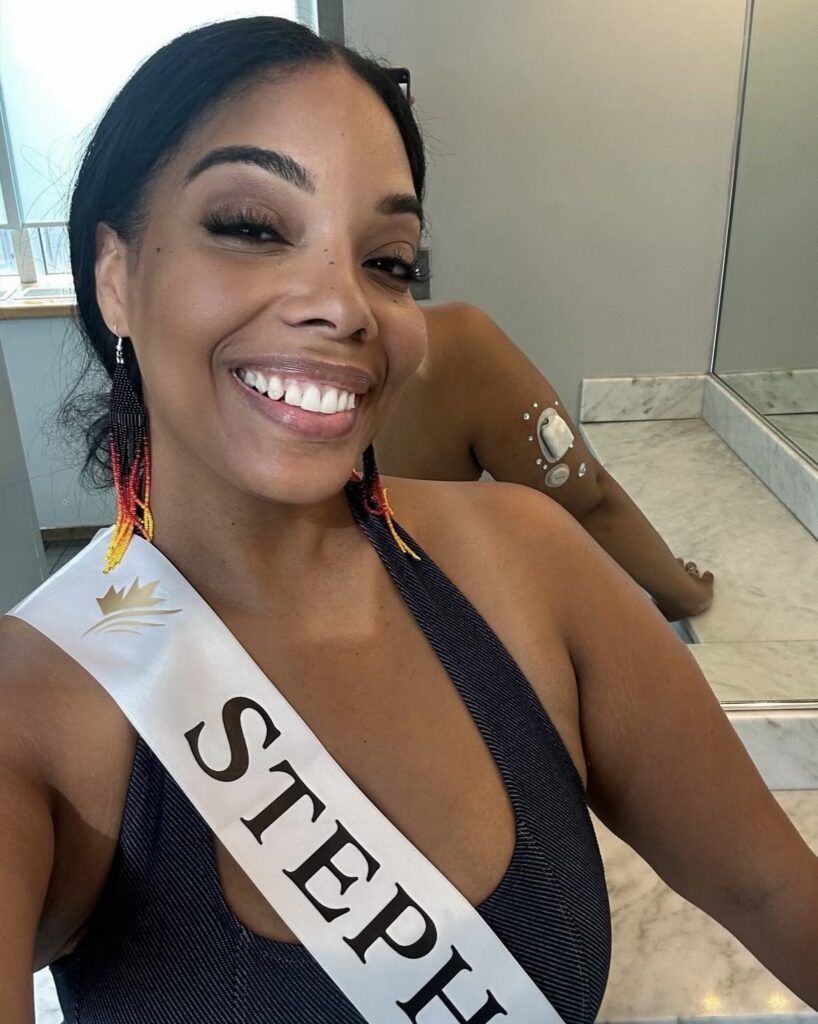
Why do you wear your diabetes devices so visibly?
The honest answer is that at first, I didn’t want to.
In the beginning, I was ashamed of my devices and tried to hide them as much as possible. As a woman working in beauty and wellness, I felt pressure to look polished and seamless, and I worried that people would only see my diagnosis instead of me.
What changed my perspective was my children.
One day, one of my kids came home from school excitedly telling me about a student in their fifth-grade class who wore a Dexcom and was having a diabetic emergency. Because my child was familiar with diabetes from watching me manage it every day, they recognized what was happening and were able to help alert an adult quickly.
That moment shifted something in me. I realized this was bigger than me. If more people saw these devices visibly — and understood what they were — it wouldn’t just help me feel more confident, it could help others too.
On the Miss Universe Canada stage, I made a conscious decision not only to wear my devices openly, but to bedazzle them. So many times, I hear, “But you don’t look sick.” And the truth is — Type 1 diabetes is an invisible illness. I wanted to bring joy and light to something that can feel heavy and misunderstood. If I was going to wear them, I was going to wear them proudly.
Visibility creates conversation. Conversation creates understanding. And understanding saves lives.
If someone sees me and feels less alone or more confident wearing their own devices, that makes it all worth it.
Is there anything else you wanted to share with the T1D community, particularly with others diagnosed as adults?
You did not cause this.
Being diagnosed as an adult can feel confusing and isolating because many people still believe type 1 diabetes only happens in childhood. When you’re diagnosed later in life, you’re often already carrying so many responsibilities — careers, families, and expectations — and it can feel like your world shifts overnight.
But your diagnosis does not change your value, your strength, or your future.
Give yourself permission to learn slowly, to ask for help, and to prioritize your health without guilt. Managing diabetes isn’t about being perfect — it’s about showing yourself grace and continuing to move forward.
You can still chase your dreams. You can still show up boldly. You can still build a beautiful, full life. Type 1 diabetes is something I manage — it does not define or limit who I am.
***
Breakthrough T1D Canada thanks Stephanie for her efforts on behalf of the T1D community and for her important work as a peer support volunteer and advocate.