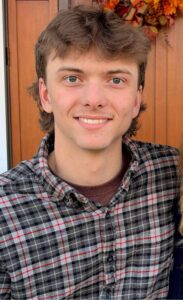
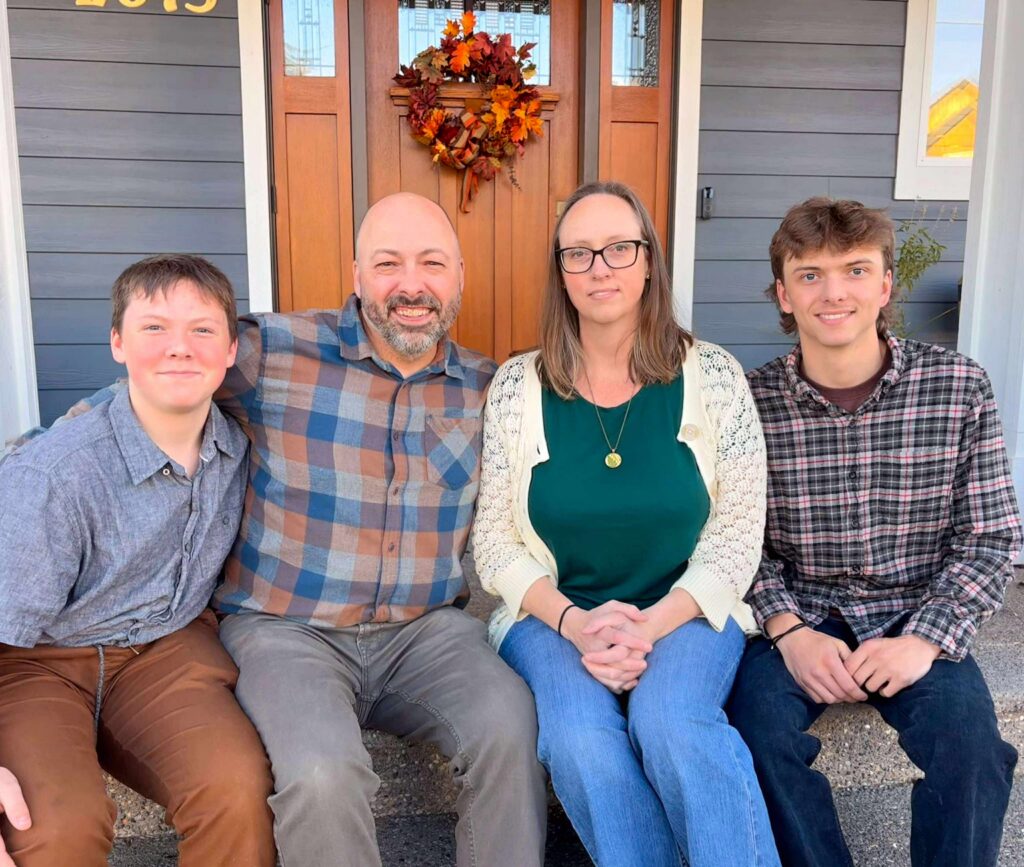
If the Thiessen family had a motto, it would surely be “knowledge is power.”
“The more you know, the better you understand, the less scared you are, really,” says mom Taryn.
That belief has shaped how they’ve lived with type 1 diabetes (T1D); not as a distant risk, but as something woven into the fabric of their family. Jack’s younger brother, his father and his grandmother all have T1D. The Thiessen family has years of lived experience, with which comes hard-earned knowledge.
So when Jack was first screened through TrialNet in 2015, it didn’t feel extraordinary. It felt like something anyone with a similar family history would do, especially understanding what’s at stake.
While the Thiessens went into screening expecting the worst and hoping for the best, what they didn’t expect was how long they would spend waiting.
Living in the in-between
Jack’s results showed autoantibodies – early signs that the immune system had begun attacking the insulin-producing cells in his pancreas.
By 2019, he was in Stage 1 T1D, meaning the process had clearly started, but his blood sugar levels were still normal and he felt like his usual self.
“And so, we were just waiting,” says Taryn. “We thought within weeks he’s going to be diagnosed. And then it just kept not happening.”
It was during this period that the Thiessens discovered that waiting is its own kind of work.
It’s watching for symptoms. It’s checking blood sugar periodically. It’s learning what to look for and living with the knowledge that something is changing, even if nothing feels different yet.
Over time, things shifted. By the summer of 2025, Jack had progressed to Stage 2, where blood sugar levels begin to rise outside the normal range but are not high enough yet to cause symptoms or require insulin.
Still no diagnosis. Still no insulin. Still no moment the Thiessens could point to and say: this is when everything changed.
Just the quiet awareness that it would.
A decision measured in years, not days
When teplizumab was approved in Canada in May 2025 – the first therapy shown to delay the onset of clinical T1D by an average of two years – it offered something the Thiessens hadn’t had before: a way to buy Jack more time without diabetes. But getting access to this new therapy was challenging. So it was exciting when, a few months later, Jack was offered the chance to receive this new treatment.
“There was a lot of hesitation,” says Taryn. “But once we started talking about it more, we were kind of looking for the reason not to.”
They did what many families do when the stakes are high: they spoke to doctors, read deeply, watched others’ experiences and talked about what they learned.
In the end, their decision came down to what those extra years free of T1D might mean for Jack, and for the family as a whole.
“There’s a huge benefit to extending his non-diabetic time for a couple of years,” says Taryn. “See, he’s 16… He’s going to have some big changes anyways. So to not have diabetes in that mix for as long as we can is a beautiful thing.”
Fourteen days now for the gifts of years later
In spring 2026, Jack spent 14 mornings at BC Children’s Hospital. Each day followed the same rhythm: infusion, monitoring, waiting, going home. The side effects were mild; some nausea and fatigue.
“By the end,” says Taryn, “he was getting a bit antsy. Ready to go home.”
But when it was finally over with, it felt a bit anticlimactic.
“I think I feel the same,” says Jack. “It wasn’t like nothing had happened. But after we got home, life just kind of went back to normal.”
That’s part of what makes this moment different from the stories we’re used to hearing. No urgent diagnosis. No hospital crisis. No clear “before” and “after.”
Just a possible shift in when diabetes will arrive for Jack.
The power of knowledge
The Thiessens are quick to acknowledge something else: they were able to make this decision because they had access. Access to screening. Access to information. And access to a program that called when treatment became possible.
But that is not the reality for most people.
Only about 15% of people diagnosed with type 1 diabetes have a family connection, the main pathway for screening in Canada. That means most families don’t know they’re at risk for developing T1D until symptoms appear, often suddenly and dangerously.
“Too many people are in full DKA[1] before they have any clue,” says Taryn. “It’s heartbreaking to see the long road many people have to take to get their diagnosis.”
This is where the story shifts from one family’s experience to a broader truth: knowledge is powerful, but only if you can access it.
What time makes possible
Today, life feels steady.
“Back to normal, other than I’m more aware,” says Jack. “And it’s a good feeling.”
There is still monitoring ahead. More check-ins to attend and a heightened sense of vigilance.
But there’s also something precious: time.
Time to finish school.
Time to become more independent.
Time for a family to prepare – not in crisis, but deliberately.
When asked what they would tell someone in Stage 2 today, the Thiessens’ answer comes easily.
“I’d want them to know that there is hope,” they say. “Diabetes is scary, but it’s manageable. And if you do it right, it’ll be OK.”
Why this story matters
Teplizumab is often described as a scientific breakthrough. And it is. But it doesn’t stand alone.
What makes a therapy like this possible is something that comes first: the ability to know T1D is developing before symptoms appear. That knowledge comes from screening.
Screening reveals that T1D often begins long before diagnosis, at a stage when people feel well, but the underlying process has already started. It creates a window where families are no longer caught off guard, and where decisions can be made proactively, rather than in crisis.
Teplizumab builds on that knowledge.
For people like Jack, who have been identified through screening, it offers something new: the possibility of delaying the onset of clinical type 1 diabetes and of holding onto time without the daily burden of managing the disease.
“Screening matters,” says Jack, simply, “because it could save your life.”
Taryns perspective on T1D screening is just as clear.
“It saves family stress. Being proactive is the way to go.”
Together, screening and therapies like teplizumab point to a different future: one where type 1 diabetes is not just treated at diagnosis, but anticipated, understood, and, when possible, delayed.
But that future depends on access. Because without screening, families never get the chance to make these choices at all.
That’s why Breakthrough T1D is working to expand access to screening for people across Canada — so more families can know earlier, prepare sooner, and avoid preventable medical emergencies like DKA.
If you want to help make that future possible, you can add your voice as an advocate.
[1] Diabetic ketoacidosis (DKA) is a potentially life-threatening condition that occurs when a severe lack of insulin means the body cannot use glucose for energy and starts to break down fat instead. Organic compounds called ketones are the by-product of the breakdown of fat and, if left unchecked, can build up and cause the blood to become acidic.