
Why they matter beyond a type 1 diabetes (T1D) diagnosis
Diabetic ketoacidosis (DKA) is one of the most serious, life‑threatening complications associated with T1D—yet it’s often associated with diagnosis and misunderstood and underrecognized among both people living with the disease and some healthcare providers.
The good news is: armed with proper knowledge, DKA is largely preventable.
What are diabetic ketoacidosis (DKA) and ketones?
DKA starts because of a lack of insulin in the body – this is why it’s so often present at diagnosis, particularly in children. When a body doesn’t have enough insulin to allow cells to use glucose for energy, it turns to fat instead. This breakdown of fat produces ketones – acids that accumulate in the bloodstream.
When ketone levels are too high, these acids rise and blood becomes acidic, leading to DKA. Once this process begins, it can escalate quickly and requires immediate attention. If not addressed, DKA will become a medical crisis that can result in further complications, and even death.
Fortunately, DKA does not typically present without warning. Part of T1D management is blood glucose testing, and testing for ketones should become standard when glucose is trending high.
If someone with T1D feels sick or unwell, they should also test ketone levels, particularly if blood glucose levels are higher than normal. Ensure there are always unexpired ketone strips on hand, and check for ketone levels whenever blood glucose levels rise above 14.0 mmol/L.
Note that DKA doesn’t only happen when blood glucose is high. DKA can also occur even when glucose levels are normal or only mildly elevated. This is particularly true for people taking certain SGLT‑inhibitor medications as an adjunct therapy, or following very low‑carbohydrate diets.
When ketones are present, timely action can prevent dangerous progression. Ensure that you or your child keeps well-hydrated, take additional insulin correction doses as needed and monitor ketone levels every two hours to prevent elevated ketones from becoming DKA. But if symptoms worsen or ketones rise above 3.0 mmol/L, it is essential to immediately seek medical attention.
Click HERE to download this infographic and print and post in a common area in your home.
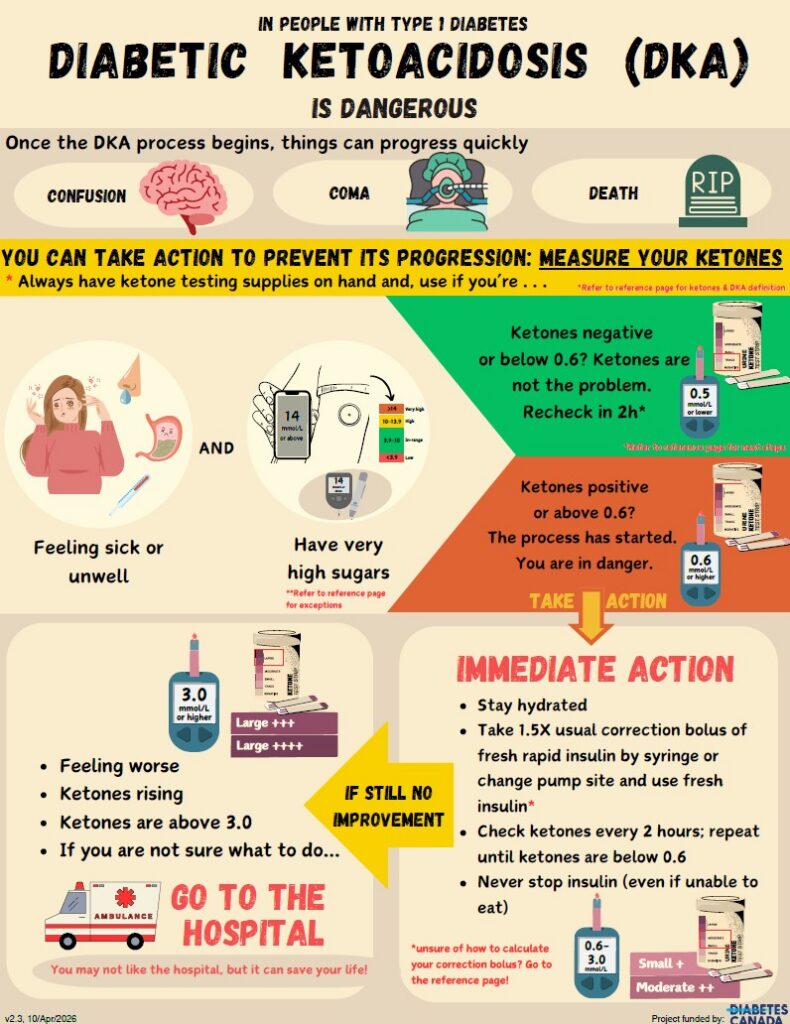
Infographic is provided courtesy of Dr. Bruce Perkins (Lunenfeld–Tanenbaum Research Institute, Sinai Health) and collaborators.
Why awareness is so important
Awareness of DKA, not just among the T1D community and healthcare professionals, but also the general public is a key tool to mitigating its incidence. And although DKA is more commonly thought to be an issue at diagnosis, the reality is that anyone with T1D is at risk, regardless of age and how long they’ve had T1D or how they manage it. And when it isn’t recognized early and addressed with urgency, it can become a medical crisis – a point at which it’s harder for the person with T1D to advocate for themselves.
This underscores why better DKA awareness among not only the T1D community, but the public at large is so important. The right education and resources, access to tools, and consistent messaging can help to mitigate DKA risk in people living with T1D.
Breakthrough T1D Canada, with support from Abbott, has launched a DKA and ketones awareness campaign to help achieve this.
Preventing DKA includes having conversations about ketones, even if they can be scary and uncomfortable.
And we want to hear from you:
We are looking for stories from our T1D community about your experience with ketones and DKA.
- Tell us about a time you, or a loved one, experienced DKA
- How do you incorporate monitoring ketones into your management of T1D?
- What symptoms do you feel when your ketones are high?
Abbott will provide a donation to Breakthrough T1D for every story submitted, and your story may be included in a future blog post.
Click HERE to share
Turning your experiences into real action
With your help, we will turn stories into awareness and action. This means reinforcing early ketone testing when symptoms are present, and more importantly, ensuring equitable access to diabetes devices and supplies like ketone strips and any future monitoring technologies.
Experiencing DKA when living with T1D is a preventable outcome with the right understanding, awareness and tools.
And listening to the stories of people who have been there will help everyone better recognize the early warning signs of DKA – and can help save lives.