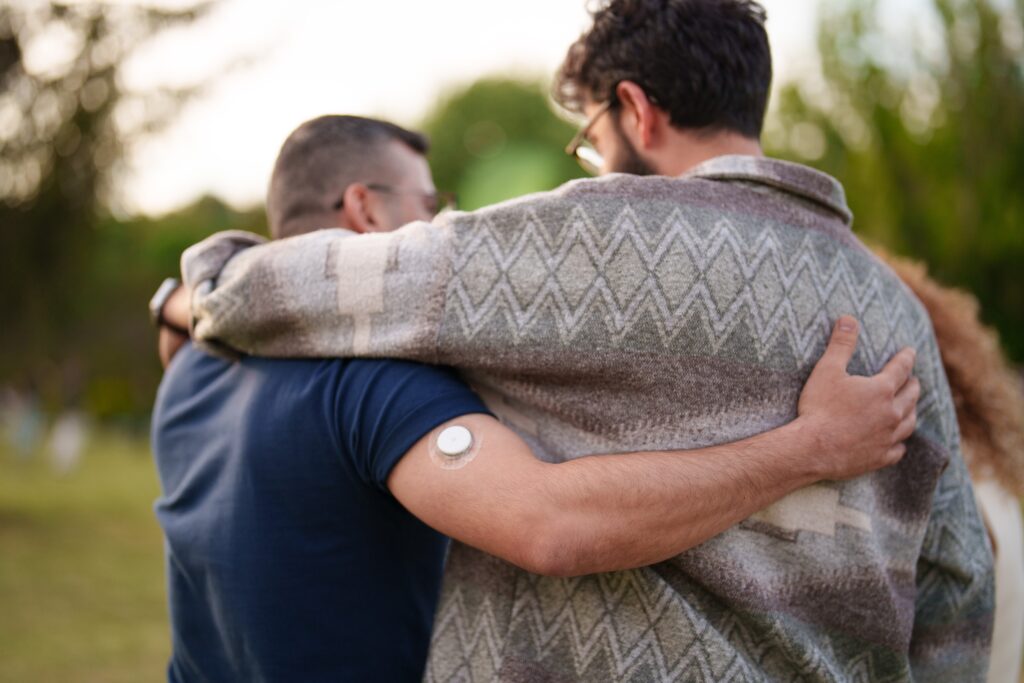
Breakthrough T1D leads publication of Continuous Ketone Monitoring guidance 

In recent years, rapid technological innovations related to diabetes devices like insulin pumps and continuous glucose monitors have significantly helped many people manage their T1D. An exciting new development is underway into continuous ketone monitors (CKM), and Breakthrough T1D is both funding research in this area and shaping recommendations for how they could be used.

On December 9th, a publication on consensus recommendations for the use of CKMs – led by Breakthrough T1D International’s Medical Affairs team – was published in The Lancet. These recommendations and further research and development of these monitors will soon give those with T1D another valuable tool to manage the condition.

What are ketones?

Ketones are organic compounds (acids) that the body makes as a by-product of using fat instead of glucose for energy. This process is called ketosis. A small number of ketones in the body is not concerning, but if they start to build up it can be life threatening. In people with T1D, this may happen because of too little insulin, illness like the flu, prolonged fasting, dehydration or the use of some medications (namely SGLT2 inhibitors). In T1D, a build up of ketones can lead to a serious condition called diabetic ketoacidosis (DKA). 

Learn more about ketones and DKA

Why monitor ketones?

People living with type 1 diabetes (T1D) are familiar with ketones and the risk they present to their health, but monitoring for ketones is burdensome and infrequent for many.

Currently, people with diabetes use blood and/or urine strips to test for ketones; however, surveys show that few individuals use them routinely. Given the current options, it remains very difficult to predict when ketone levels may be rising, and people lose opportunities to intervene early to prevent DKA altogether and could therefore benefit from more routine monitoring.

Similar to continuous glucose monitors (CGMs), CKMs will continuously measure ketone levels in the body and can alert users if their ketone levels are rising. This ability to track ketone levels in real-time could have substantial benefits in preventing DKA—and more. Continuous ketone monitoring (CKM) is on the horizon, but recommendations for use of these devices is lacking.

Potential benefits of CKM for people with T1D 

  • Early detection of rising ketones to prevent DKA 
  • Identification of elevated ketones due to infusion set failures that would prevent pumps from dosing insulin 
  • Valuable addition to automated insulin delivery (AID) systems for comprehensive monitoring of blood glucose and ketones 
  • Management of early-stage T1D—before insulin therapy is needed—to monitor disease progression  

Recommendations for use of CKM

CKMs have the potential to transform T1D care by stopping dangerous, life-threatening DKA before it ever occurs. It is critically important that healthcare professionals (HCPs) and people living with T1D know how to most effectively use this technology to maximize its benefits.  

That’s why Breakthrough T1D International, led by their Chief Medical Officer Thomas Danne, convened a panel of experts to agree on recommendations for how this technology could be used to improve outcomes for individuals at risk for developing diabetic ketoacidosis (DKA). 

The recommendations from the expert panel are: 

  • CKMs could include trend arrows, akin to those on a Continuous Glucose Monitor (CGM), and reflect rates of change of around 0.4 mmol/L per hour. 
  • To avoid potential alarm fatigue, CKM devices should have optional individual alarms and be used at the discretion of the user and their health-care professional 
  • It is recommended that an audible or vibrating alarm should be put in place to notify continuous ketone monitoring users if their ketone concentrations rise above the urgent high threshold of ≥3·0 mmol/L. 
  • The terminology for ketone levels should be: Normal, Elevated, High, Urgent High. 
  • All CKM users should be provided with a blood ketone metre to use if they are experiencing the symptoms of high or urgent high ketones, and they do not match the CKM reading.  
  • All individuals who wear a CKM should receive education on what elevated ketones mean and what actions to take.  

Why might this matter to you?

There are currently no continuous ketone monitors available on the market, but Breakthrough T1D is actively funding work in Canada and globally to make these a reality. Both academic groups and early-stage companies are working on CKM devices. Further down the pipeline is Abbott’s dual glucose-ketone sensor (CGM-CKM), which is currently in development. Including in Canada with Dr. Mahla Poudineh (University of Waterloo), in collaboration with Dr. Leyla Soleymani (McMaster University) who are also working on developing a wearable CKM.

Breakthrough T1D’s work in this area – funding research and developing recommendations for CKM use is crucial as they will be a reality soon and both healthcare providers, people with T1D and their caregivers will need standards on how to use these devices to be able to take action before DKA occurs.  

Breakthrough T1D Canada will keep the community up to date on the progress of CKM development. For clinical trials that may be testing these devices and others, visit clinicaltrials.breakthroughT1D.ca


Updates on recent type 1 diabetes clinical trials

In addition to funding research, a key component of Breakthrough T1D’s research strategy is the promotion and knowledge translation of clinical trials. Here we report on recent results from international trials relevant to our type 1 diabetes (T1D) community.

To see if there is actively recruiting research that you can be part of, see our T1D Clinical Trial Finder.

Cell Therapy: Tegoprubart trial
Current islet transplantation (from cadaveric donor islets in clinical practice to stem cell derived islets in clinical trials) require immunosuppression to protect the islets from the recipients’ immune system. Dr. Piotr Witkowski (University of Chicago) is investigating the use of tegoprubart as a less toxic alternative to commonly used tacrolimus for people with T1D receiving cadaveric donor islet transplants.

Tegoprubart (AT-1501) is an anti-CD40L antibody owned by Eledon Pharmaceuticals and has shown promising safety and efficacy data for kidney transplants.

In the ongoing islet replacement trial, preliminary data on the first six subjects show that tegoprubart is able to protect the transplanted cadaveric donor islet cells. All six transplanted subjects demonstrated marked improvements in glycemic control, achieving and maintaining insulin independence after one or two islet transplants.

Tegoprubart was generally well tolerated, with no reported serious adverse events and no signs of the kidney or neurological toxicity often observed with traditional immunosuppression.

This clinical trial is partly funded by Breakthrough T1D International and Eledon Pharmaceuticals is funded by the Breakthrough T1D Fund.

Disease-modifying therapy: PETITE-T1D
Disease-modifying therapies address the underlying cause of T1D, meaning that they protect beta cells, stop the autoimmune attack, or both.

Sanofi’s PETITE-T1D trial is testing the efficacy and safety of Tzield in kids aged 0-7 with early-stage T1D.  Tzield is currently approved by Health Canada for children and adults aged eight and older with stage 2 T1D, in whom it can delay the onset of stage 3 T1D by a median of 3 years.

Interim results from PETITE-T1D show that the safety profile of Tzield in children under the age of 8 is similar to that of older individuals who receive the drug. This study is ongoing, and we look forward to seeing efficacy data (how well it is reducing the autoimmune attack) in 2026.

Disease-modifying therapy: TrialNet Abatacept Prevention Study
New analysis from TrialNet on abatacept’s impact on type 1 diabetes progression suggest that further investigation may be warranted.

Abatacept (brand name Orencia®) is a prescription biologic medication that is used to treat certain autoimmune diseases. It works by blocking the activation of T-cells, a type of immune cell that causes inflammation,

The Abatacept Prevention Study first opened in 2013 and enrolled 212 people between the ages of 6 and 45. All participants had at least one relative with T1D and were identified as being Stage 1 T1D (which means they had two or more diabetes-related autoantibodies but normal glucose tolerance).

The initial study analysis found that while abatacept impacted immune response and preserved insulin production during the one-year treatment period, it did not meet the study goal of delaying progression to abnormal glucose tolerance (stage 2 T1D) or clinical diagnosis of T1D (stage 3 T1D). The group treated with abatacept maintained beta cell function better than the placebo group at 12 months. In addition, known effects of abatacept were detected on immune cells. However, 12 months after treatment ended, beta cell function was the same for both groups and effects on immune cells had reversed. The early effect was not sustained.

In a re-analysis of the data, it was found that the participants who were secreting the most insulin at the start of the trial had the most benefit from Abatacept. This is the first indication that an immune intervention in stage 1 T1D may delay disease progression in a subset of individuals. As studies into disease-modifying therapies sig deeper into why certain people respond better than others, it is becoming clear that a precision medicine approach will be needed to get people the most beneficial therapy possible.

Kidney complications: Finerenone
In November 2025 Bayer shared data from the international phase 3 clinical trial (FINE-ONE) which included participating sites across Canada. These results showed that finerenone (Kerendia™/Firialta™) significantly reduces urine albumin-to-creatinine ratio, a measure of kidney damage, in people with chronic kidney disease (CKD) associated with T1D.

In CKD, the hormone aldolsterone is overactive, leading to kidney damage. Finerenone blocks this hormone’s activity to protect the kidneys from further damage. Finerenone has already been approved for the treatment of CKD in type 2 diabetes.

Finerenone was well-tolerated, with no new safety issues reported and few serious adverse events. Based on these results, Bayer intends to submit the data for regulatory review, with the goal of expanding finerenone’s indication to include treatment of CKD in people living with T1D.

CKD is one of the most common complications of T1D. Nearly a third of people living with T1D will develop CKD, increasing the risk of both kidney failure and cardiovascular disease.

Finerenone is the first therapy in three decades to achieve positive outcomes for CKD in people with T1D.

Breakthrough T1D strategically collaborated with Bayer to support the FINE-ONE clinical trial.

Devices in Pregnancy: CIRCUIT Trial
To assess the efficacy of a closed-loop system in pregnancy, a randomized clinical trial in Canada and Australia, enrolled pregnant women with T1D before 14 weeks’ gestation, with follow-up until 6 weeks postpartum.

They analyzed 88 participants who were randomly assigned by 16 weeks’ gestation to closed-loop therapy or standard care. The standard care group continued their pre-randomization insulin delivery method (multiple daily injections or insulin pump), and all participants used continuous glucose monitoring throughout the study.

The mean percentage of time in the pregnancy-specific glucose range was significantly higher in the closed-loop group (65.4% TIR) than in the standard care group (50.3% TIR); the adjusted mean glucose level was also lower in the closed-loop group than in the standard care group.

The findings support the use of closed-loop systems in pregnancy with T1D.

***

Breakthrough T1D Canada will continue to monitor the results of these trials and share more updates as they become available.

Finding the perfect gift for your loved one living with type 1 diabetes

It feels like it happens every year, the months go by in a flash and before you know it, the holiday season is upon us. And now it’s time to find that perfect gift for those closest to you.

Breakthrough T1D is here to take some of the stress out of gift-giving and we’ve put together a holiday gift guide with some creative and fun ideas that can not only work for people living with T1D, but others on your list, whether they are family, friends, or colleagues. Knowing that the most treasured present is the one that comes from the heart.

Everyone loves being cozy

Sweaters, fuzzy blankets, tuques, scarves and mittens – these are simply Canadian essentials, and there is no shortage of styles, patterns and colours you can choose from.

Find some inspiration at a place like Simon’s, a Canadian store that has both household items and clothing, and that delivers across the country.

Or with enough time and energy, you could crochet a scarf or hat. You could even treat yourself to a crochet kit for a beginner, making it a gift to yourself too!

And keeping feet warm and comfortable can be even more important for people with T1D. Compression socks, and anti-fatigue mats can help with fatigue and aching in the calves and feet.

Consider non-skid, seamless and moisture-wicking socks, and pair them with a fun pair of cozy slippers (make sure they’ve got a solid and padded sole and a closed toe and back to prevent slipping). There’s nothing worse than waking up to cold floors on unprotected feet.

A fancy medic-alert bracelet

It’s advised that people with T1D wear a medic alert bracelet. And you may remember the more utilitarian style from your childhood. But did you know they come in a variety of styles, including necklaces and additions for a smartwatch band?

You can find the entire collection here: https://www.medicalert.ca/products

Keeping skin soft and supple all winter

The winter cold makes skin dry, cracked and uncomfortable. This can be especially challenging for people living with T1D. Well-moisturized skin also helps with glucose monitoring. Consider stuffing the stocking of your loved one with T1D with luxurious and rich moisturizers. Look for ones that contain urea.

Gifts to stimulate your brain

It’s easy to want to ‘couch rot’ when the days get short, cold and dark. And there is nothing wrong with a day or two doing very little. But why not also consider gifts that challenge the mind. Trivia games, sudoku, 10,000-piece puzzles, or even just old-fashioned books are gifts that can help keep the mind stimulated during that period between Christmas and New Year’s when it’s hard to remember what day or time it is!

Fun and creative insulin pump and CGM stickers
Started by a Canadian diagnosed with T1D when she was 33 years old and someone who loved colourful designs and stylish jewelry, Edda decided to create her own line when she found there were limited options in Canada.

In addition to a range of beautiful insulin covers and CGM stickers, Pimp My Diabetes also offers stylish diabetes bags and jewelry. And they have a full range of clothing and apparel options for both people who have T1D and their loved ones.

Check out the full range of items here: https://pimpmydiabetes.com/

(*Please note that Breakthrough T1D receives no funding from any of the suggested links, they are just to help you get started)

Gve the gift of breakthroughs

Maybe you don’t know what to give a colleague, or that one friend who’s really hard to shop for.

Supporting a charity, including Breakthrough T1D Canada will help you to feel good while doing good. And a donation not only helps today but can create a lasting legacy. Your support can help Breakthrough T1D in our mission of making every day life better for the close to 300,000 Canadians living with T1D, while we drive towards cures.

And if you donate today, your gift will be matched 2x up to December 31, 2025, allowing you to double your impact, and receive a final tax receipt before the end of year.

And here’s our gift to you! 

Please also accept our gift to you – an electronic holiday card that you can fill in with your own message and use to help raise awareness of type 1 diabetes in Canada.

Download by clicking on the card

No matter how stressful or busy the holiday season gets, always remember that you can’t go wrong with a gift given with genuine consideration and thought.

***

From everyone here at Breakthrough T1D, please accept our sincerest wishes for a happy, restful and restorative holiday season, and all the best for the coming new year.

Donate | Donnez