
What people with type 1 diabetes think about cell therapies

by Bryn Murphy

Multigenerational family with kids

Interest in cell therapies for type 1 diabetes (T1D) is growing, but most people still don’t have enough information to fully understand their options.

Today, islet replacement therapies are available in clinical practice to only those with the most severe T1D, and newer therapies are being investigated in a small number of people through clinical trials. But research is advancing quickly, and there is growing optimism about what may be possible in the coming years for more people with T1D.

In a recent survey, we heard both hope and hesitation. When people learned more about how cell therapies work, interest increased, showing how important clear and trustworthy information is.

People affected by T1D want to know: Will it work? Is it safe? What are the trade-offs? And, most importantly, what could this mean for daily life with T1D?

Why cell therapies matter for people with T1D

Living with T1D means constant decisions – balancing insulin, food, activity, and the risk of highs and lows. Even with today’s tools, the burden is real.

Cell therapies aim to replace the insulin-producing cells the body has lost. While these approaches are still in development and not yet widely available, they raise an important question: could they one day reduce the day-to-day impact of T1D?

What the T1D community told us

Between September and October 2025, we surveyed 399 adults living with T1D and 172 caregivers and supporters of people aged 16+ with T1D.

We asked about awareness, openness, and what matters most when considering new treatments.

People are interested but want more information before making decisions.

Awareness is still low, but grows with access to information

Only about one-third of respondents from a general T1D sample said they were familiar with cell therapies.

Among people connected to Breakthrough T1D, familiarity was much higher, showing the impact of trusted, accessible information.

Why information matters: it changes decisions

After reading a short explanation of cell therapies, openness to considering them increased from 47% to 57%. Curious what changed perspectives? Here’s the short explanation we shared:

“Islet replacement therapies (also known as cell therapies) for T1D aim to replace glucose-sensing, insulin-producing cells that are destroyed in a person with T1D by implanting ‘new’ islet cells into the body. Islets are the clusters of cells within the pancreas that secrete hormones. They are comprised primarily of beta cells, which secrete insulin in response to glucose. For the past 2 decades, islet therapies have been performed using islets retrieved from deceased individuals that have donated their pancreas. Although it is a quick, non-invasive procedure, people that undergo this procedure require immunosuppression to maintain cell function, just as any other organ transplant would. At the current time, these cell therapies are limited to individuals with the most severe cases of T1D. However, this is a fast-moving area of research and clinical trials are ongoing for next-generation cell therapies using islets created in the lab from stem cells, and research is looking at new ways to reduce or remove the need for systemic (general, whole-body) immunosuppression.”

When people understand their options, they feel more confident exploring them, even at an early stage of development.

What are cell therapies?

Cell therapies aim to replace insulin-producing cells destroyed in T1D by introducing new islet cells into the body.

Today:

  • These therapies are only available in limited situations, primarily through clinical trials and for a small number of individuals with the most severe cases of T1D
  • Most approaches use donor cells, however lab-grown cells are becoming more common
  • Immunosuppressant medications are typically required

Looking ahead:

  • Researchers are developing lab-grown cells (from stem cells)
  • New approaches aim to reduce or eliminate immunosuppression

This is a rapidly evolving area of research, but it is not yet a widely available treatment option.

Why people are interested in cell therapies

People told us these therapies could:

  • make everyday life with T1D easier
  • reduce the constant mental load
  • improve long-term health outcomes
  • offer new and innovative options

For many, even the possibility of reducing daily burden is meaningful.

What concerns people

People also shared important concerns, including:

  • wanting more research and long-term evidence
  • the need for immunosuppressant medications
  • feeling their current management is working well
  • age or other health considerations

These reflect the real-world trade-offs people weigh every day, especially for treatments that are still emerging.

What people need to know before deciding

Before considering cell therapies, people want clear answers to practical questions:

  • How effective is it?
  • What are the risks of immunosuppression?
  • How long do results last?
  • What are the costs?
  • Is it safe?

People are looking for clarity, not just hope.

Where people get trusted information

People rely on:

  • healthcare providers (67%)
  • diabetes research and advocacy organizations (58%)
  • online research (41%)

Those connected to the T1D community are especially likely to turn to organizations like Breakthrough T1D, reinforcing the need for clear, credible information.

What this means for the future

Awareness of cell therapies is still growing but interest is there, especially when people have access to the right information.

Today, access remains very limited and largely confined to clinical trials. But progress in this field is moving quickly, and there is cautious optimism that these therapies could become more widely available in the coming years.

At Breakthrough T1D, we are focused on three things:

  • Supporting research to develop and test cell therapies
  • helping the T1D community understand what’s coming and what it means
  • working to ensure that, when these therapies are ready, people who could benefit can access them

Breakthrough T1D is not only committed to educating the T1D community but is also expanding our work in Medical Affairs to educate Canadian healthcare providers about emerging therapies and clinical trials in Canada.

We will continue to share clear, balanced information so people can make informed decisions and feel confident navigating what comes next.

Learn more and stay connected

This initiative was sponsored by Vertex Pharmaceuticals. The sponsor had no influence on the survey design, delivery, analysis, or any other aspect of this research. All findings reflect the independent conclusions of Breakthrough T1D Canada.
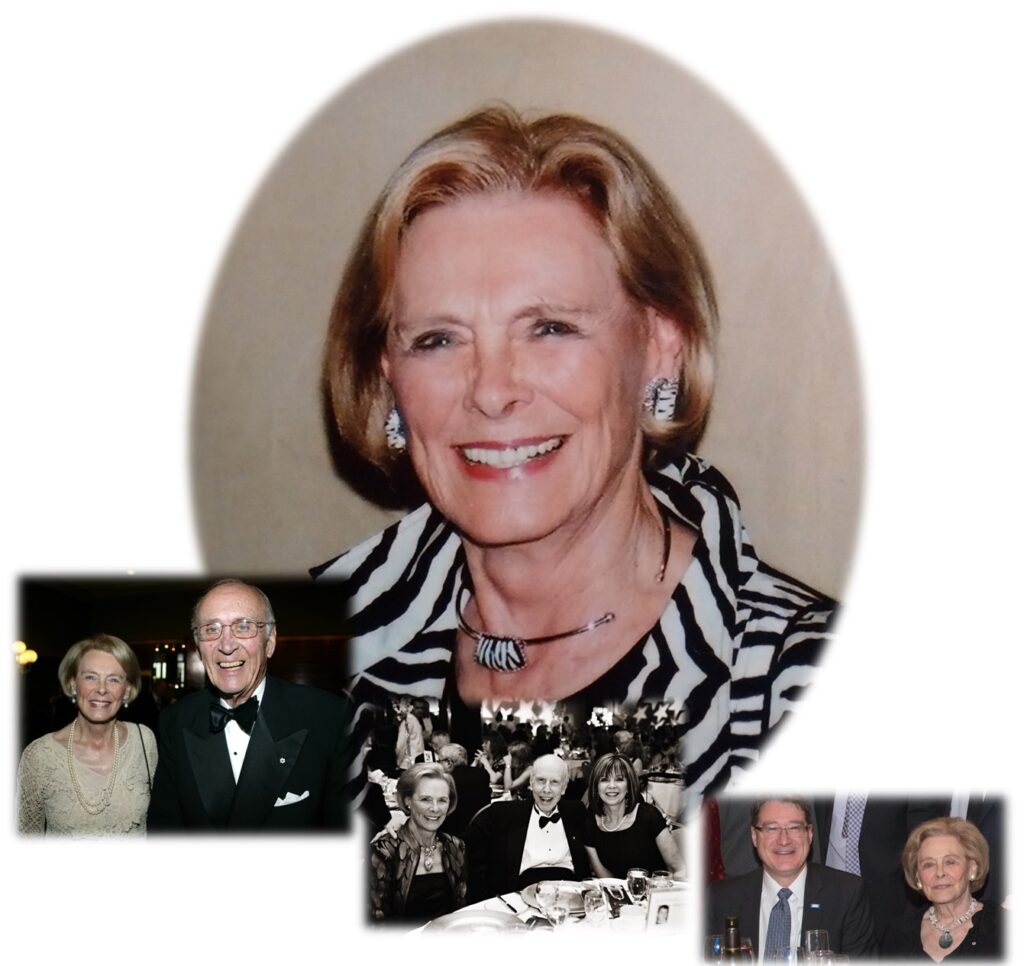

Tannis M. Richardson – lifetime of challenges, vignettes of my life

Tannis, along with her late husband George T. Richardson, were founding members of JDRF’s Winnipeg chapter (1971) and the city’s A Starry Starry Night Gala in support of JDRF. Tannis has also been on both the national and international boards for JDRF, which was formally established in Canada in 1974.

At 95 years old, Tannis is known throughout Western Canada for her exemplary community service and volunteerism.

While she always led a life of service, it was the discovery that one of their four children – their daughter Pamela – had type 1 diabetes (T1D) that found the family on the frontline of a battle they knew little about. Diagnosed at nine-years-old, they had to learn to manage a disease that was not well understood at the time, or well supported by Manitoba or Canada’s healthcare system.

It was because of this that the family became devoted to raising awareness of T1D and ensuring adequate supports for Manitobans living with the disease, something Tannis still does today with her support of universal access for diabetes devices and technologies through JDRF’s #AccessForAll program.

Sadly, Pamela died at the age of 29 from complications of diabetes. Shortly thereafter, Tannis and George were invited by Helaine Shiff, (another JDRF Canada founder) to attend the JDRF gala in Toronto.

“The gala in Toronto was a huge and lovely affair. The next morning, I phoned to tell Helaine what a wonderful job she had done – to which she responded, ‘that’s all very well Tannis, but what are you going to do in Winnipeg to help JDRF’.

I was at a dinner few weeks later in Winnipeg, and I was sitting next to (Regional Director, CBC Western Division) Donald Ferguson, when he asked me – what are we going to do in Winnipeg about JDRF. I replied who do you mean by ‘we’ – to which he replied CBC & you (Tannis). Due to this conversation we started to discuss what we could do. Eventually the idea came to us to have a gala.”

There were three other families in Winnipeg that were active and interested in what they could do to help fundraise for diabetes research, and together we formed a committee that organized Winnipeg’s first JDRF gala, A Starry Starry Night, named after one of Tannis’s favourite songs, and held on the plaza at City Hall. Today, nearly 35 years later, the annual gala remains one of Winnipeg’s premier fundraising events.

“I’ve seen so many changes during my time with JDRF,” says Tannis. “There is so much knowledge about diabetes now being publicized. It was slow coming, and with our high incidence of diabetes in Manitoba, it took a while before it started coming to the forefront. It was a slow start, but steady. And of course, the A Starry Starry Night Gala certainly helped a great many people realize what a challenge it was to have diabetes. It allowed us to show the public how life changing and life challenging T1D is, and why T1D research needs to be financed.”

Part of Tannis’ ongoing support came with the publication of her autobiography, Vignettes from My Life, which was self-financed so that 100% of the proceeds can go to JDRF.

“I remember so much of my life, what I’ve experienced and what’s happened – so it was suggested that I make an oral history of my experiences. I did that for a year with Janet Walker, (from the University of Winnipeg) but it evolved from there to thinking about putting it down on paper. “I guess I am a storyteller, and what resonated for me is that there was a purpose in telling my story.

Tannis met with Dorothy Ross, JDRF’s Director of Leadership Giving for a lunch, where they discussed JDRF, the pace of research and the Campaign to Accelerate. During this conversation Tannis informed Dorothy she would like to make a transformational gift in support of the Global Research Pillar, which will harness the work of world-leading investigators and trainees both in Canada and globally to make breakthroughs in areas of T1D screening, prevention, better treatment, and cures.

“There has to be something there that is going to be the breakthrough. Stem cell research seems to be the best thing that we know how to do, and if supporting the research monetarily helps us find a cure, we need to get the word out there,” Tannis explains of her reason to contribute to this area of T1D research. So many people feel that they are not able to donate, but if they realize that whatever they can give is a step forward, it all helps,” she explains.

“People feel we’ve been looking for a cure for a long time, but finding insulin was a game changing discovery. Once that one discovery was made, everything could come from that.  I feel that way about (T1D) research now – because it’s advancing so quickly. Today is the time to support it. If contributions are going to make that a reality. While we can’t foresee the future, for people with diabetes – a cure will mean their whole life will change. It will take a lot of work and struggle before they find the answer, I’m hoping it’s tomorrow.  At the age of 95 I hope I see it in my lifetime. I want to be part of it,” says Tannis.

JDRF is so thankful to Tannis for her remarkable contributions, and we are proud to announce her most recent generous investment in diabetes research during National Diabetes Awareness Month.

“There’s always a bright light in a challenge, and for me – it’s the wonderful people who are contributing who have enriched my life,” she says. ‘I feel very honored that I have met so many incredible people through JDRF. It is quite an organization – once you are in battle you realize that there are so many people who are working so hard to bring the end to and help us to finally win. The JDRF group are very special to me.”


Join the Blue Balloon Challenge

This summer, Medtronic® is challenging Canadians to take the Blue Balloon Challenge to raise awareness of how difficult it is to balance the ups and downs of life with type 1 diabetes (T1D).

People living with T1D have to make 300 or more decisions every day to keep their blood sugar levels in check. This includes making choices about everything they eat, drink, how much exercise to do, how long to sleep and so much more. There is never a break, and it is always there, often invisible to others

That’s what prompted Medtronic to launch this challenge, asking people to try and complete everyday tasks while holding a balloon in the air. The balloon is a metaphor that is meant to demonstrate the complexity of life with T1D.

Challenge yourself and your friends and family! Film yourself doing an everyday activity while keeping a blue balloon up in the air to highlight the constant balancing act that is living with T1D. Then post it on social media using the #blueballoonchallenge and #JDRFCanada.

Consider tagging 3 (or more!) friends to do the challenge too.

OPTIONAL: Tag @MedtronicDiabetesCanada on your post and have a chance to be featured on the Medtronic Diabetes Canada social channels as a featured post!

We look forward to seeing your photos and videos and sharing them on our JDRF social platforms.

JDRF thanks Medtronic Diabetes Canada for including us and Diabetes Canada as partners in the Blue Balloon Challenge and helping to raise funds and awareness of T1D across the country.

Check out the Blue Balloon Challenge video from Medtronic here.

Donate | Donnez