To every delegate who walked the halls of Parliament this year, this blog is for you.
T1D on the Hill 2026 was about more than meetings and metrics. It was about people. It was about families, kids, parents, adults living with type 1 diabetes, and the shared belief that progress happens when we show up together.
And show up you did.
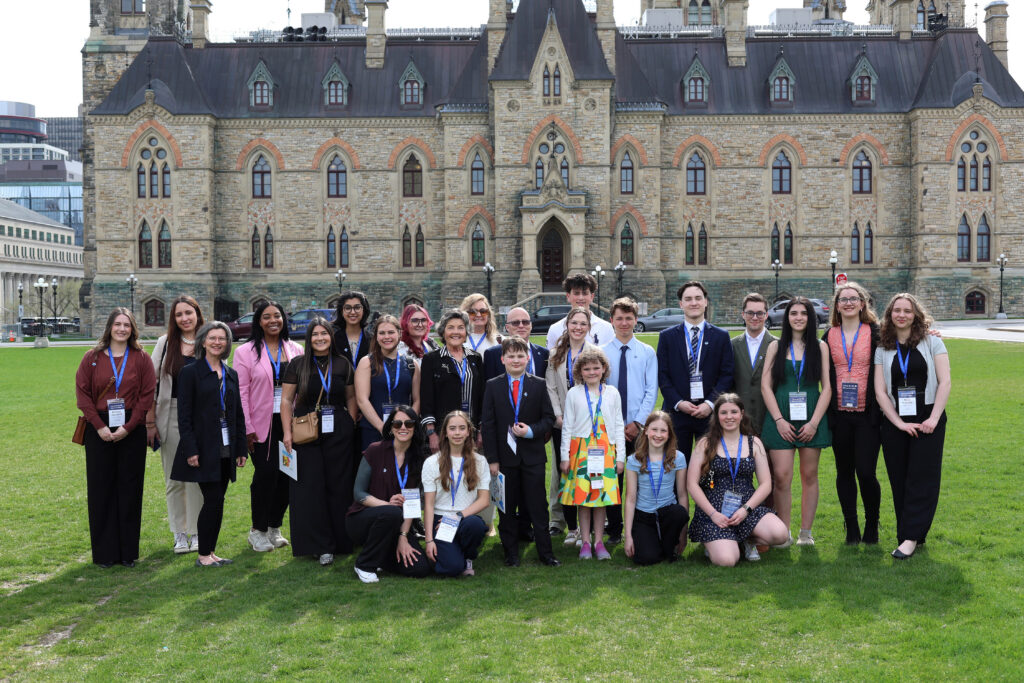
May 4, 2026: Breakthrough T1D members on Parliament Hill in Ottawa. Photo by Dave Chan.
On May 4th and 5th, 28 delegates from across Canada met with Members of Parliament, Senators, and senior staff. In total, 49 parliamentarians engaged with Breakthrough T1D Canada and learned about the Breakthrough T1D Network Canada. We can confirm, the reception to our message was overwhelmingly positive.
What made the difference was you.
Delegates spoke with confidence, clarity, and heart. You shared personal stories that brought the realities of type 1 diabetes into sharp focus. You explained why 2026 is a critical moment for research and access. You showed decision-makers that T1D is not abstract or theoretical. It is something families live with every single day.
The feedback we heard again and again was that the message was clear and compelling. Parliamentarians appreciated the materials you shared, the focused ask, and the fact that everything fit into a meaningful conversation. Many asked thoughtful questions. Many requested follow-ups. And many committed to helping move this work forward.
There were real and tangible wins. We secured commitments from MPs and Senators to champion the Breakthrough T1D Network Canada internally and we identified strong allies across parties. We saw statements made publicly in the House of Commons and the Senate. We opened doors with central agencies and built new connections that will support the path ahead.
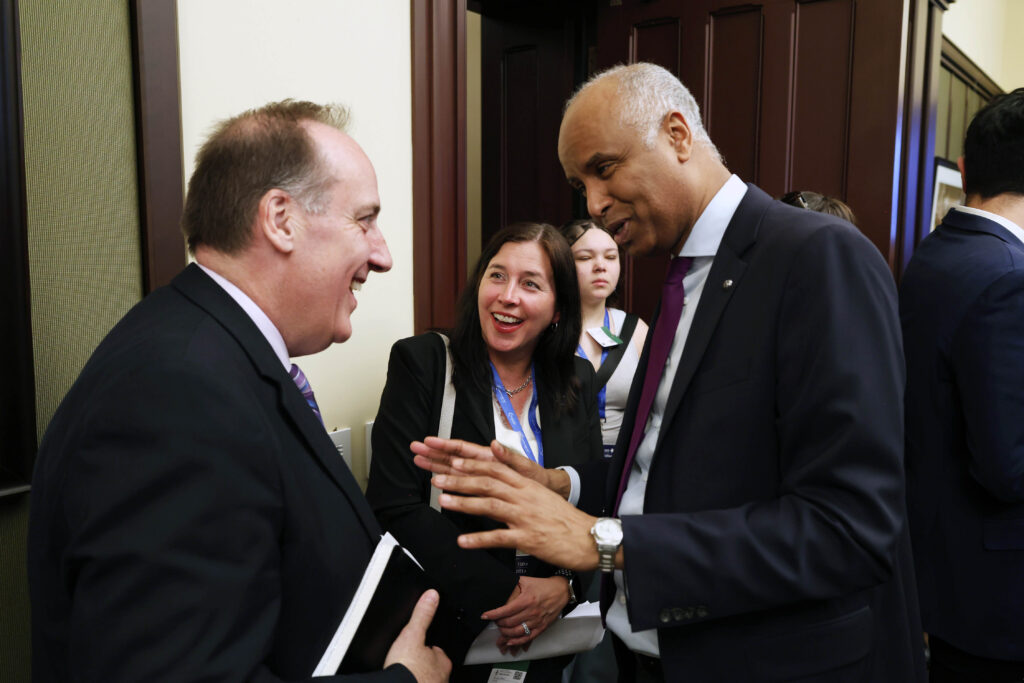
May 4, 2026: Breakthrough T1D members on Parliament Hill in Ottawa. Photo by Dave Chan.
These outcomes matter, but they only happened because our delegates were prepared, supported, and brave enough to speak from experience. Kids and their parents spoke not only about their daily challenges, but about why a cure matters to their future. Adults living with T1D spoke about the daily mental and physical load of managing this disease, the financial burden, but they also shared how a cure would impact their lives. Together, you struck a balance between policy and humanity that left a lasting impression.
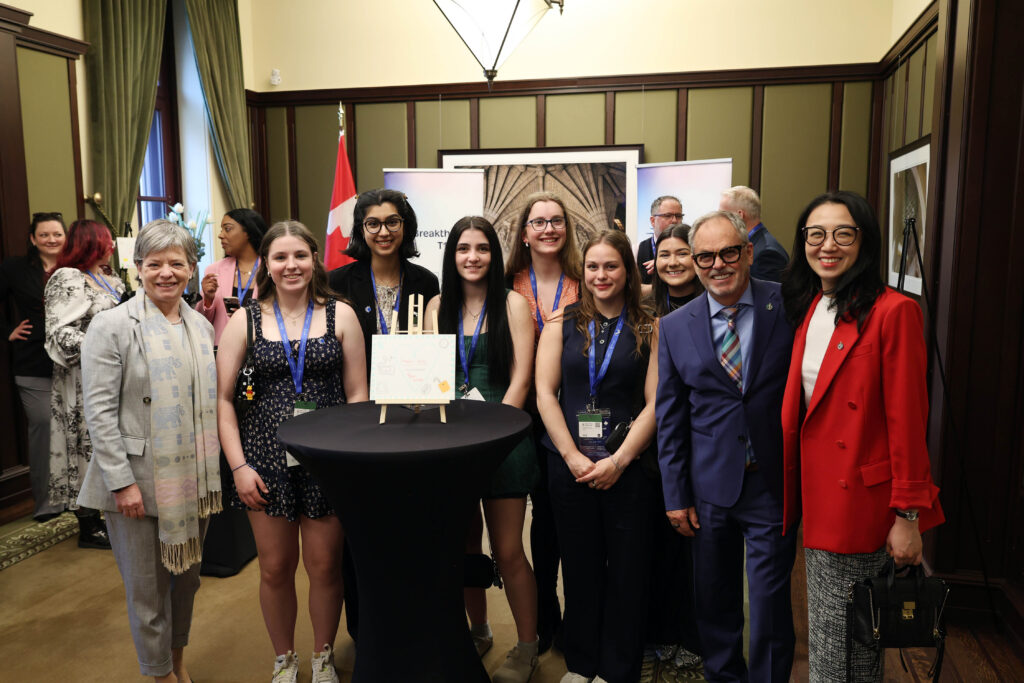
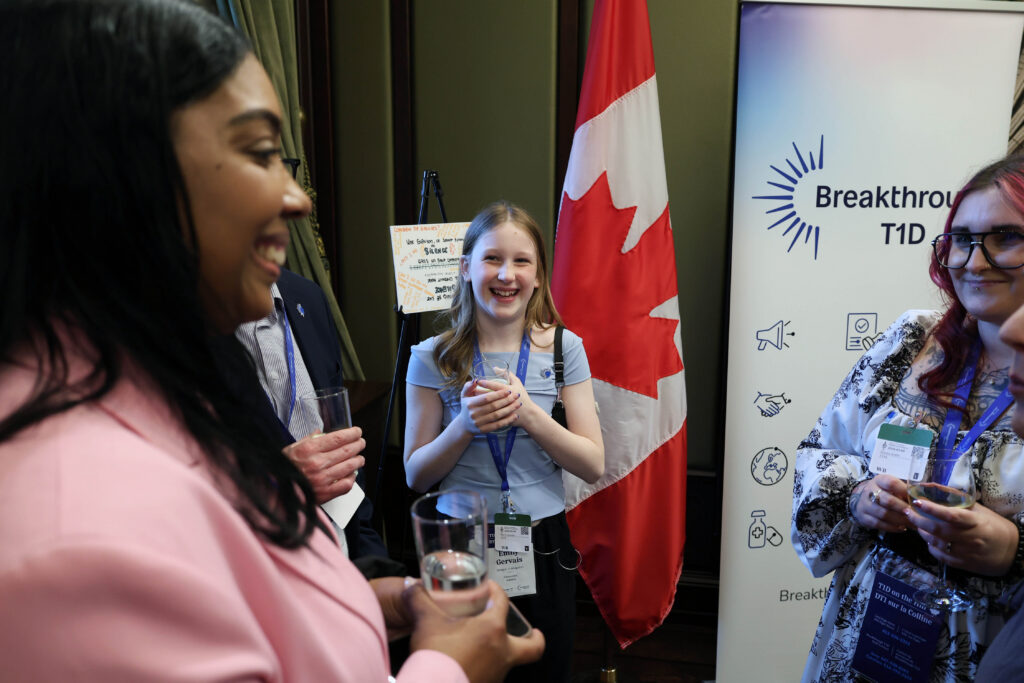
One of the most powerful moments of the week came at our reception. More than 90 people filled the room, including over 20 MPs and Senators. The energy was unmistakable. Conversations flowed easily. Parliamentarians stayed, listened, and engaged. It was a clear signal that when our community gathers, people pay attention.
May 4, 2026: Breakthrough T1D members on Parliament Hill in Ottawa. Photo by Dave Chan.
This year also marked an important evolution for T1D on the Hill. With new Breakthrough T1D branding, a more centralized government relations approach, and board members working closely with delegates, the effort felt cohesive and purposeful. Kids and adults advocated side by side, showing that T1D affects every stage of life and that solutions must too.
There is still work ahead. Questions about research funding and science will continue. Follow-ups with offices and committees are already underway. But the momentum is real, and it was built by the collective effort of this community.
To our delegates: thank you for your time, your preparation, and your courage. Thank you for sharing your story and for lending your voice so that others living with type 1 diabetes may someday live with less burden, and eventually, without this disease.
T1D on the Hill 2026 reminded us of something powerful. When our community comes together, we don’t just ask to be heard. We are heard.
If you’d like to help keep this momentum going, we invite you to send a letter to your MP by clicking the link below. https://Advocacy.BreakthroughT1D.ca/page/188437/action/1 We’ll keep you updated on our progress in the months to come!
May 4, 2026: Breakthrough T1D members on Parliament Hill in Ottawa. Photo by Dave Chan.
Building next-generation solutions for type 1 diabetes
Vancouver-based Aspect Biosystems recently announced a new $280 million partnership with the Government of Canada. Breakthrough T1D Canada’s Chief Scientific Officer, Sarah Linklater, spoke with Aspect’s Founder and CEO, Tamer Mohamed, about what the news means for the future of type 1 diabetes (T1D) treatment.
Sarah: For readers who may not be familiar with Aspect Biosystems, can you tell us what the company does and which health conditions you’re focused on?
Tamer: Aspect is pioneering what we call bioengineered cellular therapies. In simple terms, these are engineered cellular medicines designed to replace the function that’s lost because of disease—and without the need for long-term immune suppression.
Our main focus is on metabolic and endocrine diseases, with T1D being a major priority. We’re developing a stem cell-derived islet replacement therapy that aims to restore blood glucose control without requiring chronic immune suppression, which has long been one of the biggest challenges in this field.
We’re also applying our platform technology to other endocrine diseases, including primary adrenal insufficiency and other rare conditions. Across all of these areas, our goal is the same: to bring the full power of our platform to serious diseases that have been extremely difficult to treat—and develop curative medicines.
Sarah: Aspect recently announced major investments from the Government of Canada. What does this mean for the T1D community?
Tamer: Canada has a deep and proud history in diabetes research, including the discovery of insulin. More than 100 years later, this partnership is about Aspect Biosystems leading the next wave of curative medicines and building something truly generational, anchored in Canada.
In 2024, we launched a $200 million partnership with the governments of Canada and British Columbia to advance our platform and therapeutic pipeline. More recently, we’ve deepened our partnership with an additional $280 million project with the federal government to strengthen our clinical development capabilities and help us go the distance.
For the T1D community, this matters because it accelerates our ability to move therapies into advanced clinical development. It brings us closer to delivering curative medicines to people in Canada and around the world—and it does so by building a generational biotech company right here at home.
Sarah: Regenerative medicine is a rapidly evolving field, especially in T1D. What makes Aspect’s approach stand out?
Tamer: We have three elements that are essential to unlocking cellular therapies with curative potential without the need for chronic immune suppression. First, access to high-quality stem cell-derived islets. Second, best-in-class immune evasion technologies that protect those cells from the immune system. And third, the manufacturing required to scale these therapies.
We took a big step forward earlier this year in our partnership with Novo Nordisk to integrate key stem cell and hypoimmune cell engineering technologies under Aspect’s leadership. Combined with our recent federal investment, this gives us a real opportunity to develop therapies that could be transformative for people living with T1D.
Sarah: Looking ahead, how does Aspect plan to work with the T1D research and clinical community, including Breakthrough T1D?
Tamer: Partnership with the people we aim to serve is absolutely central to what we do. As we advance toward first-in-human studies, continuing to deepen our understanding of the patient experience becomes even more important.
From the early days, Breakthrough T1D played a role in shaping our path – we held an industry grant that enabled us to create a focus on T1D and, later, support from the T1D Fund. Our partnership with Breakthrough T1D was never just about capital. It was about shared mission, insight, connections, and learning.
We know the challenge ahead is enormous, and we’re humbled by it. But we’re committed. Our job isn’t done until we’ve made a real difference for people living with T1D—and we’re not going to rest until we do.
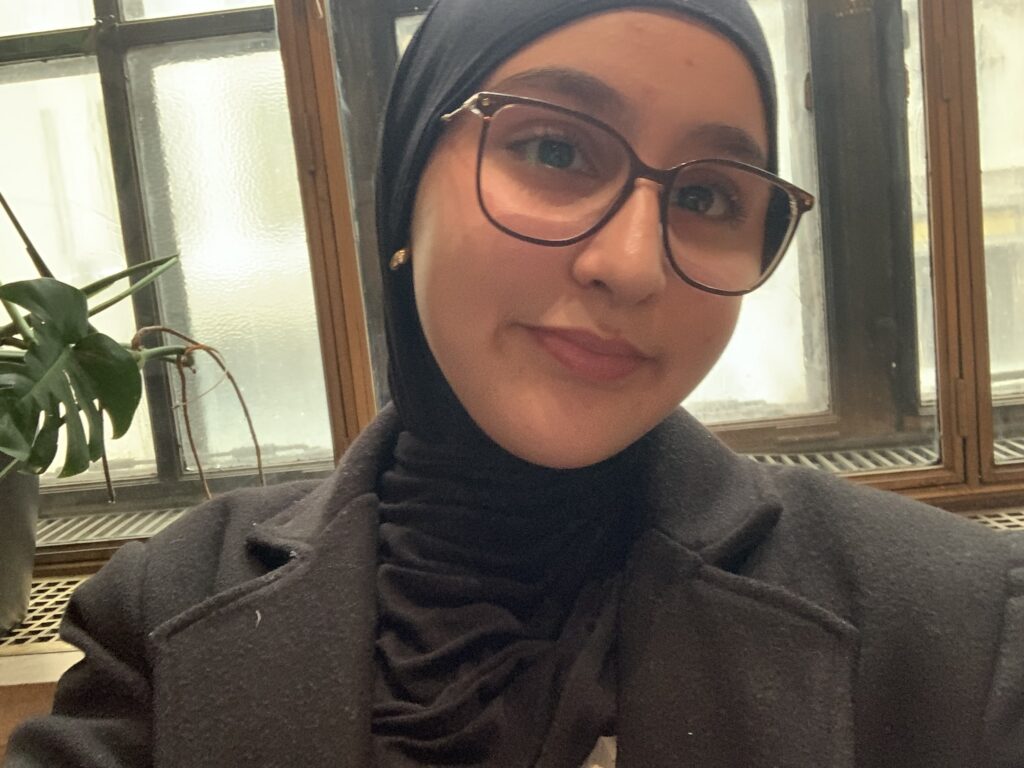
Guest post: Soundous Sellam, student living with type 1 diabetes in Montreal
Living with T1D (type 1 diabetes)
I don’t wake up at night because of school stress. I wake up because my sugar dropped, again. It’s 3 am and I have to shove food in my mouth, trying to convince my body not to give up on me. The quiet of the house makes the beeping of my glucose monitor feel deafening and strangely unreal. It’s such a weird reality.
People hear “diabetes” and picture an older person told to stop eating sugar. That’s type 2. I have type 1. I didn’t get this because of what I ate or how I lived. My own immune system destroyed the cells in my pancreas that produce insulin, leaving me to manage something my body can no longer do for me. My pancreas became a battlefield, and my immune system, once protector, turned into the invader, devouring the cells I needed to survive. It felt as if my own body had mistaken its organs for enemies. It tore through the cells that once worked tirelessly for me.
I was diagnosed in May 2022. The doctors told me my blood sugar was 26 mmol/L which is dangerously high. I was on the edge of life and death, nearly in diabetic ketoacidosis. Suddenly, I had to grow up faster than anyone else. I had to learn to inject myself, count carbs with precision, carry supplies everywhere, and cover bruises from needles and sensors. Even when I slept, even when I was sick or exhausted, the calculations never stopped. I had to care for myself constantly because if I didn’t, the consequences could be immediate or long-term, from passing out to risking damage to my heart, eyes, and kidneys.
When I was diagnosed, I didn’t want my parents to carry the weight of my illness for me. I didn’t want to wake them up in the middle of the night every time my sugar dropped or see the worry etched into their faces every time I checked my numbers. So, I stood up for myself. I learned to inject insulin, count carbs, and manage my highs and lows on my own. It wasn’t just about independence it was about protecting them from the fear that came with every spike and crash. In taking responsibility for my own care, I discovered a resilience I didn’t know I had. I don’t vent to them, I don’t stress them out with the endless calculations, the beeping monitors, the sudden lows that knock me off my feet. I keep it all to myself. It’s a quiet burden, one I carry so they don’t have to.
Sometimes it’s lonely, but in that silence, I’ve learned to listen to my body, to trust myself, and to stand on my own even when everything feels unpredictable. Managing diabetes became not just about survival, it became about proving to myself that I could handle whatever life threw at me.
It isn’t just the physical labor; it’s the mental weight. There’s a second voice in my head, always questioning, always calculating: Did I take enough insulin? Did I eat too much? Will I crash during my exam? Will someone think I’m exaggerating? It gets exhausting and it’s a daily pressure, like a hand pushing down on me, reminding me that I can never let my guard down.
Some nights, despite all my planning, my body still rebels. I wake up shaking, sweating, seeing stars, unable to even sit up. Every number feels like a puzzle, and the solution decides whether I feel okay or end up in the hospital. I learned to be responsible, to make the right decisions, and to carry the weight that those decisions can have, not just on myself, but on the people around me.
Every choice, from a small snack to a dose of insulin, is a lesson in accountability. It feels like solving equations that never end, numbers looping through my mind like an infinite maze. Diabetes taught me that my actions have consequences, and that taking ownership of them is both a challenge and a gift.
People tell me to “just accept it.” And sometimes, I have. Until I’m at the pharmacy, staring at a bag full of insulin, needles, and sensors and realize that this bag will never be empty. Not next month, not next year, not ever. I’ve accepted it… until I walk into a restaurant and see people eating without a second thought, no carb counting, no calculations, no fear. I’ve accepted it, until exhaustion and sugar swings make me snap at someone I love, and I wonder who that even was. Acceptance isn’t a box you check. It’s something you lose, and slowly find again.
Type 1 diabetes has taken a lot from me, but it has also given me more than I could have imagined. It has taught me discipline, patience, and self-awareness. It also made me more empathetic. Living with a constant, invisible shadow that walks beside men even when the sun is out, taught me that everyone is fighting their own battles, even when I can’t see them. I’ve learned to notice the small struggles, to listen, and to approach others with patience and understanding because I know what it feels like to carry a weight no one else can see.
And one day, I hope to use what I’ve learned to help others fight in the same way I’ve had to fight for myself. I want to be an anchor for others, someone they can rely on when life feels uncertain. Living with this disease has shown me the importance of steadiness, patience, and care not just for myself, but for the people around me. If I can offer support, understanding, or a calm presence to someone else, I know it can make a difference. I hope I’ll make that difference.
May is Mental Health Awareness month, an international movement dedicated to reducing stigma, providing education, and promoting mental health as a critical part of overall health and well-being. The month highlights the need for community support, early intervention, and professional resources for those challenged by mental health issues.
Having type 1 diabetes (T1D) affects a person’s emotional, social, and mental wellbeing throughout their lifetime, known collectively as psychosocial health.
Research has shown that people with T1D are at higher risk of mental health disorders including depression, anxiety and disordered eating. These challenges are common in people with T1D and can be treated – but only with the right resources that address the correct gaps in healthcare specific to diabetes.
Launched in 2021, Breakthrough T1D takes a three-pronged approach to its Mental Health Strategy: 1) enabling knowledge generation through new research, 2) delivering a training program for mental health providers, and 3) developing both new and ongoing community supports.
Since then, we have seen significant progress in all three key areas, thanks to the generous support of donors, as well as partnerships with academia, other diabetes organizations, and community partners.
We are pleased to share the updates to this program that have taken place since May, 2025.
Mental Health + Diabetes Training Program A training program specializing in type 1 and type 2 diabetes
We continued to deliver the Mental Health + Diabetes in both English and French, supporting registered mental health providers care providers to better understand the psychosocial impacts of diabetes.
This year, we developed a companion workbook to the e-learning that includes key takeaways from each module and includes thought-promoting questions. This workbook addresses feedback from learners that have completed the program, as this was a common request of participants.
We made updates and quality improvements to ensure the program remains relevant and evidence informed.
678 mental health providers completed this training as of May 1st 2026
Mental health providers who complete our training program are eligible to join our Directory of trained providers, allowing the the diabetes community to more easliy find providers in their communities.
We were very pleased to see consistent and continued growth of the Directory and we continued to work to increase the visibility of trained mental health providers across Canada.
We completed ongoing reviews and maintenance of the Directory to ensure listings remain accurate and useful for people living with diabetes and their caregivers.
The Directory now includes trained mental health providers who can provide care in all provinces and territories (please note for the territories they are currently offering virtual appointments and are cross-listed with other provinces).
244 mental health providers listed as of May 1, 2026
Research updates Current mental health research focuses on adolescents, young adults, and those facing care transitions or geographic barriers.
Projects funded in partnership with Brain Canada are developing and testing psychosocial interventions.
A randomized controlled trial, Teaching Adolescents with type 1 Diabetes Self-compassion (TADS) to reduce diabetes distress, led by Dr. Marie-Eve Robinson, Ontariodemonstrated that a mindful self‑compassion program significantly reduced diabetes distress, depression, anxiety, and disordered eating among youth. Full results from this completed study will be presented in 2026.
Dr. Tricia Tang, British Columbia uses a virtual care platform called REACHOUT to deliver peer‑led mental health support to adults with T1D across British Columbia. Participants in Dr. Tang’s recent trial showed reductions in diabetes distress and depressive symptoms, alongside increased perceived social support.
TECC-T1D3: Technology-enabled Comprehensive Care for young adults with Type 1 Diabetes and Diabetes Distress, a study led by Dr. Peter Selby, Ontario is using qualitative interviews to inform the design of a technology‑enabled care intervention for young adults experiencing diabetes distress, which is currently in the pilot phase.
Projects funded in partnership with CIHR address key life transitions and unmet psychosocial needs.
Aiming for Something Sweeter: Supporting Youth with Type 1 Diabetes During Transition from Pediatric to Adult Diabetes Care led by Dr. Sonia Butalia, Alberta is testing how to support youth transitioning from pediatric to adult diabetes care by integrating trained non‑medical transition coordinators into the health system.
Adaptation and Pilot Evaluation of a Digital Intervention Targeting the Psychosocial Needs of Individuals with Pregestational Diabetes: A Mixed-Methods Multi Phase Study led by Dr. Deborah Da Costa, Quebec is adapting the HealthyMoms digital platform to support the mental health needs of individuals with pre-gestational diabetes during pregnancy planning, pregnancy, and postpartum periods, with a trial planned for 2027.
Type 1 Diabetes, Exercise and Mentoring (TEAM) Trial: A randomized controlled pilot trial using peer mentorship to increase physical activity and quality of life in adolescents with type 1 diabetes led by Dr. Jon McGavock, Manitoba evaluates a peer‑mentorship model to increase physical activity, quality of life, and belonging among adolescents with T1D, with early feedback demonstrating meaningful benefits among participants.
Find Your CommuniT1D: Customized Virtual Peer Support for People Living with Type1 Diabetes. Dr. Holly Witteman, Quebec established a robust team of individuals with lived and loved experience of T1D as well as digital health experts to create CommuniT1D. The program launched in summer 2025 and are currently recruiting participants that are being placed in small groups based on similar circumstances or needs.
Updates on Community Grants An incubator initiative designed to provide seed funding to organizations ready to transform innovative ideas into successful projects to support the mental health and wellness of the T1D community.
Through their community grant support, the University of Montreal created videos in French with English subtitles about mental health and T1D, covering a range of important topics. These videos and more T1D specific mental health content are available on the Type 1 Better Support platform.
We also provided a top up grant to Connected in Motion, “Bridging the Gap: Mental Health Integration into Slipstream Programming,” wrapped up in February 2026, an extension and add on to the 2023 grant stream. With this support the organization built a new mental health hub: https://www.connectedinmotion.ca/mental-health-hub/, that expanded digital content and delivered mental health specific sessions at their virtual programming session. session.
The new Hub now brings together:
Community-written blogs and reflections on topics like burnout, identity, relationships, aging, and emotional resilience
Recorded virtual sessions exploring the mental side of living with type 1 diabetes
Community-created tools and gentle visual resources that support everyday well-being
Clear pathways to connect with others through events, groups, and additional supports
A 2026 funding opportunity has been announced and will be larger (up to $35,000 each) to allow for even more fulsome projects.
Expanded partnerships and community collaboration Working with the community to provide outreach and further fill gaps in community resources and care
Breakthrough T1D was pleased to launch a new partnership with You’re Just My Type (YJMT to provide more peer support opportunities, both virtually and in-person.
This partnership will bring two in-person events and one virtual event throughout 2026 – May 30th in Vancouver, Toronto in the autumn, and a virtual event later in the year. These will be YJMT’s first-ever Canadian events and will help to strengthen peer connection and community-driven mental health support for adults living with T1D.
This partnership reflects a shared commitment to meeting people where they are with relatable, accessible mental health resources.
We also continue to collaborate with Diabetes Canada on our Training Program and Directory, and thank them for their ongoing efforts to increase awareness and engagement of these initiatives.
Caregiver Support Recognizing an unaddressed need for parent and caregiver support.
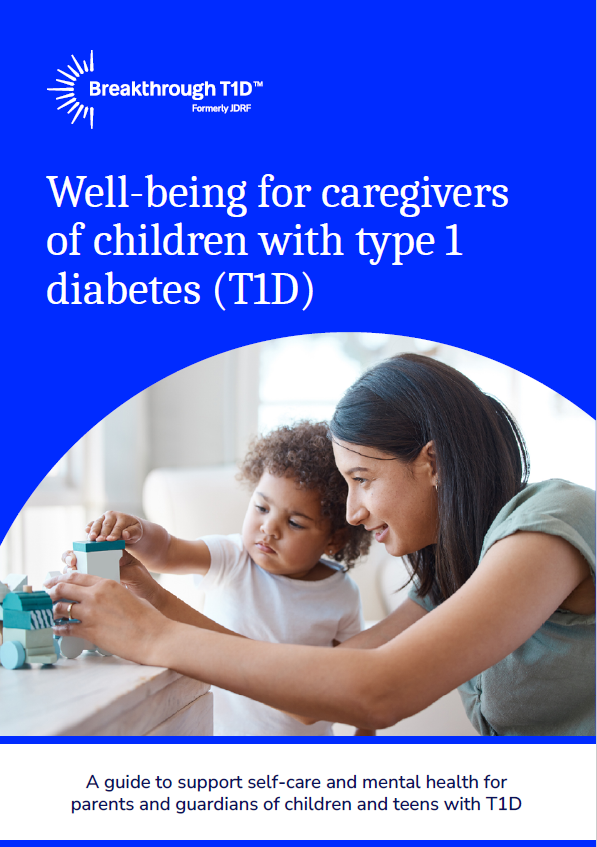
We have also released a new Caregiver Guide for parents and caregivers of children and adolescents living with T1D. Based on a guide produced by Breakthrough T1D Australia, and with input from Canadian mental health providers and people with lived experience of T1D, we are pleased to release the updated Canadian guide for our audience.
We had frequent feedback that caregiver support was a significant need for the T1D community, and the new guide acts as a practical, compassionate resource to support parents and caregivers of children and youth living with T1D.
To further support T1D caregivers, we are planning virtual, interactive sessions for fall 2026. These facilitated sessions will aim to provide parents and caregivers of children and teens living with T1D with a supportive, interactive space to reflect on their experiences, build practical coping skills, and connect with others facing similar challenges.
Thank you to our community
Breakthrough T1D Canada remains enormously grateful for the support of our Mental Health Advisory Council, lead volunteers and philanthropic partners, including funding partners Brain Canada and CIHR, without whom our progress in this area would not be possible.
To keep informed of upcoming events with YJMT and the caregiver support sessions, please ensure you’re on our mailing list or follow our social media channels: Facebook Instagram LinkedIn
In March 2026, Breakthrough T1D Canada and You’re Just My Type (YJMT) announced a new partnership to build on lived experience support as part of the organization’s mental health and diabetes strategy.
You’re Just My Type is a nonprofit dedicated to supporting the mental health of people living with T1D through in-person events, resources, and community-building.
The partnership with Breakthrough T1D will bring YJMT to Canadians, through free, in-person mental health events for adults with type 1 diabetes (T1D), taking place in Vancouver in May, in Toronto and an online event in November that will be available to anyone in Canada.
Breakthrough T1D had the opportunity to speak with YJMT founder Laura Pavlakovich about what motivated her to start her nonprofit, and her hopes for the expansion into Canadian communities.
Tell us a little bit about yourself
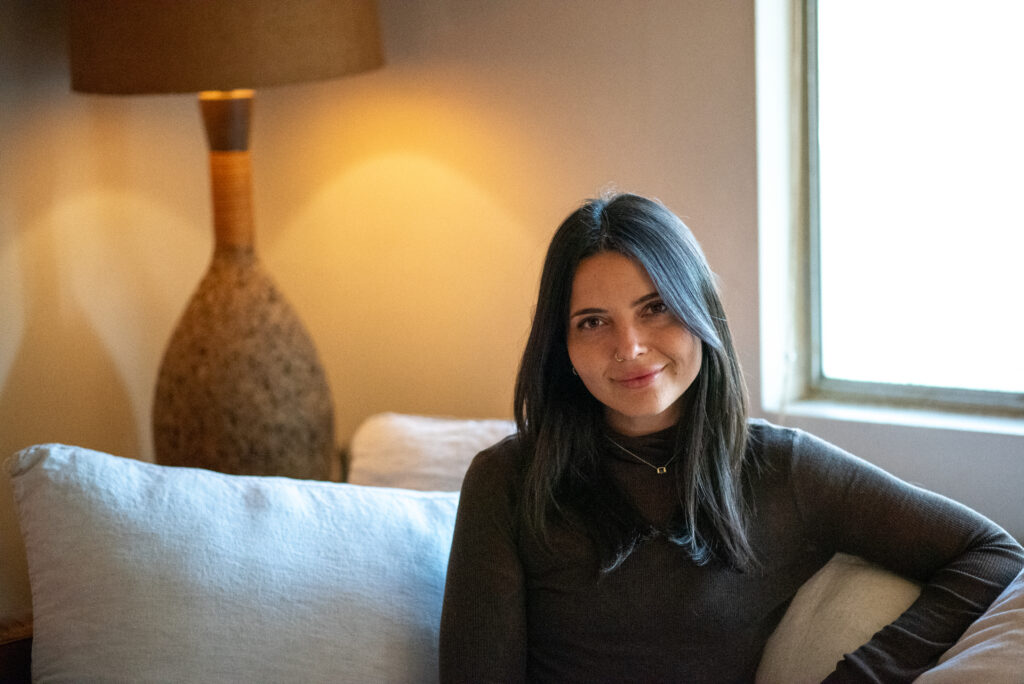
I’ve lived with type 1 diabetes for nearly my entire life, and I’ve found that the mental toll can often be heavier than the physical. My background is in photojournalism, a path that took me all over the world and ignited my passion for storytelling and human connection. In 2016, I began combining these two worlds – photography and T1D – to share the stories of our community. That work eventually grew into You’re Just My Type, where we now focus on building mental-health-centered, peer-led spaces for those living with this condition.
What made you start You’re Just My Type?
You’re Just My Type grew out of realizing how much peer support and in-person community were missing in the Type 1 space. While the photo project began in 2016, it evolved into a formal organization in 2021 when I hosted our first in-person mental health event.
I kept thinking about what I wished I had growing up; diabetes camp was a lifesaver, but it only existed for one week a year. I wanted that support to be a year-round reality. Since 2021, we’ve hosted over 50 free events across multiple cities. It became clear that people don’t just need better tools—they need each other.
What makes you excited about the YJMT and Breakthrough T1D Canada partnership?
We hear from people in Canada all the time asking if we’ll ever bring You’re Just My Type there, so this partnership feels incredibly meaningful. Breakthrough T1D Canada is such a trusted and respected organization, and we share a fundamental belief that caring for people with type 1 means caring for their mental health, too. Partnering together makes it possible to reach more people and begin building community in new places in a thoughtful, sustainable way.
Why do you think it’s important for people to understand about mental health and Type 1 diabetes?
Type 1 diabetes is a 24/7 mental experience, even when it looks “under control” from the outside. People often think Type 1 is easy because, as a community, we’ve learned how to make it look easy.
What they don’t see is the constant decision-making, the math, the planning, the sleepless nights, and the complete exhaustion that comes with managing a chronic illness every single day. Mental health support isn’t an optional “extra” in diabetes care; it is essential.
Any further message you want to share with the Canadian T1D community?
You’re not alone in this, even if it feels that way sometimes. You deserve spaces where you can be honest, imperfect, and fully understood. We are so excited to bring You’re Just My Type’s community-based events to Canada and build something alongside you. You belong here.
Learn more about You’re Just My Type at: https://www.yourejustmytype.org/ and further announcements about upcoming events by following Breakthrough T1D Canada on their social media channels.
There is a saying that many of us have heard soon after boarding a flight: “put your oxygen mask on first, before helping others,” a safety instruction when you’re on an airplane that acts as a metaphor for self-care. Simply put, it means taking care of your physical and emotional well-being before attempting to help others. Because if you don’t look after yourself first, it becomes much harder to look after anyone else.
For parents and caregivers of children and youth with type 1 diabetes (T1D) it can feel difficult to put your mask on first. After a diagnosis of T1D, the focus will inevitably be on your child first and getting them through that acute phase of fear and uncertainty, before learning to navigate your new normal as a family with T1D.
But it’s essential to also take care of your health and well-being, even during the period immediately following diagnosis. T1D is a lifelong disease that requires 24/7 management without time off and with no breaks, and it can be relentless. Continually being in a state of high alert without self-care can lead to chronic stress and caregiver burnout.
Learning to recognize concerning effects on mental health and preventing them before they become serious is especially hard for parents of children with T1D, as they often feel their needs come secondary to those of their child’s.
“I felt overwhelmed by the complexity of managing the disease, along with a deep sadness for the carefree childhood I feared had been lost,” said Mina, a caregiver whose child was diagnosed at 10 years old.
Breakthrough T1D Canada heard from the community that there was a gap in caregiver support. Therefore, as part of its Mental Health Strategy, Breakthrough T1D Canada has launched a new Caregiver Guide to help address this underrepresented need.
Based on a guide produced by Breakthrough T1D Australia, and with input from Canadian mental health providers and people with lived experience of T1D, we are pleased to release the updated Canadian guide for our audience.
The Caregiver Guide is a thorough, chapter-based information guide that details the many different stages of caregiving, including:
The immediate aftermath of diagnosis
Transitional stages, (i.e. elementary school to middle school to high school)
When your child asserts independence in their T1D management
Impact on siblings
Different types of stress
Coping strategies
When to seek professional support and help, and much more.
We hope that it will be a useful, compassionate resource to help parents and caregivers of children and youth living with T1D.
“The T1D community became an extraordinary source of support on our journey. Connecting with other families, social workers, and accessing the resources available through Breakthrough T1D made an enormous difference for our family. Today, my son is doing wonderfully—happy, healthy, and thriving while managing T1D—and we remain deeply grateful for the community that helped us get here,” says Mina.
In fall 2026, to complement the Caregiver Guide, Breakthrough T1D is planning free, virtual, facilitated caregiver support sessions. These sessions will aim to provide parents and caregivers of children and teens living with T1D with a supportive, interactive space to reflect on their experiences, build practical coping skills, and connect with others facing similar challenges.
They will aim to translate key themes from the Caregiver Guide into practical, real-world reflection and discussion, encourage parents to seek help when needed, and to foster connections to mental health and peer supports.
The sessions will be in both English and French, with time for a question-and-answer period.
Putting your oxygen mask on first isn’t always easy, but it’s crucial that caregivers also prioritize their own health and well-being in order to best support a child with T1D. And Breakthrough T1D is here with resources to help support parents and other caregivers in their own personal journeys with T1D.
“In the hardest moments, what helped me most was realizing I didn’t have to do this alone… Asking for support is not a weakness, but a vital part of this journey,” says Miriam, whose child was diagnosed age 13.