Breakthrough T1D Canada is pleased to announce three new trainees in partnership with the Canadian Islet Research and Training Network 

Breakthrough T1D Canada is excited to continue its successful partnership with the Canadian Islet Research and Training Network (CIRTN) and announce a fourth cohort of co-funded trainees beginning in 2026. 

CIRTN was established in 2020 as a world-class training and research network with joint contributions from the University of Alberta, University of British Columbia, University of Manitoba, Université de Montréal, Institut de Recherches Cliniques de Montréal, and the University of Toronto and now includes 12 institutions from across Canada.   

Breakthrough T1D Canada has partnered with CIRTN to leverage funding to this network from the National Science and Engineering Research Council – Collaborative Research and Training Experience (NSERC-CREATE) program.  

Previous cohorts: 
2023 

2024 

2025 

Dr. Austin Miller –Postdoctoral Fellow (supervisor: Francis Lynn, University of British Columbia) 
Improving the ability to generate stem cell-derived pancreatic islets in the lab 
Regenerative medicine approaches are being developed as an alternative in which pancreatic islets are transplanted into patients to restore autonomous insulin secretion, reducing the patient burden of T1D management. Stem cell-derived pancreatic islets (stem cell islets) have the potential to provide an unlimited supply of islets for transplantation.  

Overall, my research aims to improve our ability to generate stem cell-derived islets in the lab. I will develop tools to study cellular pathways that allow cells to manage the burden of secreting proteins like insulin and perform studies to better understand the role of these pathways in the generation of insulin-secreting cells. These findings will inform strategies to further improve the efficiency of stem cell-derived islet generation. 
Dr. Chris Schaaf – Postdoctoral Fellow (supervisor: Patrick MacDonald, University of Alberta)  
Standardizing stem cell-derived beta cells 
The advent of stem cells has provided a promising approach towards generating a functional cure for type 1 diabetes. However, current protocols do not generate stem cell-derived beta cells that appropriately produce and regulate insulin secretion, and there is a lack of standardized assays, benchmarks, and analytical tools for comparing stem cell-derived beta cells to human donor islets. 

This project will leverage the humanislets.com dataset – a collection of ‘gold standard’ molecular and functional datasets from hundreds of human organ donors – funded by Breakthrough T1D and CIHR.  Using this robust dataset and collaborative expertise in computation and artificial intelligence, we will perform comparative analyses and benchmarking for the improvement of stem cell-derived beta cell outcomes. This will enable us to develop benchmarking standards and protocols that can be used by researchers anywhere in the world to compare their own lab generated  stem cell-derived beta cells to our repository of human donor islets data, and use that data to generate  stem cell-derived beta cells that truly mimic the function of human beta cells. 

Yihan Luo – PhD student (supervisor: Kacey Prentice, University of Toronto)  
A new approach to prevent type 1 diabetes by strengthening insulin producing cells 
In the human body, organs communicate with each other through hormones, such as insulin, made by beta cells in the pancreas. Insulin tells fat, muscle, and liver cells to absorb sugar from the blood, which provides energy and keeps blood sugar levels in balance. In type 1 diabetes (T1D), the immune system destroys beta cells, causing lifelong insulin deficiency. Evidence suggests that T1D begins before beta cell loss, due to disrupted insulin responses and organ–pancreas communication. Fabkin, a hormone complex secreted by fat, affects beta cell health and research has shown that blocking it in mice helped beta cells stay healthier. Our project studies Fabkin’s key component, NDPK, to learn how it affects beta cell survival and function, and test whether NDPK-targeting drugs can prevent or delay T1D. If successful, this work could lay the foundation for a new approach to prevent T1D by protecting beta cells before they are damaged or lost. 

In her own words: Stephanie Atkinson

Stephanie Atkinson, a Montreal, QC based adult Breakthrough T1D Canada ambassador, sat down with the organization to discuss what drew her to volunteering and what it’s like to be diagnosed as a busy mother and businesswoman.

Tell us a little bit more about yourself

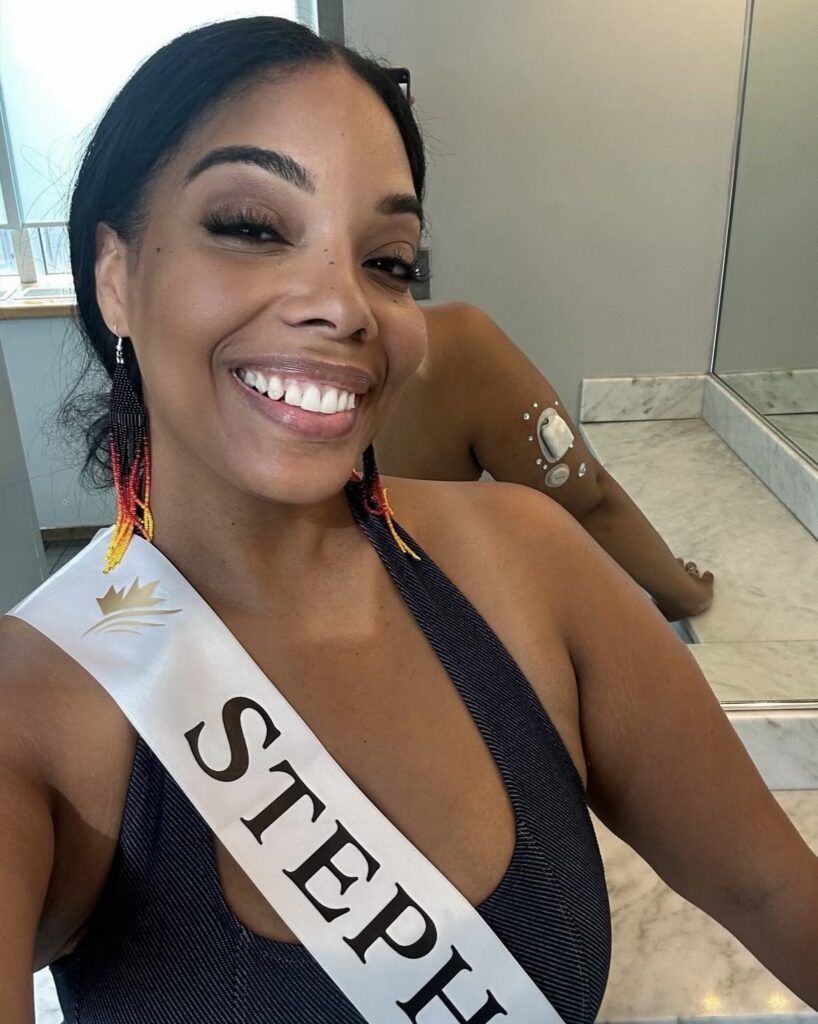
My name is Stephanie Atkinson. I’m a mom of four, a skin and beauty expert, founder of Mayfield Glow, and a recent finalist on the Miss Universe Canada stage.

Before anything else, I’m someone who has learned firsthand how fragile life can be — and how powerful resilience is.

I built my career helping women feel confident and cared for through skincare and wellness. But my own health journey shifted my purpose in a deeper way.

Standing on the Miss Universe Canada stage as one of the first finalists openly wearing two visible diabetes devices — an insulin pump and a continuous glucose monitor — wasn’t just about competing. It was about representation. It was about showing that living with a chronic illness does not disqualify you from showing up fully, boldly, and beautifully in the world.

Today, I use my platform to advocate for type 1 diabetes awareness, especially for adults diagnosed later in life, while balancing motherhood, entrepreneurship, and advocacy.

Can you share a little bit about your diagnosis? What do you remember?

Before my diagnosis, I was sick for many days, but it was during COVID and most clinics were closed, so accessing care felt nearly impossible. I was exhausted in a way that didn’t make sense. I now know I was experiencing all the classic “4 Ts” of type 1 diabetes — thirst, tiredness, toilet, and thinner. I was constantly thirsty, extremely fatigued, using the bathroom nonstop, and losing weight rapidly. My vision began to blur, I could barely walk, and deep down I knew something was very wrong — but as a mom, you push through.

When I finally got into a clinic, I was told I had a urinary tract infection. I remember saying I had never had one before, but I was told that strange things happen before turning 30. I left feeling dismissed, even though my body was telling me something much more serious was happening.

The next morning, everything changed.

I woke up to a police officer at my door doing a wellness check. My doctor had reviewed my results and realized I had been misdiagnosed — my blood work showed I was actually in diabetic ketoacidosis (DKA), a life-threatening emergency where the body begins breaking down fat for fuel because it cannot use glucose properly without insulin. Acid builds up in the bloodstream, and without immediate treatment, it can be fatal.

When I got to the hospital, things were still confusing. Initially, I was diagnosed with type 2 diabetes because I was an adult. But my condition worsened quickly, and I ended up in the ICU with severe DKA. I remember feeling like my body was shutting down. I was losing vision in my left eye, I couldn’t walk properly, and everything felt overwhelming and terrifying.

Later, after further testing, I was correctly diagnosed with type 1 diabetes.

I was 29 years old, a mother, and suddenly my entire life changed. I didn’t fit the stereotype people imagine when they think of Type 1 diabetes — and that experience is one of the main reasons I advocate so strongly today, especially for adults who are diagnosed later in life.

Over 70% of Canadian T1D diagnoses are in adults. How did you find the transition to your new normal?

The hardest part wasn’t just learning how to manage insulin — it was realizing how little support exists for adults diagnosed later in life. 

As a mother and entrepreneur, I had to quickly learn how to balance blood sugars, medical appointments, and new technology while still showing up for my family and my work. There’s a lot of education and community built around children diagnosed with Type 1, but adult diagnosis can feel isolating.

To be honest, there were many times I wished I had been diagnosed as a child. By the time I was diagnosed, I was already an adult, already a mom, already carrying so many responsibilities. A lot of guilt came with that — guilt about how my diagnosis might affect my family, guilt about slowing down, and guilt about having to suddenly prioritize my health in ways I never had before.

Over time, I learned that managing diabetes isn’t selfish — it’s necessary. I built a support system, connected with community, and learned to use technology as a tool for confidence instead of fear. That transition taught me how strong and adaptable we really are, and that being diagnosed later in life doesn’t mean you’re behind — it just means your journey looks different.

You went into DKA prior to your diagnosis. Are ketone levels and how they’re measured something you think about more now?

Absolutely. Once you’ve experienced DKA, awareness becomes second nature.

I pay close attention to how my body feels, especially when blood sugars are elevated or when I’m sick. I monitor ketones when needed and rely heavily on my diabetes technology for early warnings. It’s not about living in fear — it’s about understanding my body and staying proactive so I can avoid going through that experience again.

Why do you wear your diabetes devices so visibly?

The honest answer is that at first, I didn’t want to.

In the beginning, I was ashamed of my devices and tried to hide them as much as possible. As a woman working in beauty and wellness, I felt pressure to look polished and seamless, and I worried that people would only see my diagnosis instead of me.

What changed my perspective was my children.

One day, one of my kids came home from school excitedly telling me about a student in their fifth-grade class who wore a Dexcom and was having a diabetic emergency. Because my child was familiar with diabetes from watching me manage it every day, they recognized what was happening and were able to help alert an adult quickly.

That moment shifted something in me. I realized this was bigger than me. If more people saw these devices visibly — and understood what they were — it wouldn’t just help me feel more confident, it could help others too.

On the Miss Universe Canada stage, I made a conscious decision not only to wear my devices openly, but to bedazzle them. So many times, I hear, “But you don’t look sick.” And the truth is — Type 1 diabetes is an invisible illness. I wanted to bring joy and light to something that can feel heavy and misunderstood. If I was going to wear them, I was going to wear them proudly.

Visibility creates conversation. Conversation creates understanding. And understanding saves lives.

If someone sees me and feels less alone or more confident wearing their own devices, that makes it all worth it.

Is there anything else you wanted to share with the T1D community, particularly with others diagnosed as adults?

You did not cause this.

Being diagnosed as an adult can feel confusing and isolating because many people still believe type 1 diabetes only happens in childhood. When you’re diagnosed later in life, you’re often already carrying so many responsibilities — careers, families, and expectations — and it can feel like your world shifts overnight.

But your diagnosis does not change your value, your strength, or your future.

Give yourself permission to learn slowly, to ask for help, and to prioritize your health without guilt. Managing diabetes isn’t about being perfect — it’s about showing yourself grace and continuing to move forward. 

You can still chase your dreams. You can still show up boldly. You can still build a beautiful, full life. Type 1 diabetes is something I manage — it does not define or limit who I am.

***

Breakthrough T1D Canada thanks Stephanie for her efforts on behalf of the T1D community and for her important work as a peer support volunteer and advocate.

Guest post: What does a cure for type 1 diabetes (T1D) look like?

What does a cure for type 1 diabetes (T1D) look like?

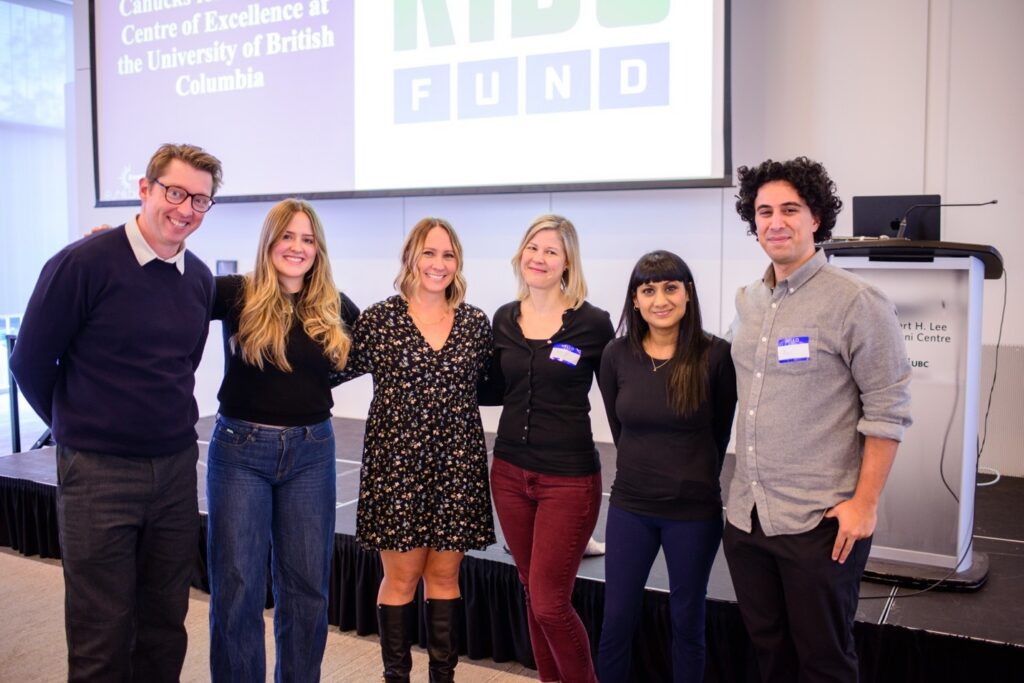
Authors: Katie Bartel, Beth Miller, Tony Lucas, Benjamin Mammon, for The Breakthrough T1D Canucks For Kids Fund Centre of Excellence at UBC T1D Lived Advisory Group

That was the question that the Type 1 Diabetes Lived Experience Advisory Group attempted to answer through a recent anonymous survey.

The group quickly learned it’s not an easy puzzle to solve.

The Breakthrough T1D Canucks For Kids Fund Centre of Excellence at UBC T1D Lived Advisory Group has a key role at Centre outreach events and enabling dialogue between researchers and people living with T1D. The recent survey was done to gather information to inform these discussions and, in turn, the Centre’s cure-focused research program.

Of the 49 respondents, there were varying degrees of what a cure for T1D looks like – some want fully functioning insulin production, whereas others would be satisfied with a device-free lifestyle. Some respondents focused more on improved quality of life, while others struggled to put any kind of description to a T1D cure.

“Type 1 requires so much decision making on a daily basis that I cannot help but wonder what my brain will do with that space and time,” one participant commented. “Am I less likely to face decision fatigue? More likely to have more resilience to frustration… the potential is significant, but the ability to guess what that might be is difficult.”

It’s these types of responses that the Centre’s T1D Advisory Group believes is essential for researchers to know.

“If we don’t know what a cure looks like for people with type 1 diabetes, we can’t work towards it,” said Dr. Søs Skovsø, scientific project coordinator at the Centre, and Chair of the Advisory Group.

And that’s where the Advisory Group plays a role.

The Advisory Group is made up of eight members who either live with T1D or care for people living with T1D. The group’s objective is to integrate the voices of people with T1D into T1D research.

The Advisory Group developed a survey that was distributed through local T1D community networks and stayed open for one month. There were 49 respondents in total; 33% were caregivers and 67% lived with T1D. Most respondents lived in Canada – 53% in BC and 41% in other provinces. The remaining 6% lived internationally.

The main query of the survey was “What does a cure for T1D mean for you?”

Questions included rating the importance of restoring the body’s ability to produce its own insulin again, versus preventing the immune system from attacking insulin-producing cells. The survey asked about the importance of a cure being device free, as well as the significance of improvements to quality of life gained with the introduction of a cure.

51% of survey respondents responded that a cure involving stem cell therapy would be extremely important; 58% rated immune therapy as extremely important; and 40% rated being device-free as extremely important. And when asked about the most important benefit that a T1D cure could provide – improved mental health was rated higher than freedom from blood sugar checks, elimination of insulin dependence, and reduction of long-term health risks.

The question that was most surprising for Advisory Group members and researchers at the Centre was how confident respondents were that a cure would be found in their lifetime.

Responses varied: some were confident, others skeptical.

“The mixed response from the community doesn’t reflect the exciting work that’s going on at the Centre,” said Advisory Group member Beth Miller. “This highlights a need for better communication between the scientific community and the broader T1D community,” Miller added.

Skovsø agrees.

“Some people have lost hope for a cure, and at the same time others thinking that there’s a cure coming next year,” she said. “This means that the research community has to do a better job at communicating that a cure may not be available next year, but it is within reach.”

The Advisory Group’s survey is the first of its kind according to Dr. Bruce Verchere, one of the lead principal investigators at the Centre.

“This survey promises to increase the impact of T1D research in the Centre by helping researchers better understand the hopes and expectations of persons living with T1D, and how research could improve their lives,” said Verchere.

“What a cure looks like to a parent of a child with T1D, or to someone living with T1D for 30 years, or to a scientist is going to be different,” said Skovsø. “Hopefully this survey will help open minds that a cure is not single-sided; it’s multi-faceted.”

This survey was just the first step. A second quantitative survey is now being developed by the Advisory Group, in collaboration with the Centre research team, with the intent of reaching a wider audience and publishing the results in a scientific journal.

“It’s cool to see the work and conversations coming out of the Advisory Group trickle and spread into the science community,” said Skovsø. By publishing a larger study, “we can spark even more conversation and understanding.”

Valentine’s Day Treat Carb Counts

Do you prefer the sweetness of a Hershey’s kiss, or maybe you like the spice of a cinnamon heart? For most of us, we can grab a handful of Valentine’s Day candy without thinking about it. But for people living with type 1 diabetes (T1D) every snack, every meal, every piece of food eaten must first be calculated for carbs and sugar against the insulin they need to take – just to stay alive.

For newly diagnosed families, learning the calculations of carbs against insulin needs can be challenging at first, but with practice and consistency this should become easier over time. And even for people who have been living with T1D for decades, the sugar or carb counts of certain foods can vary, either by brand or a change to the product.

Always make sure to check the label carefully, and consider downloading an app, like Roche’s mySugr app, Diabetes M, or apps from your device manufacturers. Visit the website of the manufacturer of your device to find out more.

Carbs and Cals lets you take a photo of your meal, and the app searches its library of over 19,000 foods to give you the nutritional information you need.

MyFitnessPal app includes a database of over 14 million foods so you can find out nutritional information about what you’re eating, including the amount of carbs. It has a handy barcode scanner for ready-made products, and you can also add your own foods.

There is a free version and a paid version which has more features. The app is compatible with iOS and Android.

We always want the holidays to be fun for you, or a loved one with T1D, knowing that treats can still safely be enjoyed. It just requires a little extra work and knowing the carb levels of  favourite candies.

Remember also to factor in the portion of candy or chocolate you or your child eats to get a more accurate carb count.

  • Great Value Cinnamon Hearts (25 pieces) contains 15g total carbs, 15g net carbs, 0g fat, 0g protein, and 60 calories.
  • Hershey Kiss (1 piece) contains 3g total carbs, 2.8g net carbs, 1.5g fat, 0.4g protein, and 27 calories.
  • Hershey’s Reese’s Peanut Butter Cup (1 package – each 1.5 OZ – 2 cups – 2 1/8″ diameter per cup) contains 23g total carbs, 21.7g net carbs, 12.8g fat, 4.3g protein, and 216 calories.
  • Jellybeans (10 piece) contains 28g total carbs, 28g net carbs, 0g fat, 0g protein, and 113 calories
  • Compliments Jujubes (8 candies) contains 33g total carbs, 33g net carbs, 0g fat, 0g protein, and 130 calories.

(values found at https://www.carbmanager.com/)

For a more detailed list of Valentine’s candies and their carb counts, thank you to our friends at Waltzing the Dragon for this Valentine Treat Carb Guide (https://waltzingthedragon.ca/diabetes/nutrition-excercise/valentines-day-candy-chocolate-carb-counting-tips/)

Donate | Donnez