On January 20, 2026 Novo Nordisk (“Novo”) and Vancouver-based Aspect Biosystems (“Aspect”), announced a new phase of their partnership focused on developing curative cell therapies for type 1 diabetes (T1D).
Since 2023, Aspect and Novo have worked together on technologies aimed at producing insulin-secreting islet cells from stem cells. Under the revised partnership, Aspect has acquired Novo’s stem cell–derived islet and hypoimmune cell engineering technologies—designed to create insulin producing cells that can evade immune attack after transplantation into people with T1D.
Novo will continue to invest in Aspect and provide research funding, and it will retain future commercialization and royalty options. This agreement follows Novo’s October 2025 decision to discontinue its cell therapy research and development, including but not limited to, T1D islet manufacturing. As part of the transition, T1D-related research, development, and manufacturing activities will move from the U.S. and Denmark into Aspect’s Canadian platform, expanding the company’s domestic capacity.
This milestone further strengthens Canada’s leadership in T1D research and builds on the $73M Federal–Provincial (BC) investment in Aspect announced in July 2024.
What does this mean for Canadians with T1D? To cure T1D, we need to do two things: we need to protect insulin-producing beta cells from autoimmune attack, and we need to protect and restore their function. To achieve this requires developing a renewable source of cells, as well as therapies that don’t require immunosuppression, as with traditional organ and tissue transplants.
This partnership will help advance cure research that is advancing on both fronts towards the ultimate goal of freedom from insulin, for people of all ages with T1D. And it will be taking place right here in Canada.
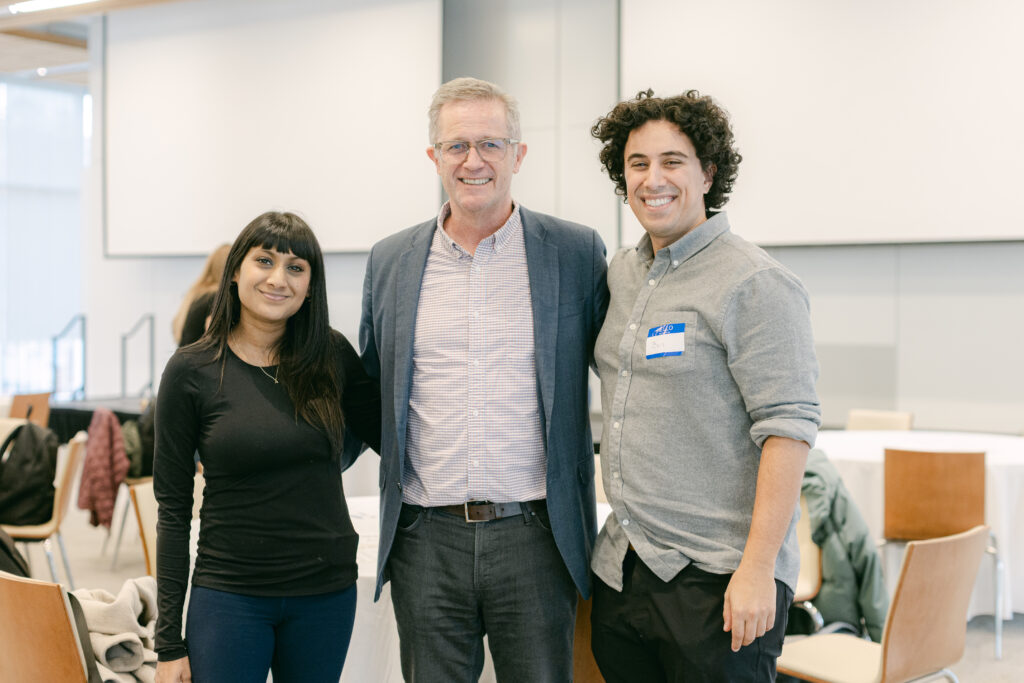
Ramya (left), Dr. Bruce Verchere, Co-Director at the Centre (middle), and Dr. Benjamin Mammon, another member of the T1D Lived Experience Advisory Group (right). Photo credit: Macy Yap
Type 1 diabetes stories help shape research
Ramya Hosak was diagnosed with type 1 diabetes (T1D) at age 19 while attending university. Since then, she has been a devoted volunteer, helping others navigate the challenges of T1D and the steep learning curve that accompanies a life-altering diagnosis.
As co-chair of the T1D Lived Experience Advisory Group at the Breakthrough T1D Canucks For Kids Fund Centre of Excellence at the University of British Columbia (UBC), her perspective helps guide the Centre’s research and connect the T1D community with the researchers advancing cures. Her voice is just one of many representing a diverse group of faces and stories, working with researchers to drive innovative therapies.
Ramya’s passion is nonprofit work, specifically in social justice, community development, and equal access to healthcare. To better unite the T1D community in BC, she co-founded Young and T1, a local support group that helps young adults with T1D through the transition to adulthood.
We asked Ramya to share the reasons behind her incredible volunteering and what T1D research means to her.
Breakthrough T1D Canada: Can you tell us about your T1D diagnosis?
Ramya: I was diagnosed in my second year of university. Super tired and barely able to keep my eyes open in the lecture hall, I was constantly chastising myself. “Don’t be a wimp, everyone else is struggling with midterms and finals, get it together and toughen up, Ramya,” I thought to myself as I chugged a litre of juice.
But I kept getting weaker. Eventually, my parents dragged me to the hospital, practically carrying me to the ER. That’s when I found out, at 19 years old, that T1D can occur at any age, not just in childhood. Initially, I was relieved at the diagnosis that explained my recent exhaustion. Yet as time went on, questions arose that couldn’t be answered by medical professionals who hadn’t been in my position. My parents and friends assumed that as a responsible adult, I had things under control and was fine.
But I wasn’t fine. I went from being a student who enjoyed an active social life, going out with my friends without a second thought, to suddenly having to be so careful. I felt a need to act like everything was fine and hide the toll that the invisible full-time job of T1D was having on me, mentally and emotionally.
I stopped reaching out to my friends for fear of being seen as a complainer and not having a positive attitude. I went through a period of extreme depression, feeling like no one “got me.” But after graduating from university, I started getting better and began meeting others my age with T1D.
Breakthrough T1D Canada: What drew you to participate in the Centre’s T1D Lived Experience Advisory Group?
Ramya: My undergraduate degree was in Health Sciences, and research has always held an interest for me, particularly as my mom is a cancer researcher. I’ve grown up hearing about her excitement, disappointments, and long days/nights that come along with being a researcher. I respect this work immensely, and to be able to work with researchers who are working so hard to find a cure for diabetes and bridge the gap for those living with T1D has always been very important to me. Similarly, I love the questions researchers ask me about living with T1D and helping them to understand why their hard work truly matters.
Photo credit: Macy Yap
Breakthrough T1D Canada: How do you feel about the cure research happening at the Centre?
Ramya: Excited! Not just for me, but for the future generation! I truly believe a cure is in sight, and having had my first child recently (September 2025), the potential to eliminate T1D in the generations to come is such a wonderful thought.
Breakthrough T1D Canada: What research excites you most?
Ramya: I find Dr. Megan Levings’ work on immune system regulation as it relates to T1D particularly interesting. I work at the Kidney Foundation of Canada and have seen her work in the transplant field come up as well. It’s exciting to see research in immunology having the potential to lead to additional breakthroughs in other health-related issues.
Breakthrough T1D Canada: What are your hopes for the future of diabetes?
Ramya: My hope is that within the next generation, T1D markers can be identified in at-risk patients before disease onset or at early onset, and the correct therapies can indefinitely prevent it from fully taking place (by preserving remaining beta cell function, etc.).
“The real glory would be never having to carb-count, constantly be checking my blood levels and worrying about how every variable of life impacts my glucose numbers and therefore how I feel physically and emotionally throughout the day with this 24/7 invisible job. So much mental space would be freed up.”
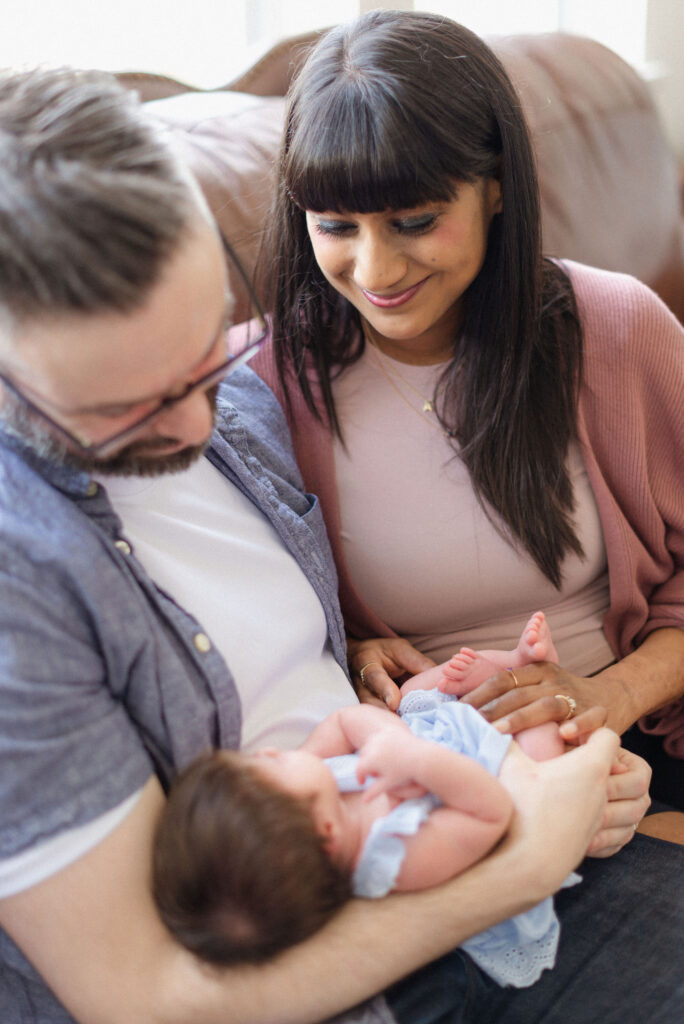
Ramya with her husband, Mark, who also lives with T1D (diagnosed at age 10), and their newborn daughter.
Breakthrough T1D Canada: What prompted you to launch Young and T1?
Ramya: Upon diagnosis, I started volunteering for Breakthrough T1D (then JDRF), and when working with youth ambassadors, it was so amazing to hear kids meet other kids who shared the same diagnosis. They told stories of bullying at school when their pumps were seen as strange, compared pump colours with each other, and it was just so normal.
I really wanted a community that “got” what living with T1D in adulthood felt like. T1D gets lonely. I hear this a lot. Young people at this transition stage often feel uncomfortable speaking with their doctor or parents about complex issues that arise for an adult with T1D. Thirteen years ago, I did not realize what an awesome resource Young and T1 would be—for myself and now over 700 individuals in BC—for learning and sharing with one another.
Through meeting folks with similar daily struggles, and living with my husband Mark, who also has T1D, I have learned that all bodies are different. One size does not fit all in T1D management, and getting as much information available to us as possible is important. By conveying our struggles and successes with one another, we all benefit from shared knowledge.
—
Breakthrough T1D Canada is grateful to Ramya for sharing her story and helping our researchers accelerate breakthroughs. Knowledge sharing is critically important not just among the T1D community but also among the researchers who will one day bring cures to the community.
Breakthrough T1D oversees T1D research worldwide to ensure that teams are collaborating and sharing learnings. The Breakthrough T1D Canucks For Kids Fund Centre of Excellence at UBC is a prime example of that collaboration in action, with over 40 multidisciplinary researchers working together to tackle all angles of cure research.
The Centre is a key pillar of our $100M Campaign to Accelerate, a national campaign with a global impact. Read about research highlights from year 4 of the Centre’s three interconnected research themes advancing cures here.
Philanthropic donors are advancing promising cure research in BC and around the world. To learn more about these exciting projects or to make a leadership gift, please contact:
On January 6th, 2026, Encellin (California, Quebec) reported positive interim results of its Phase 1 clinical trial of encapsulated islets in people with type 1 diabetes (T1D), which is being carried out in Toronto and Montreal.
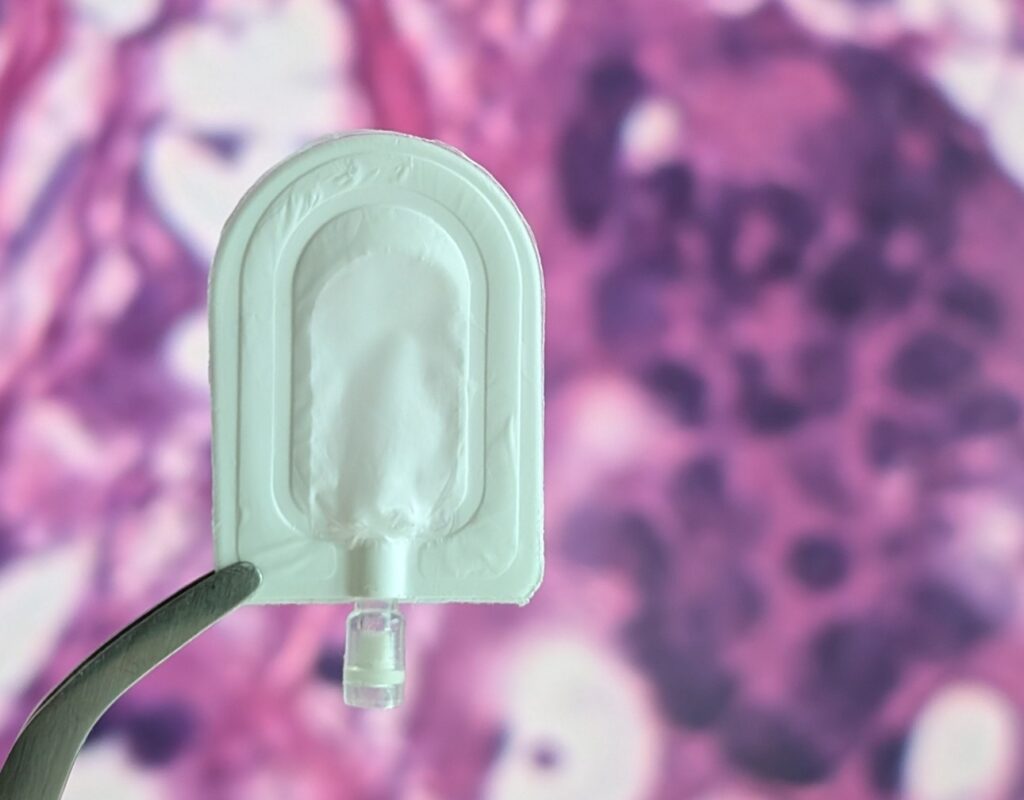
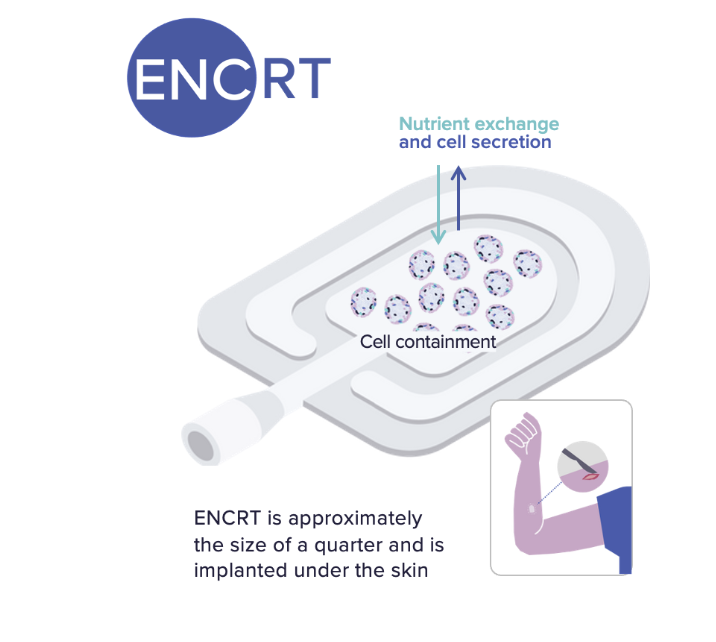
Trial Details: In Encellin’s trial, cadaveric human donor islets are being encapsulated in Encellin’s Encapsulated Cell Replacement Therapy (ENCRT) device and implanted into adults with T1D. This first-in-human trial is assessing (1) safety and adverse events, (2) cell survival within the device, and (3) fibrosis, or scarring, around the implants.
Interim Results: As planned, ENCRT devices were removed from the initial five participants after 4 months of implantation. Analysis of the removed devices show:
minimal to no fibrosis (formation of scar tissue around the device);
robust formation of blood vessels around the device;
viable islets inside the device.
These results indicate that the device has the potential to host islet cells while maintaining sufficient oxygen and nutrient flow for the cells to work effectively.
Historically, macroencapsulation devices (which act like a teabag to enclose the islet cells) have had limited success due to high levels of fibrosis that prevents cell survival, reduces the ability of the cells to access oxygen and nutrients, and limits the release of insulin. The preliminary finding that fibrosis is not occurring with Encellin’s device is therefore a critical step toward overcoming the barrier of fibrosis with islet encapsulation devices and advancing the development and delivery of cell-based therapies for people with T1D.
We will continue to report updated results as they become available.
Breakthrough T1D’s Role: Encellin’s technology was originally developed within the Lab of Dr. Tejal Desai (University of California San Francisco) with funding from Breakthrough T1D, which was crucial in the formation of Encellin as a company and attracting subsequent venture capital.
While we look forward to the year ahead, we want to also reflect on 2025 and the breakthroughs we saw, in type 1 diabetes (T1D) research, advocacy, community engagement, and more. We were also able to host successful events and community initiatives across the country.
Our first full year as Breakthrough T1D Canada was one of impact. And while we may have a new name, our mission and commitment to the T1D community didn’t change; it was only strengthened.
Our incredible community of donors, volunteers, and supporters are the heart and soul of everything we do, and thanks to them it was a transformative year. We committed substantive funding to research, further developed partnerships in academia with new fellowships and grants, continued to support newly-diagnosed people, and our adult T1D community, reinforcing our commitment to being a source of trusted information and support to all Canadians affected by T1D, at any age and any stage of their journey with this chronic disease.
Curing T1D is and remains our north star, while we work to improve the lives today of the estimated 300,000 Canadians with T1D until we have a world free from type 1 diabetes.
Launched ‘Beyond the Numbers’, a compelling video series that features real stories about mental health challenges and T1D
Seeing improvements in device access in Newfoundland and Labrador and Saskatchewan, while continuing to advocate to other provincial and federal governments for increased support
Reaching thousands of Canadians impacted by T1D through our Breakthrough T1D Education Series, bringing experts into their homes to discuss topics important to them.
Thanks to donors to the $100M Campaign to Accelerate, the Breakthrough T1D Canucks For Kids Fund Centre of Excellence at UBC marks four years of innovation
Continuing a successful partnership with the Canadian Islet Research and Training Network (CIRTN) and announced a third cohort of co-funded trainees
Vertex FORWARD trial of Zimislecel (previously called VX-880) is currently the most advanced stem cell-derived islet replacement trial. Of the 12 individuals that have reached the one-year mark post-transplant, all have resolved severe hypoglycemic events, reduced HbA1c to 7% or less, and 10 of 12 are off insulin
In disease-modifying therapies:
Interim results presented from Sanofi’s PETITE-T1D trial demonstrated acceptable safety of Tzield in kids aged 0-7 with early-stage T1D
To read more about research updates and stories of people living with T1D, please visit www.breakthrought1d.ca/blog.
As we head into 2026, we pause and reflect on how truly grateful we are for the support of our donors, volunteers and the commitment of the T1D community. We’re very excited to approach this new year with renewed vigour, working to build on these breakthroughs and continuing to push our mission forward.
And thanks to your generosity, cures have never been closer.