Donor Spotlight: The Commercial Real Estate 100 Challenge

To commemorate the 100th anniversary of the discovery of insulin, JDRF launched the $100M Campaign to Accelerate – a bold initiative to help finally free people from the monster that is type 1 diabetes (T1D). Though the pandemic posed challenges across industry, individuals working in commercial real estate came together to help JDRF achieve its ambitious fundraising goal.

JDRF volunteer John O’Bryan initiated the 100 Challenge asking 100 leaders from the commercial real estate sector to each contribute towards a $1 million goal. Together with campaign volunteers Yogini Narine, Vanessa Oliver, Fred Rubinoff, Peter Senst, and Chris Tambakis, along with more than 100 of their fellow colleagues across Canada, they succeeded!

Their contributions will be matched as part of JDRF’s partnership with the Canadian Institutes of Health Research (CIHR). The result is an incredible $2 million to fund the path to a cure for T1D.

JDRF was able to talk to John about what drove him to organize this challenge, and why helping to slay the T1D monster is so important to him and his fellow volunteers.

*Please note that some of the answers have been edited for clarity and length.

JDRF: How did you get involved with JDRF?

John O’Bryan: I have no personal connection with diabetes. With me, it was more that as an organization (CBRE) where I was the chairman and am now still the honorary chairman, they were very committed to the Ride. I got involved in the first year and really enjoyed it – enjoyed the people, enjoyed the event, I enjoyed bringing together lots of different people in the industry. And then Dave (Prowten, JDRF President & CEO) gave me a call just before Christmas and spoke to me about your plans for the 100th anniversary. Based on that conversation, I became involved with the Campaign to Accelerate.

JDRF: How did the idea for the 100 Challenge campaign come about?

John O’Bryan: I understood the significance of the 100th anniversary, and so the fact that the $100 million goal was synchronistic with the nature of the number wasn’t lost on me. And it was certainly not an unambitious number.

I came up with this concept of the 100, which was to try and get 100 real estate executives to contribute towards a $1 million goal. I then went back to Dave and laid out the whole campaign for the 100 to see if it was something he felt that JDRF could embrace.

JDRF: How did you manage to do it so quickly?

John O’Bryan: I chatted with a couple of friends of mine. Ken Silva at CBRE said “If you embark on this campaign, I’m in.” And Yogini Narine on his executive team jumped on board and said, “whatever logistical help you need, I’ll help.” They were very supportive and instrumental in helping me out.

What I wanted to do was engage people on the fundraising side of JDRF, the volunteers who are in the real estate business – Chris Tambakis, Vanessa Oliver and Fred Rubinoff, all of whom I knew.  And I tried to come up with a list of names and tried to get the number to about 50. We went from Newfoundland to BC, and I think in every province in Canada, we got representation.

The idea was not to engage companies but to engage people. These were quintessentially personal donations. But basically, an entire industry rallied around this campaign and so I thought it would inspire others.

I think due to the pandemic, people were ready to embrace things that were helpful. I think it was at a time when there was certainly a very receptive audience for this message.

The speed, to be honest with you, did surprise me. I think that was a combination of the cause, the relationship we had with those individuals, but most of all, it was the real estate community. I’ve been in this industry since 1972. It has always been and has accelerated over the years to be a wonderfully warm community. It welcomed me in as an immigrant, and it has grown to a point now where it’s a major force for good. 

JDRF: Why is this particular 100 Challenge campaign unique?

John O’Bryan: To some extent, I don’t think it is. One of things that I’ve noticed when your life has been touched by tragedy like cancer, heart disease, diabetes, you become very committed to the cause and sometimes it’s hard to understand why other people aren’t as committed as you are. And obviously it’s simple when you stand back, which is that they’ve got causes that speak to them.

The easier part of the conversations I had was that you really don’t have to explain diabetes to anybody. If it hasn’t touched your family, it has certainly touched people around us. There were times when I got off the phone and I might have had another call scheduled, but I had to cancel a couple of them because they were very emotional calls.

JDRF: What’s your hope for the Campaign to Accelerate?

John O’Bryan: The hope is that we can move the dial for people. The hope is – all research takes twists and turns and nothing is ever easy when you’re working with diseases – but you just want to make people’s lives better.

If you live in Canada and you’ve achieved any sort of success in your business, you’re such a small fraction of both the population of Canada and more importantly, of the planet. You’re in such a privileged position. It’s something that I think lots of people feel and believe and we’re all looking for ways and outlets to express that. And it’s to give back. I can’t think of a better expression than to pay it forward. Help other people. Just do your best to reach out and help.

With this campaign, you’re trying to raise $100 million, and you start with $10,000. That’s the essence of it. You must start somewhere. That to me, was the whole rationale behind the 100 Challenge campaign. If you can raise $1 million, you’ve only got 99 to go. And then when the other campaigns started to lift off, you might be able to make a significant dent in $100 million. People were very happy to contribute en masse.


JDRF thanks John O’Bryan and his co-contributors in the commercial real estate industry for their incredible contribution to the Campaign to Accelerate. The matched donation will contribute $2 million towards vital type 1 diabetes research. John hopes to spur other industries to hold similar challenges of their own.
Manipulating the Microbiome to Prevent Type 1 Diabetes

Type 1 diabetes is an autoimmune disease resulting in a lifelong dependency on insulin treatment and a risk of serious long-term complications. The cause of the disease is unclear, although both genes and factors in the environment seem to be important. As new cases of this burdensome and costly disease are on the rise in almost every country around the world, finding ways to prevent and better treat type 1 diabetes are top research priorities.

In the past decade, research has shown that changes in the gut microbiome – the microbial community that colonizes the intestine – precede the onset of type 1 diabetes in young children. Most of these studies highlight a potential link in the first years of life when the microbiome is highly dynamic and heavily influenced by environmental factors such as mode of birth delivery, diet, infections, and antibiotic use. JDRF and other funders have invested heavily in this area, supporting studies such as the DIABIMMUNE Study, BABYDIET, and TEDDY, which all helped to point researchers towards new therapeutic opportunities. In addition, for many years, JDRF led an international consortium that brought researchers working in this area together on a regular basis to share ideas, compare data, and accelerate progress.

The field is now focused on testing whether manipulation of the microbiome with drugs or diet can delay or even prevent the disease altogether. Other studies are attempting to figure out how changes in the gut microbiome could signal a person is at risk of developing type 1 diabetes.

Dr. Jayne Danska, a professor at the University of Toronto Faculty of Medicine and a senior scientist at The Hospital for Sick Children, is working at the cutting edge of this field. In late 2019, she was awarded a $2 million CAD team grant from JDRF and the Canadian Institutes for Health Research (CIHR) to advance her work studying the role of the gut microbiome in altering risk and progression of type 1 diabetes. She and her team previously showed that deliberate manipulations of the gut microbiome can inhibit autoimmune responses in an experimental model of type 1 diabetes. The new five-year project seeks to understand how environmental changes influence the gut microbiome in infants with genetic risk for type 1 diabetes. The team will attempt to define exactly what risk-associated microbes do inside a developing infant, and how they affect the immune response to either protect against or potentiate the disease. The ultimate objective of Dr. Danska’s work is to identify new therapeutics to prevent type 1 diabetes.

We are facing a moment in time that can forever change the landscape of type 1 diabetes research, with better treatments and cures on the horizon. JDRF is striving to speed up research progress in any way we can. We are constantly scouting for the best ideas, the brightest talent and the innovative project that will bring us the next real breakthrough.

In partnership with Media Planet

Joseph and Rosalie Segal and their family give a transformative gift to help fund JDRF’s Centre of Excellence at UBC

Joseph Segal is a 96-year-old World War II vet and renowned business tycoon. As the founder of Fields stores and President of Kingswood Capital Corporation, Joseph Segal has built an impressive empire, but perhaps his most tremendous success comes in the form of his and his family’s philanthropy. Recently, JDRF was the recipient of his family’s incredible generosity, receiving a $1 million contribution to fund the JDRF Centre of Excellence at the University of British Columbia as part of its Campaign to Accelerate.

This Centre will be the first of its kind in Canada, among just four others worldwide. In Vancouver, world-class researchers are poised to bring therapies to the clinical testing stage to cure T1D and positively impact other autoimmune diseases. 

The JDRF Centre of Excellence will be a game-changer for T1D research. Joseph and Rosalie Segal and their family have helped to set that change in motion.

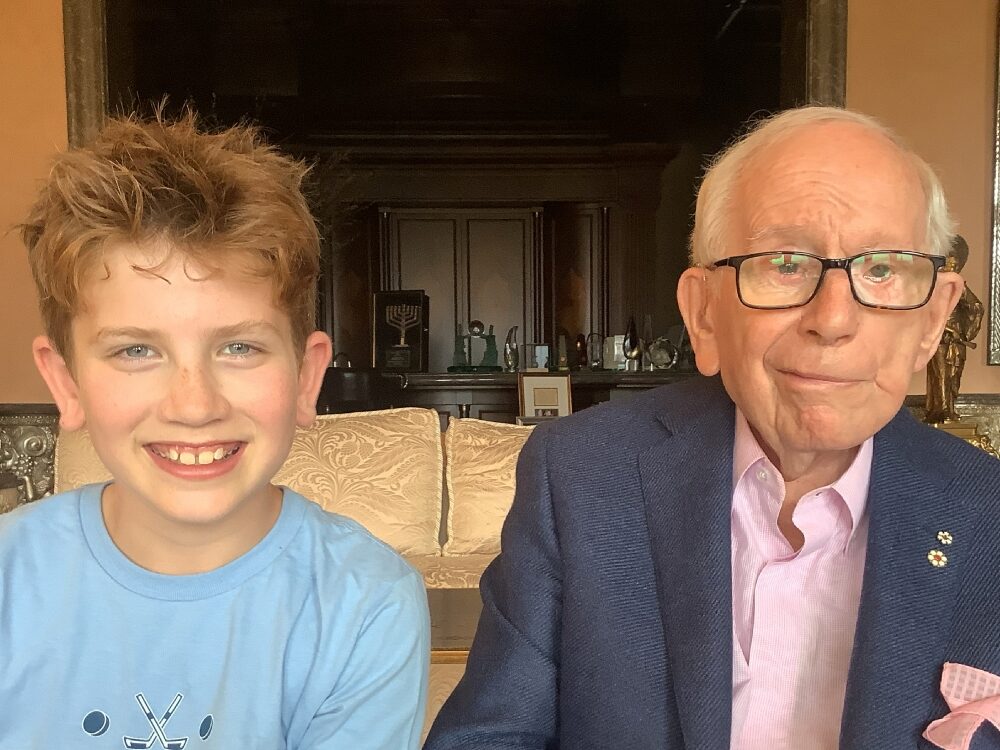
JDRF had the opportunity to speak to Joseph and his grandson Danny Miller about what prompted their contribution.  See the interview below from May 13, 2021:
JDRF: Mr. Segal, Please tell us more about what causes you feel strongly about and why?

Joseph Segal: I could sum it up in one word: everything.

We feel that every cause that has a genuineness to it is important. So I could say mental health, I could say Vancouver General Hospital, I could say education because education is the answer to most of the tragedy in the world. So every cause is important. But, there are other causes that most people don’t look at when you have a situation – an individual who needs a little bit of help – maybe $5,000, maybe $3,000, perhaps $10,000; and they don’t know where to turn. They have nowhere to turn. Those are causes that are below the surface, and those are the causes that are important because it gives the individual a little bit of encouragement. It makes the individual feel that you care. Those are the causes that go unseen. But those are the causes that have as much impact as giving to what everybody else gives to.

So, you have to have somebody who you can look to who will give you a hand. That’s simple. And that’s a very necessary part of society that is, to a large degree, overlooked.

JDRF: Mr. Segal, why is giving important to you personally?

Joseph Segal: You have an obligation in society to give because you truly feel you want to give. That is a different situation than giving because you have to give.

I can remember days when I didn’t have that much, and my first major contribution was $100,000, which was the value of my house. So, I was essentially giving away my house. But, I thought, I’ll make it back. So, it’s not a question of saying, I’m giving back –  you have to say I’m giving what I can.

The individual who gives $2,000 is equally as important as the individual who gives $1 million because nobody gives anything that they’re going to miss. But the $2,000 contributor is probably going to feel it more than the $1 million contributors.

JDRF: Mr. Segal, how do you and Rosalie make decisions on what to fund?

Joseph Segal: Most people probably have a dialogue, and they try to determine if it’s important or not important. I’ve been married 73 years next month, and in 73 years, I have never, ever had a difference of opinion or discussion around any charity that we decided to support. She has charities that I don’t even think about to support. I have charities, make a decision, make a commitment, and fulfill the commitment. That’s the end of it. We do it together.

There has never been a difference of opinion to what is necessary because when the cause is right, it doesn’t matter who makes the decision. If you can, you support the cause to whatever degree you feel inclined.

JDRF: Mr. Segal, what made you become our first donor to the JDRF Centre of Excellence at UBC?

Joseph Segal: There are many reasons that I did it, but the first reason is that it’s worthy.

There are many causes that are universal, and diabetes is universal. It’s an important step towards solving a major problem. It is like the vaccination for COVID-19, if you didn’t have it, what would you have? Chaos around the world. So, it is not about the obligation to find a solution but about the will to find a solution to one of the problems that are so important in society. Juvenile diabetes is one thing, and then as you become an adult, you still have diabetes because there is no solution to it. Because I have had an exposure with a family member or two who have suffered from diabetes, and it’s a debilitating disease if you don’t manage it. People that don’t have it probably don’t understand the necessity of managing it properly.

So, you’re not just doing a good job, you’re fulfilling a major need for the community, and if you get this off the ground, if they find just a little bit of a cure – a partial cure – open the window and let the fresh air in, that’s what you’re trying to do.

Once you find a solution, you will enhance the lives of so many people, and that was the reason.

JDRF: Mr. Segal, a major component of the Centre of Excellence, is being flexible and adapting as the research changes. How does that adaptability align with your business ethos?

Joseph Segal: If you want to be successful in life, you need flexibility. You can go down the road, and you can say “I am on the right road” and you can drive 100 kms, and then you’ll say “I’m maybe on the wrong road”. So, when you’re into research, and I’m not familiar with research, but I can imagine that when you’re in research, you’ll find something you didn’t anticipate. And maybe that opens up a whole new road, and you pursue that road instead of the other road.

Without flexibility, it can take twice as long to find the answer and find the road.

You have to be optimistic too. You have to believe that the mission you’re on will have an end and that you’ll be happy with it. If all your researchers have the same attitude, then their profession is going to yield results.

JDRF: Mr. Segal, where did your philanthropic value system come from, and how have you instilled it throughout your family?

Joseph Segal: When we got married 73 years ago, I didn’t have anything; I was in the army and overseas in Europe (Belgium, Germany).  When I came back and saw my wife, I said “That’s the girl of my dreams,” and I married her. We both set the example for our children and, fortunately, they have the same attitude.  They’re involved in different areas and different communities. I attribute that entirely to my wife.

I don’t have any words of wisdom. All I know is that you have a cause. The cause is legitimate, the cause is vital and if we can do a little bit to further the development and the understanding of this disease, then we will have contributed to the world;  like Banting (and Best) with insulin.  

I’m not telling you that to impress you. That has been the attitude that I have lived with all my life.

Joseph and Rosalie’s grandson Danny Miller is the co-Chair of the JDRF Centre of Excellence Campaign, and Danny’s son Cody has T1D:
JDRF: Mr. Miller, how have your grandparents’ legacy of generosity inspired you?

Danny Miller: Well, how can it not inspire you?

I’ve heard Grandpa say many times that it doesn’t matter whether it’s $2,000 or $2 million; you give what you can if the cause is worthy. And that’s exactly right. What might be a little to me might make a huge difference to somebody else, and that’s always been in the back of my mind. So, I try to live that way, and so do my wife Jennifer and our kids.

It’s really inspiring to see the generosity and the fact that no cause is too small or too unimportant as long as it’s worthy and genuine, then it’s important to support it. That’s what I’ve learned.

JDRF: Mr. Miller,  what does the JDRF Centre of Excellence at UBC mean for you?

Danny Miller: Freedom. Being able to relax and not worry about what’s going to happen to my kid at any given time.

Vancouver is already a world-leading research hub for type 1 diabetes research, so the opportunity to take all those world-class researchers and bring them all together and make 1+1 =3 is something that I couldn’t NOT support.

It’s something we had to support because it’s just too obvious, the need. If you take an important cause and bring the best people together and help them work together even better, only good things can happen.

To my grandparents, I’ve said this to you before, thank you so much for taking the lead on this because it’s really important to me and Jen and my parents and Cody and his brothers. It’s just a really important cause and thank you.


JDRF thanks Joseph and Rosalie Segal and their family for their incredible generosity. Their contributions will help to accelerate the most promising research into cures and help us one day realize a world free from type 1 diabetes.

#AccessForAll in the age of COVID-19

May 5, 2020

As COVID-19 continues to dominate global headlines, the journey to #AccessForAll remains. In fact, within a few short months, the investment into virtual healthcare and digital health technologies has become even more of a priority for provincial healthcare systems across the country. Patients and doctors are still finding a way to connect without having to meet in person, and that is becoming our new normal in light of the current pandemic.

When the dust settles and provinces start to open up again, virtual care will still be a viable option that will reduce hallway healthcare, save considerable resources, and be a convenient option for patients and doctors alike. In order to roll out virtual care successfully, and more permanently, considerable investments in digital health technologies such as Continuous Glucose Monitoring (CGM) and Flash Glucose Montoring (FGM) need to be made, and every patient who desires one should be able to have access through public coverage.

Our #AccessForAll campaign is working towards ensuring that every Canadian living with type 1 diabetes has access to affordable technology. CGM and FGM technologies represent an evolution in the self-management of the disease because they provide richer, more accurate and more timely data to doctors and patients about fluctuations in blood glucose and time in range. This rich data promises to revolutionize how health care teams interact with and guide patients, leading to better diabetes management over the long-term. More and better data means better decision-making for patients, which ultimately leads to better self-management of their disease. As a result, we will undoubtedly see substantial improvements to healthcare in the form of reduced hospitalizations, emergency room visits, and longer-term issues such as amputations, heart disease, stroke and kidney complications.

CGM and FGM have already been game changers for the type 1 diabetes community – they are already helping people live safer, easier and healthier. Unfortunately, they still largely remain unaffordable and inaccessible, especially for those who need it most.

JDRF continues to mobilize our #AccessforAll campaign, and we need your help to tell your provincial representative this story, in light of the new situation we find ourselves in with COVID-19. To support the campaign, take a few minutes to send a message to your representative, and you will be voicing important concerns in response to a new era of healthcare. Send a message today!

Donate | Donnez