Together on the Hill: Our T1D Community Made an Impact 

To every delegate who walked the halls of Parliament this year, this blog is for you. 

T1D on the Hill 2026 was about more than meetings and metrics. It was about people. It was about families, kids, parents, adults living with type 1 diabetes, and the shared belief that progress happens when we show up together. 

And show up you did. 

BreakthroughT1D delegates on Parliament Hill
May 4, 2026: Breakthrough T1D members on Parliament Hill in Ottawa. Photo by Dave Chan.

On May 4th and 5th, 28 delegates from across Canada met with Members of Parliament, Senators, and senior staff. In total, 49 parliamentarians engaged with Breakthrough T1D Canada and learned about the Breakthrough T1D Network Canada. We can confirm, the reception to our message was overwhelmingly positive. 

What made the difference was you. 

Delegates spoke with confidence, clarity, and heart. You shared personal stories that brought the realities of type 1 diabetes into sharp focus. You explained why 2026 is a critical moment for research and access. You showed decision-makers that T1D is not abstract or theoretical. It is something families live with every single day. 

The feedback we heard again and again was that the message was clear and compelling. Parliamentarians appreciated the materials you shared, the focused ask, and the fact that everything fit into a meaningful conversation. Many asked thoughtful questions. Many requested follow-ups. And many committed to helping move this work forward. 

There were real and tangible wins. We secured commitments from MPs and Senators to champion the Breakthrough T1D Network Canada internally and we identified strong allies across parties. We saw statements made publicly in the House of Commons and the Senate. We opened doors with central agencies and built new connections that will support the path ahead. 
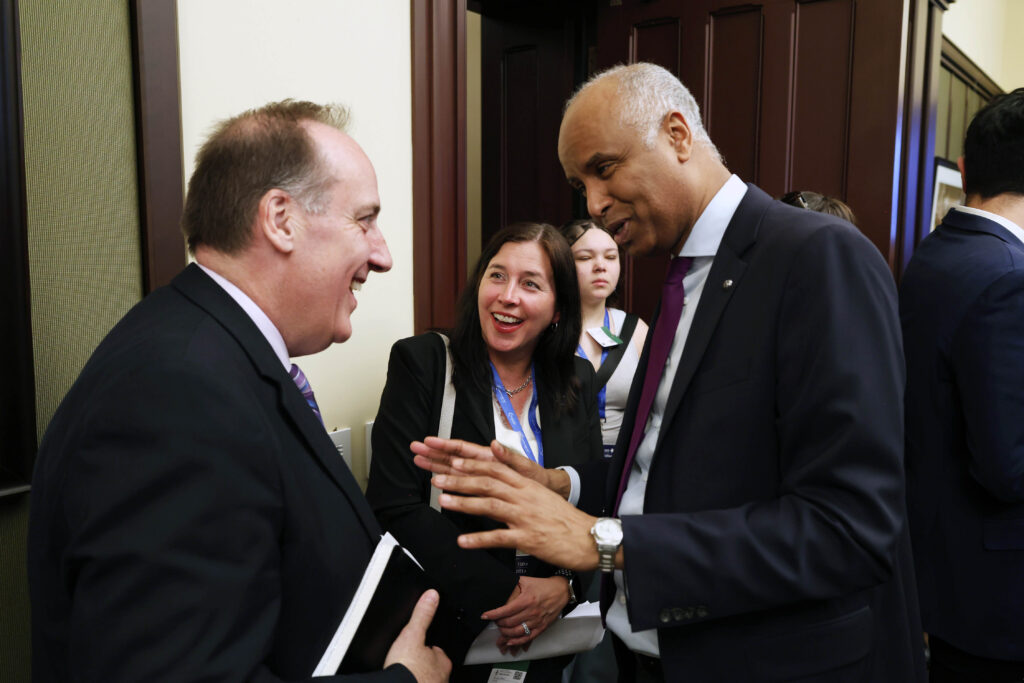
BreakthroughT1D delegates on Parliament Hill
May 4, 2026: Breakthrough T1D members on Parliament Hill in Ottawa. Photo by Dave Chan.

These outcomes matter, but they only happened because our delegates were prepared, supported, and brave enough to speak from experience. Kids and their parents spoke not only about their daily challenges, but about why a cure matters to their future. Adults living with T1D spoke about the daily mental and physical load of managing this disease, the financial burden, but they also shared how a cure would impact their lives. Together, you struck a balance between policy and humanity that left a lasting impression. 

One of the most powerful moments of the week came at our reception. More than 90 people filled the room, including over 20 MPs and Senators. The energy was unmistakable. Conversations flowed easily. Parliamentarians stayed, listened, and engaged. It was a clear signal that when our community gathers, people pay attention. 
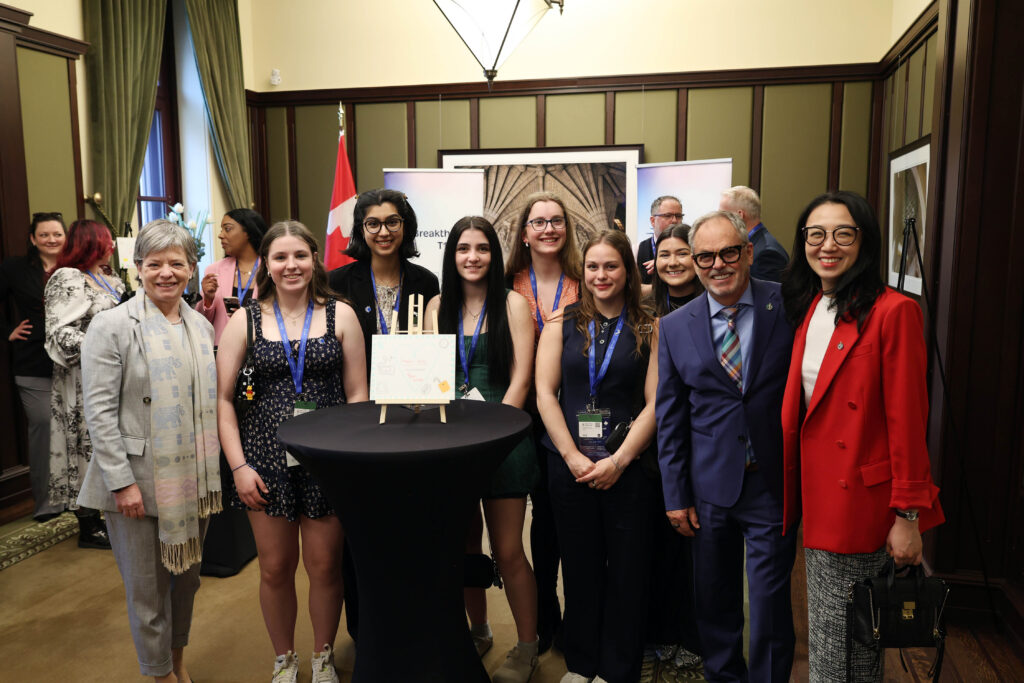
BreakthroughT1D delegates on Parliament Hill
May 4, 2026: Breakthrough T1D members on Parliament Hill in Ottawa. Photo by Dave Chan.

This year also marked an important evolution for T1D on the Hill. With new Breakthrough T1D branding, a more centralized government relations approach, and board members working closely with delegates, the effort felt cohesive and purposeful. Kids and adults advocated side by side, showing that T1D affects every stage of life and that solutions must too. 

There is still work ahead. Questions about research funding and science will continue. Follow-ups with offices and committees are already underway. But the momentum is real, and it was built by the collective effort of this community. 

To our delegates: thank you for your time, your preparation, and your courage. Thank you for sharing your story and for lending your voice so that others living with type 1 diabetes may someday live with less burden, and eventually, without this disease. 

T1D on the Hill 2026 reminded us of something powerful. When our community comes together, we don’t just ask to be heard. We are heard. 

If you’d like to help keep this momentum going, we invite you to send a letter to your MP by clicking the link below. https://Advocacy.BreakthroughT1D.ca/page/188437/action/1 We’ll keep you updated on our progress in the months to come! 
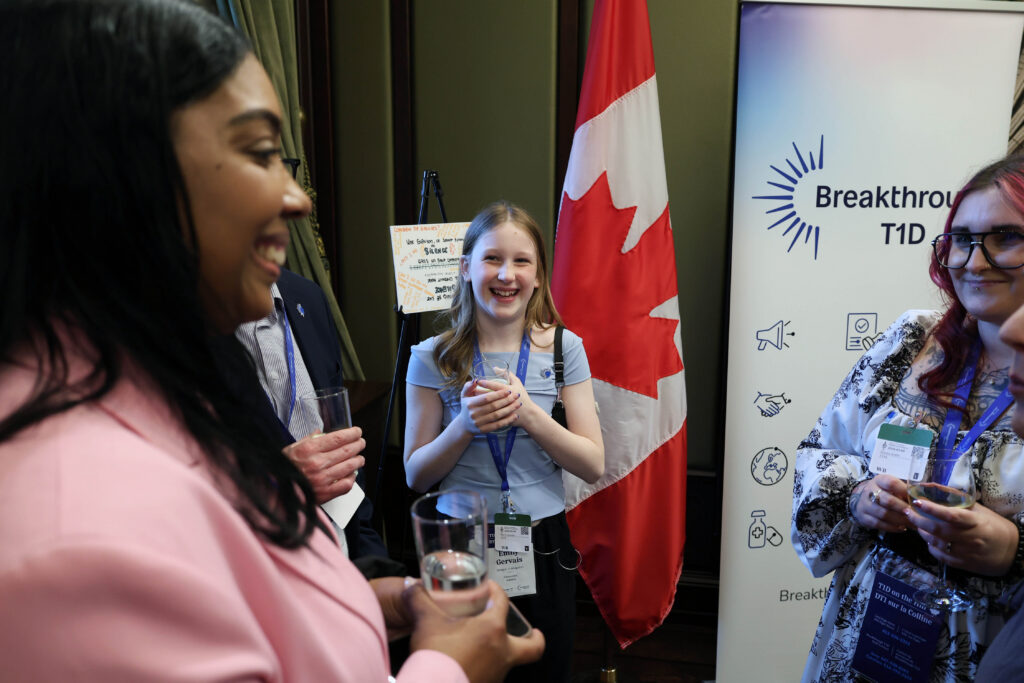
BreakthroughT1D delegates on Parliament Hill
May 4, 2026: Breakthrough T1D members on Parliament Hill in Ottawa. Photo by Dave Chan.

A new step toward cures for type 1 diabetes in Canada

If you live with type 1 diabetes (T1D), or love someone who does, you know how much daily effort it takes to stay healthy and how urgently better treatments and cures are needed.

That’s why we want to share an important update.

Breakthrough T1D Canada has formally asked the federal government to partner with us to launch the Breakthrough T1D Network for Canada (BTNC) – a national effort designed to speed up the path to real, lasting treatments for T1D.

This proposal didn’t come out of nowhere. It was shaped over many months with input from dozens of stakeholders – researchers, clinicians, industry experts, policymakers, and members of the T1D community – all focused on one shared goal: making sure people in Canada can benefit from breakthrough therapies for T1D as soon as possible.

Why this matters for people living with T1D
Right now, some of the most promising T1D therapies in history are moving from the lab into human trials, including therapies designed to restore the body’s ability to make insulin.

But here’s the challenge: without coordination at a national level, Canada risks seeing those trials, expertise, and future treatments happen elsewhere, meaning Canadians could wait longer to access them.

The BTNC is about changing that.

It is designed to:
• Link expertise, ideas and efforts from across the country to reduce duplication and accelerate T1D research and innovation
• Bring T1D clinical trials to Canada faster
• Support more trial sites across the country
• Help ensure successful therapies are developed, tested, and delivered here at home

For the T1D community, that means earlier access to trials, clearer pathways to new therapies, and a stronger chance that life‑changing treatments reach people in Canada sooner.

What exactly is the Breakthrough T1D Network for Canada?
The BTNC is not a new building or a single research project.
It is a coordinated national network that would connect researchers, clinicians, hospitals, industry partners, and people living with T1D under one clear plan, with shared priorities, timelines, and standards.

In practical terms, the BTNC would:
• Actively manage a national portfolio of T1D research initiatives and trials
• Help trial sites launch and run studies more efficiently
• Support shared training, protocols, and knowledge‑sharing
• Work with partners to move successful therapies toward real‑world use

How this fits with Project ACT
If you’re familiar with Project ACT, this may sound aligned — and that’s intentional.

Project ACT is Breakthrough T1D’s global strategy to accelerate cell therapies as cures for T1D, by addressing not just science, but clinical trials, regulation, access, and health‑system readiness. The BTNC is a key part of how we’re achieving that strategy here in Canada. It focuses on making sure Canada has the systems, coordination, and partnerships needed to turn global progress into real access for people living with T1D here: not years later, and not somewhere else first.

Built with community and partner input
This proposal reflects conversations with dozens of stakeholders, including people from across the T1D research and innovation ecosystem. Their input helped shape a plan that is practical, realistic, and focused on results. We are grateful to the Stem Cell Network for their partnership and to the following organizations for their generous support of this stakeholder engagement work:

• Vertex Pharmaceuticals
• Sana Biotechnology
• Novo Nordisk Canada
• Allarta Life Science

Thanks to all those who participated in stakeholder consultations. Your willingness to share perspectives, ask hard questions, and keep the focus on people living with T1D helped strengthen this proposal and ensure it reflects real community priorities.

What happens next
The federal government is now considering our proposal.
If approved, this partnership would represent a significant step toward:
• Faster progress toward cures
• Stronger clinical trial opportunities in Canada
• A future where people living with T1D spend less time managing the disease and more time living their lives
• Global leadership for Canada in T1D research and trials

We’ll continue to keep you informed, and we’ll continue to advocate – alongside you – for a future without T1D.

Thank you for being part of this journey.

A historic moment for Quebecers living with type 1 diabetes: Looking back at the Autour du diabète de type 1 event

On March 17, at the Hilton Québec people from throughout the type 1 diabetes (T1D) community in Quebec gathered for an important advocacy event.

Jointly organized by Breakthrough T1D and Diabetes Québec, the Autour du diabète de type 1 event brought together for the first time in several years, Quebec diabetes organizations, as well as patients, clinicians, researchers, elected officials, and several industry partners.

More than just a gathering, the evening became a true collective call for justice, equity, and change—voiced together, in unity, and directed at decision‑makers within the Quebec government.

This atmosphere was warm and supportive, and reflected the diversity and strength of those in attendance:

  • Manon Lalonde and Anne‑Frédérique Simard, two women living with type 1 diabetes
  • Representatives from the medtech industry, including Abbott, Dexcom, Insulet, Medtronic, and Tandem, who came to express their support for the community
  • Staff members from Breakthrough T1D and Diabetes Québec
  • Members of parliament and key players within Quebec’s healthcare system

All were united around a clear objective: to end age‑based discrimination for insulin pump coverage in Quebec.

Heartwarming stories shared in support of an important cause

The central moment of the evening was unquestionably the conversation with Anne‑Frédérique Simard and Manon Lalonde—two individual life journeys but with one shared disease.

By sharing their stories, they brought the discussion back to what truly matters: human experience. With vulnerability and courage, they shared about:

  • Their diagnoses, one in childhood and the other in adulthood
  • The financial injustice faced when diabetes device coverage ends or is denied
  • The psychological impact of a living with T1D, a disease that is 24/7 with no breaks or time off
  • The immense burden created by unequal access to life‑sustaining and enhancing diabetes technologies

Their final message resonated deeply with the attendees:

“Access to insulin pumps should be a right, and their use a choice, regardless of the age at diagnosis.”

There was nothing more to add. Only to listen, and act.

A unified voice: organizations speaking together to advocate to Quebec’s provincial government

For the first time, there was public and powerful demonstration of unity among Quebec and national diabetes organizations with a shared goal.

Kim Hanson, Chief of External Relations, and Kim Lacombe, Chief Development Officer of Breakthrough T1D, represented the organization, and demonstrated their commitment to seeing through a change in the current inequitable access to insulin pump coverage in the province.

A particularly striking moment was the joint address by Kim Hanson and Susana Lazzaro, the new CEO of Diabetes Québec. Standing side by side, they delivered a powerful message: divisions no longer belong here, the community is united, the asks are clear: the time for change is now.

They reminded everyone of a simple truth that is sometimes forgotten: behind every administrative decision, every regulation, every delay, there is a person. There is a life affected.

And for people living with T1D, those decisions can mean the difference between more stable T1D management or unnecessary challenges. Patient choice is paramount, and every individual with T1D must be able to make their own decisions regarding their management.

Clear, essential, and urgent political asks

The presentation on advocacy priorities highlighted two requests:

  • That the Government of Quebec expand access to insulin pumps and their supplies for adults living with type 1 diabetes or latent autoimmune diabetes in adults (LADA)
  • That the Government of Quebec modernize RAMQ processes so approvals are faster, simpler, and ensure continuity of insulin therapy

The message was clear: Quebec can do better. And that Quebec must do better—as the only province in Canada that does not cover insulin pumps for people diagnosed with type 1 diabetes after the age of 18, this inequitable practice needs to change.

A resounding success—and a beginning, not an end

The evening concluded with a renewed spirit of mobilization and openness. Discussions were honest, human, sometimes emotional, but always driven by a shared vision: to build a Quebec where access to healthcare no longer depends on age.

The March 17 event planted something powerful. That the community is strong and that we know the solutions exist.

The next step is for Quebec to end age-based discrimination to diabetes technologies and provide every person living with type 1 diabetes with the tools they need to live fully, healthily and safely.

Closing thoughts

For everyone present that evening, a singular theme emerged: that collectively we witnessed a turning point, and this is a movement that goes beyond individual organizations.

Together, we started working towards needed change, and this event was only the beginning.

If you would like to add your voice to this important movement, you can support our advocacy efforts by signing the petition here.

Access for All moves out east

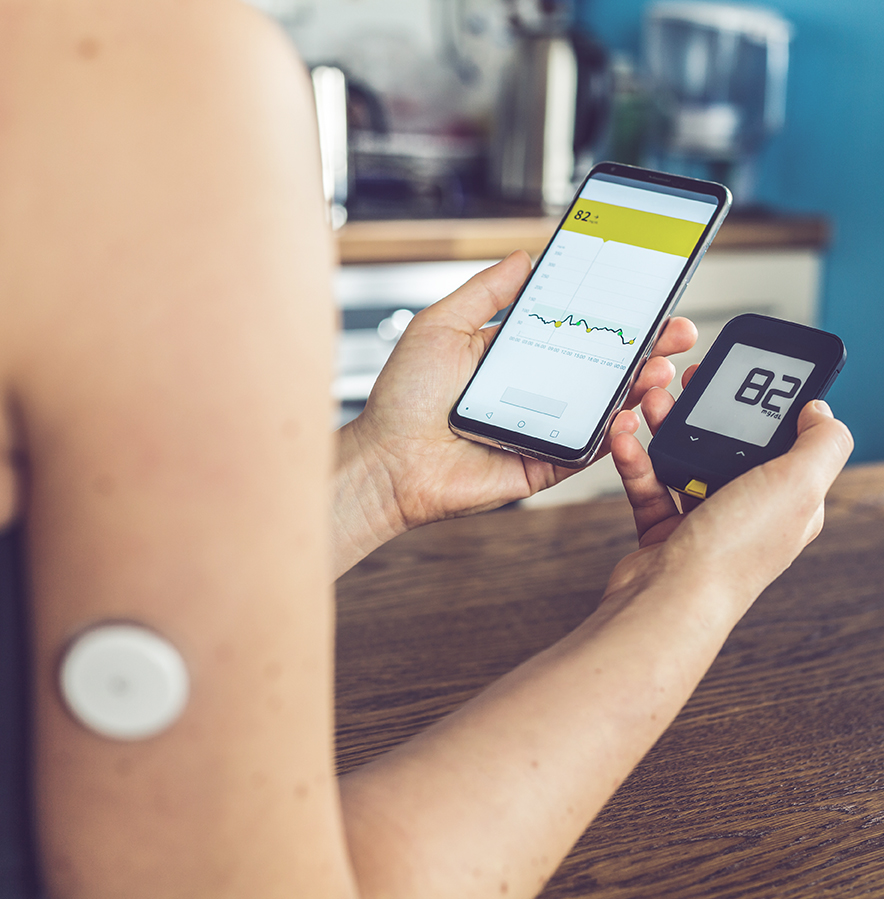
Since the #AccessforAll campaign launched in 2019, we have seen considerable success with five provinces and one territory introducing new coverage for Continuous Glucose Monitors (CGM) and Flash Glucose Monitors (Flash GM). As a result, thousands of Canadians living with type 1 diabetes (T1D) have been able to access this diabetes technology, reducing individual out-of-pocket costs considerably.

For 2022, the campaign is focusing on persuading the Atlantic provinces to also begin providing this much-needed coverage. Armed with additional data from a new cost-effectiveness study, as well as successful models from other Canadian jurisdictions, we are confident that we’ll be able to welcome more good news in 2022.

We began the year with a productive meeting with the Minister of Health in Nova Scotia, The Hon. Michelle Thompson. We discussed the benefits of offering coverage for Nova Scotians living with T1D, and potentially expanding the insulin pump program to those older than 25.

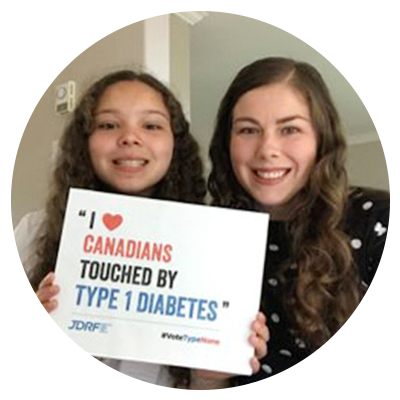
Mother and daughter, and JDRF advocates Amanda and Aaliyah Williams spoke to the Minister about how important patient choice is for those living with T1D. Aaliyah, who is 14 years old, shared how she initially started using a different advanced glucose monitoring device, and soon realized that it wasn’t working for her. Luckily, because she is covered by private insurance, she was able to make the switch to the device that helps her live a healthier and safe life. She has never been happier, but not everyone is as fortunate to have private coverage, and this is why we are urging the government to step up and fill those gaps.

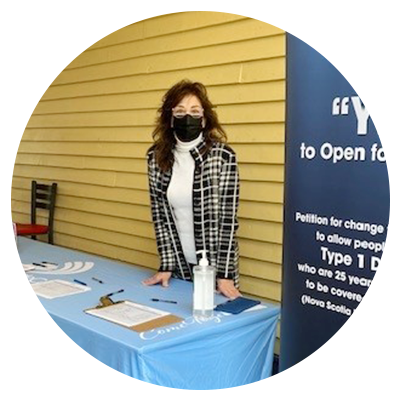
Leah Sutherland, a mother of a young adult living with T1D worries for her daughter who will age out of pump coverage next year. Leah’s daughter is at a critical point in her life, starting her career and not in a position to take on the cost of a pump and supplies, as they cost thousands of dollars per year. T1D does not end at 25, so Leah has been advocating tirelessly on behalf of her daughter, collecting signatures for a petition that will be presented in the legislature in the coming months.

We were also encouraged by PEI’s commitment to diabetes funding in their 2021 provincial budget. We, presented to Minister of Finance The Hon. Darlene Compton to make the case for CGM/Flash GM funding, and made a similar appeal to the Minister of Health in Newfoundland, The Hon. John Haggie.

We look forward to working with the Atlantic provinces to ensure that the T1D community is supported in their efforts to increase public coverage for insulin pumps and advanced glucose monitors (CGM and Flash GM). To support the campaign, please take a few minutes to send a message to your representative. You will be voicing important concerns in response to a new era of healthcare. 

A Year in Review: Why Advocacy Matters

Why advocacy matters

The driving force behind JDRF’s government relations and advocacy strategy is to help Canada’s decision-makers understand the impact of type 1 diabetes (T1D) and what needs to be done to improve the lives of those affected by the disease. We put T1D on the government agenda by actively participating in the legislative decision-making process and giving a voice to the most pressing issues facing the T1D community.


A year in review

In 2021, we set out to renew continued investments in T1D research through the JDRF-CIHR Partnership to Defeat Diabetes, expand access to the Disability Tax Credit and support the creation of a national diabetes framework. The federal government announced their commitment to all three of these issues in Budget 2021 and have set the wheels in motion for implementation.

Provincially, our Access For All campaign helped to increase access, affordability and use of advanced glucose monitoring technology with new public coverage in British Columbia, Manitoba and Saskatchewan. In addition, expansion of insulin pump programs in both Manitoba and Saskatchewan mean more people can access these devices.

None of this work would be possible without our incredible and passionate volunteers. We are always building our grassroots advocacy network to be able to achieve Access for All for even more Canadians impacted by T1D.


Federal Accomplishments

  • Government of Canada renewed funding for JDRF-CIHR Partnership to Defeat Diabetes
  • National diabetes framework aka Diabetes 360⁰, improvements to DTC also achieved in Budget ’21
  • Bringing Breakthroughs to Life: Type 1 Diabetes Research Symposium draws 228 participants including Health Canada staff, researchers, clinicians, diabetes organizations, others.


Provincial Accomplishments

  • Access For All BC Online Community Consultations drew 128 participants (including a dozen BC MLAs) – All MLAs emailed a summary video with clips from the event
  • Presentations to BC Liberal and NDP Caucus
  • Expanded access to insulin pump coverage in two provinces – MB (to age 25) & SK (to all ages)
  • New CGM coverage in four provinces – includes MB (until age 25), SK (until age 18), QC and BC (all ages but w/ eligibility criteria & only one vendor)

There is still much work to be done, and our advocacy efforts, along with those of our T1D community, will continue to focus on patient choice, universal accessibility and improving lives today.

In her own words.

JDRF Advocacy intern Anne Pettigrew on why she volunteers

November is National Diabetes Awareness Month (NDAM)! NDAM means something different to every person living with or affected by T1D. T1D is a very personal, individualized disease, and no two people with type 1 diabetes are exactly the same in terms of how they manage their diabetes, the diabetes technology they may use, or with their personal diabetes stories. We are all individual people who happen to live with the same disease. That’s why it makes sense that NDAM is meaningful to each of us in a slightly different way.

Personally, I feel like if there was ever a perfect time to get loud about T1D, it would be during the month that is devoted to raising awareness about diabetes. However, while November is a month where I get loud about T1D, it is also a month where I quietly reflect on my diabetes journey, how far I have come, and how far is still left to go. For me, NDAM is a time of pride, wonder, pondering, and grief – all at once. It is a rollercoaster of a month, and at times it can be a scary one to ride, but I look forward to it every year because it is – for me, at least – the perfect opportunity to advocate for T1D.

Advocacy is most effective when it is personalized to the advocate. This is especially true when the advocacy concerns something as individualized as T1D. For this reason, when I am talking about T1D with the intent to educate about it, I make sure to keep it very personal to me. I tell my story, speak to my personal experiences, and advocate for T1D issues that I care and know the most about.

That is not to say that any one of the several problems that people with T1D face is more important than othess. T1D is a multi-faceted, three-dimensional disease that demands so much from a person – financially, emotionally, mentally, physically, and with regards to time. – None of these demands are less worthy of being advocated for than another.

There are many equally important ways that T1D management could be made easier with increased support from the government, from communities, and from healthcare providers; but, with so many problems that need to be solved, it is too much for one advocate to take on alone. That is why advocacy needs to be personal – there are approximately 300,000 people with T1D in Canada, all of us with our own stories that deserve to be told, and all of us impacted differently by things like the price of insulin, access to medical technology, and the physical and mental burdens of living with this disease. One person cannot tell 300,000 stories in a way that will make a lasting impression; it is much more effective if we each focus on telling our own story

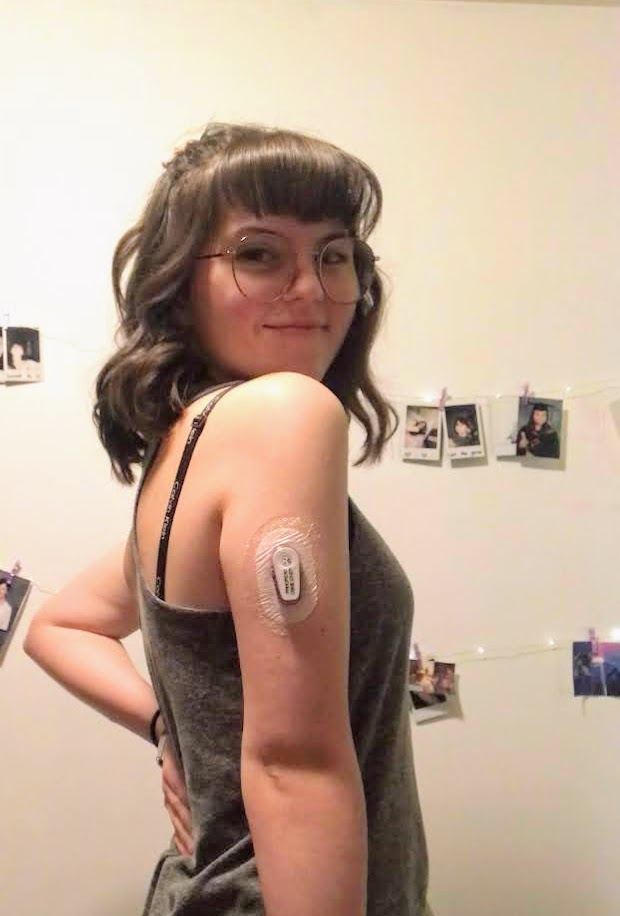
For example, I use a continuous glucose monitor (CGM) to make my management safer and easier, and CGMs are not covered by the provincial government in Ontario where I live. This personally impacts me and my diabetes story, so it is easy for me to get involved with JDRF’s Access for All campaign by talking to the Ontario government officials about why CGMs should be provincially funded. The trick to personalizing your advocacy is choosing a couple of key aspects of T1D to focus on and making sure those aspects are ones that are close to your heart.

A final way to make sure your advocacy is effective and impactful is to make sure you are advocating in a way that lets you stay mostly in your comfort zone – advocacy is personal to you, NDAM is personal to you, and T1D is personal to you. There is no one right way to get loud about T1D. It can be contacting your local government official to talk about T1D, posting on social media about T1D, or talking to your family and friends about T1D.

Whatever you do to mark this National Diabetes Awareness Month, however you go about your advocacy, and wherever you are in your T1D journey, JDRF is right here with you!

Anne Pettigrew, JDRF Volunteer and Advocate

Diagnosed two weeks shy of her 12th birthday.

Interested in becoming a JDRF advocate like Anne? Sign up here.

Bill C-237: An Act to Establish a National Diabetes Framework passes

Up until now, Canada has been without a national diabetes strategy. But thanks to the work of tireless advocates and diabetes organizations, on June 21, 2021 Bill C-237 an Act to Establish a National Diabetes Framework, was passed by the Senate.

The passage of the bill means that the federal government is poised to take on the work proposed by Liberal MP Sonia Sidhu who was the sponsor of this Private Member’s Bill C-237, National Framework For Diabetes Act.

Bill C-237 was inspired by a Diabetes 360° initiative first proposed by Diabetes Canada with support and input from JDRF Canada and other diabetes organizations. Diabetes 360° aims to develop meaningful targets designed to stem the rising tide of diabetes based on an innovative model that was used globally to tackle HIV/AIDS.

The need for a comprehensive diabetes strategy is becoming increasingly important given the rising costs of complications associated with diabetes and the rapid rise in incidence over the past decade.

The first reading of the bill took place in February, 2020 and has taken just over a year to go from proposal to assent.

Senator Nancy Hartling, who added her voice in support of Bill C-237, spoke passionately when she said,


“We don’t need to start from scratch, colleagues; there is a lot of expertise right here in Parliament, including Diabetes Canada’s Diabetes 360° framework. In addition, we already have two all-party parliamentary diabetes groups that foster dialogue, policies, best practices and awareness on diabetes. 

Diabetes 360° was developed after extensive consultation with stakeholders, including experts, health care providers, governments, researchers and the diabetic community. It is based on the UN AIDS model, which combined successful 90-90-90 targeting strategy with the treatment as a prevention model to make ambitious inroads against HIV/AIDS epidemics. 

Diabetes Canada saw an opportunity to adapt the strategy to diabetes and developed the 360 targets, which are composed of the four 90s: one, prevention and elimination of health inequities; two, awareness and screening; three, achievement of health outcomes through treatment and technology; and four, engaging in a patient-centred approach to reduce rates of diabetes and improve overall well-being. 

The four 90s are achievable. They require a consistent, coordinated approach and the cooperation of all levels of government. Bill C-237 aims to facilitate this process and provides all the tools our government needs to do it.” 


What does the bill being passed mean?

(1) That the Minister of Health must, in consultation with the representatives of the provincial governments responsible for health, Indigenous groups and with other relevant stakeholders, develop a national framework designed to support improved access to diabetes prevention and treatment to ensure better health outcomes for Canadians.

(2) The national framework must include measures to

(a) explain what diabetes and prediabetes are;

(b) identify the training, education and guidance needs of health care and other professionals related to the prevention and treatment of diabetes, including clinical practice guidelines;

(c) promote research and improve data collection on diabetes prevention and treatment;

(d) promote information and knowledge sharing in relation to diabetes prevention and treatment; and

(e) take into consideration any existing diabetes prevention and treatment frameworks, strategies and best practices, including those that focus on addressing health inequalities.

And that the Minister must hold at least one conference with the persons referred to in subsection (1) for the purpose of developing the framework.

JDRF congratulates and thank MP Sonia Sidhu, Diabetes Canada, along with the other diabetes advocates who have worked together to advocate for Diabetes 360°, a strategy and framework to advance research to treat, prevent and cure diabetes.

The passage of the Bill is testament to the power of collaboration, and we recognize Diabetes Canada for leading the charge.

We look forward to working with the government to improve the lives of Canadians living with diabetes.

Learn more about Diabetes 360° here: www.breakthrought1d.ca/advocacy/diabetes-360/

Consider joining us as we advocate for Access For All

There has been some great progress made recently towards greater access to diabetes devices and federal commitments to funding and incorporating a national diabetes strategy. These have only been achieved through collaboration with partners and other diabetes organizations and on the strength of our volunteers.

We rely on a network of passionate volunteer advocates to help Canada’s decision-makers understand the impact and severity of type 1 diabetes (T1D) and what needs to be done to improve the lives of those living with this disease.

We have a variety of volunteering opportunities and are always open to suggestions. Please visit our website to see some of the ways our volunteers help and consider joining us too.
www.breakthrought1d.ca/get-involved/advocate

Donate | Donnez