Between the lines of sugar


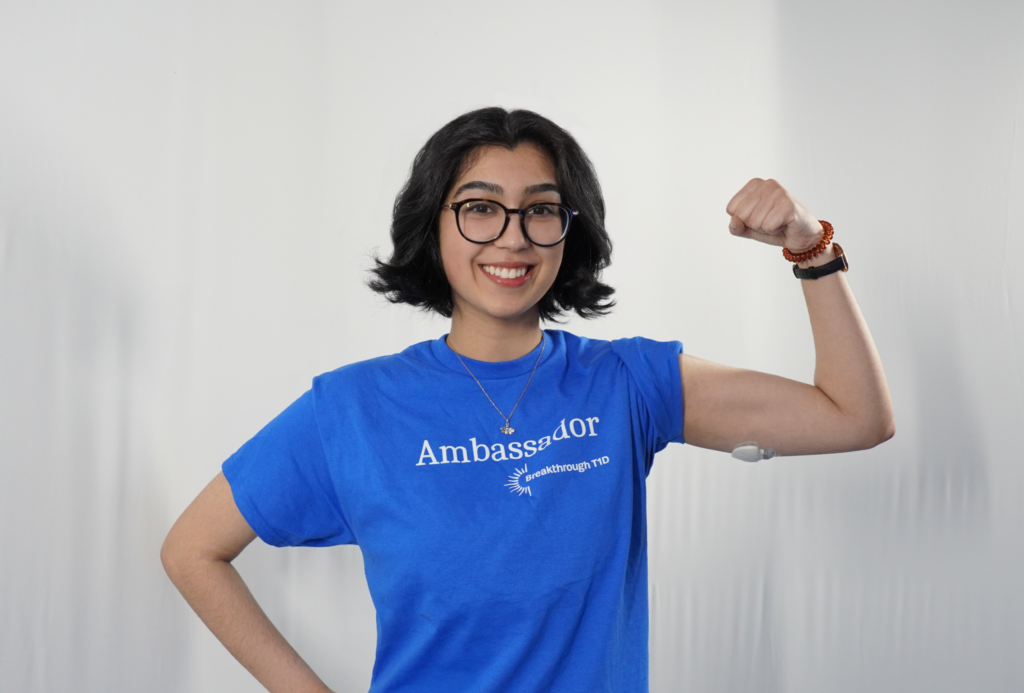
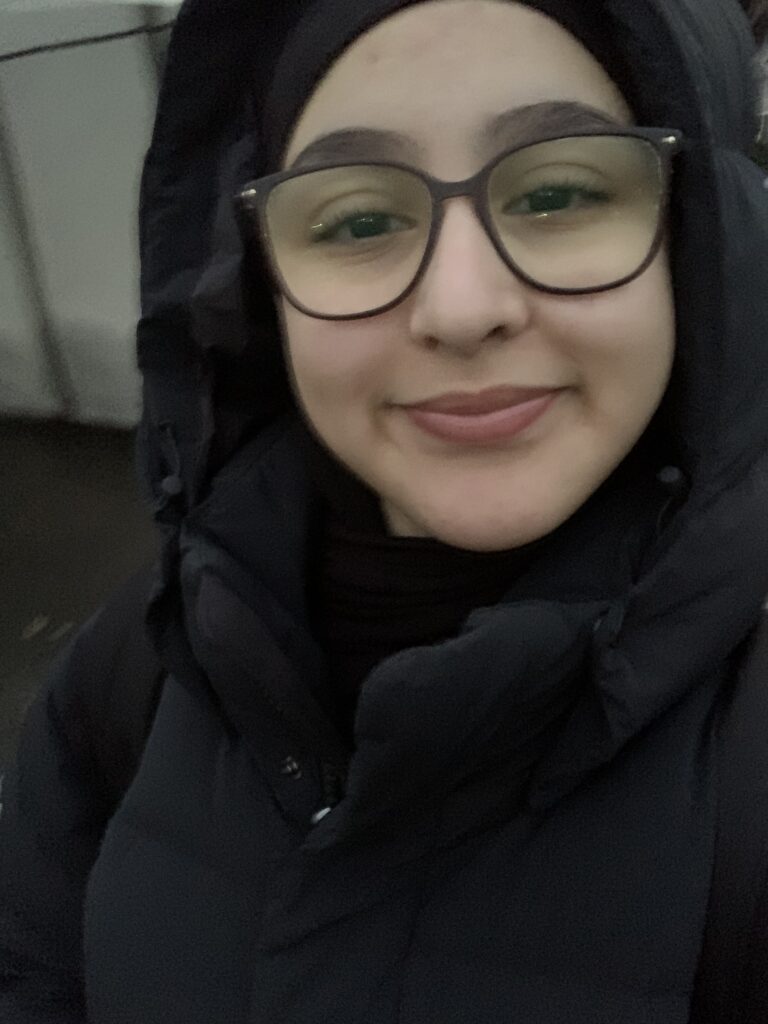
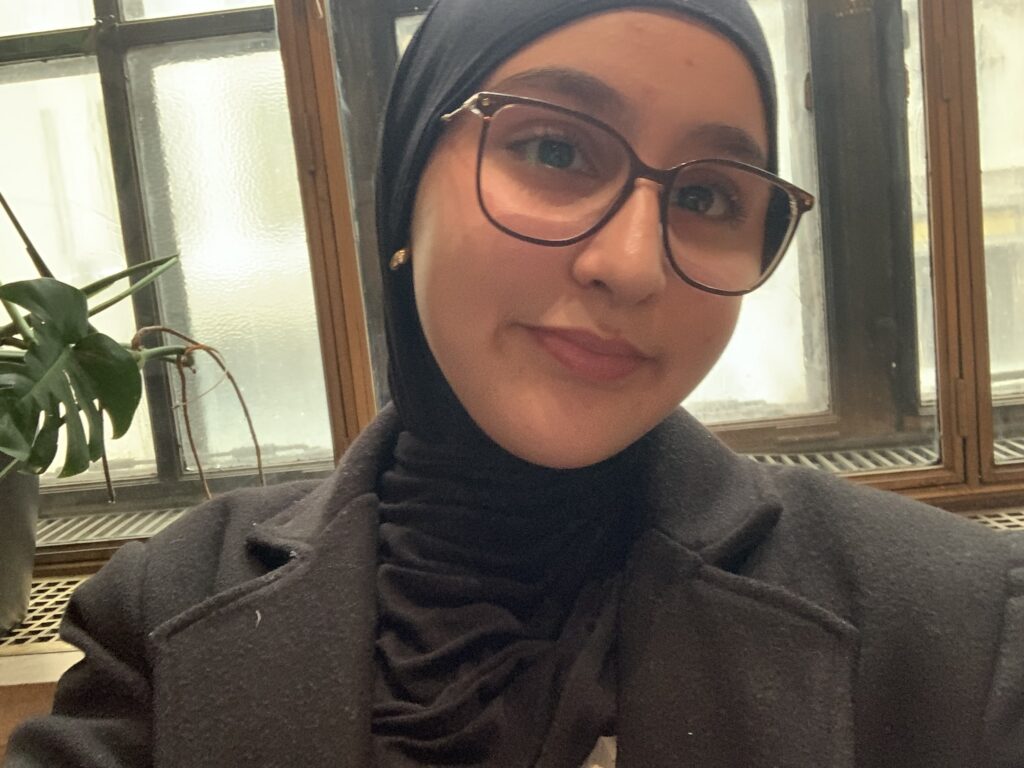
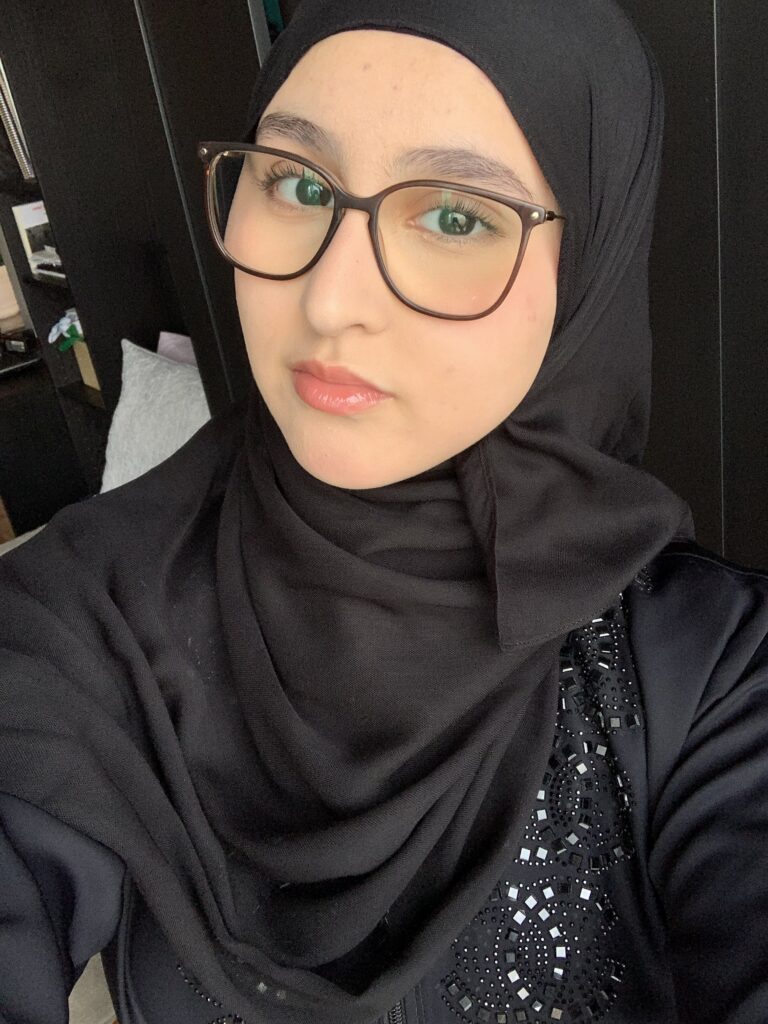
Guest post: Soundous Sellam, student living with type 1 diabetes in Montreal

Living with T1D (type 1 diabetes)

I don’t wake up at night because of school stress. I wake up because my sugar dropped, again. It’s 3 am and I have to shove food in my mouth, trying to convince my body not to give up on me. The quiet of the house makes the beeping of my glucose monitor feel deafening and strangely unreal. It’s such a weird reality.

People hear “diabetes” and picture an older person told to stop eating sugar. That’s type 2. I have type 1. I didn’t get this because of what I ate or how I lived. My own immune system destroyed the cells in my pancreas that produce insulin, leaving me to manage something my body can no longer do for me. My pancreas became a battlefield, and my immune system, once protector, turned into the invader, devouring the cells I needed to survive. It felt as if my own body had mistaken its organs for enemies. It tore through the cells that once worked tirelessly for me.
I was diagnosed in May 2022. The doctors told me my blood sugar was 26 mmol/L which is dangerously high. I was on the edge of life and death, nearly in diabetic ketoacidosis. Suddenly, I had to grow up faster than anyone else. I had to learn to inject myself, count carbs with precision, carry supplies everywhere, and cover bruises from needles and sensors. Even when I slept, even when I was sick or exhausted, the calculations never stopped. I had to care for myself constantly because if I didn’t, the consequences could be immediate or long-term, from passing out to risking damage to my heart, eyes, and kidneys.

When I was diagnosed, I didn’t want my parents to carry the weight of my illness for me. I didn’t want to wake them up in the middle of the night every time my sugar dropped or see the worry etched into their faces every time I checked my numbers. So, I stood up for myself. I learned to inject insulin, count carbs, and manage my highs and lows on my own. It wasn’t just about independence it was about protecting them from the fear that came with every spike and crash. In taking responsibility for my own care, I discovered a resilience I didn’t know I had. I don’t vent to them, I don’t stress them out with the endless calculations, the beeping monitors, the sudden lows that knock me off my feet. I keep it all to myself. It’s a quiet burden, one I carry so they don’t have to.

Sometimes it’s lonely, but in that silence, I’ve learned to listen to my body, to trust myself, and to stand on my own even when everything feels unpredictable. Managing diabetes became not just about survival, it became about proving to myself that I could handle whatever life threw at me.

It isn’t just the physical labor; it’s the mental weight. There’s a second voice in my head, always questioning, always calculating: Did I take enough insulin? Did I eat too much? Will I crash during my exam? Will someone think I’m exaggerating? It gets exhausting and it’s a daily pressure, like a hand pushing down on me, reminding me that I can never let my guard down.

Some nights, despite all my planning, my body still rebels. I wake up shaking, sweating, seeing stars, unable to even sit up. Every number feels like a puzzle, and the solution decides whether I feel okay or end up in the hospital. I learned to be responsible, to make the right decisions, and to carry the weight that those decisions can have, not just on myself, but on the people around me.

Every choice, from a small snack to a dose of insulin, is a lesson in accountability. It feels like solving equations that never end, numbers looping through my mind like an infinite maze. Diabetes taught me that my actions have consequences, and that taking ownership of them is both a challenge and a gift.
People tell me to “just accept it.” And sometimes, I have. Until I’m at the pharmacy, staring at a bag full of insulin, needles, and sensors and realize that this bag will never be empty. Not next month, not next year, not ever. I’ve accepted it… until I walk into a restaurant and see people eating without a second thought, no carb counting, no calculations, no fear. I’ve accepted it, until exhaustion and sugar swings make me snap at someone I love, and I wonder who that even was. Acceptance isn’t a box you check. It’s something you lose, and slowly find again.

Type 1 diabetes has taken a lot from me, but it has also given me more than I could have imagined. It has taught me discipline, patience, and self-awareness. It also made me more empathetic. Living with a constant, invisible shadow that walks beside men even when the sun is out, taught me that everyone is fighting their own battles, even when I can’t see them. I’ve learned to notice the small struggles, to listen, and to approach others with patience and understanding because I know what it feels like to carry a weight no one else can see.

And one day, I hope to use what I’ve learned to help others fight in the same way I’ve had to fight for myself. I want to be an anchor for others, someone they can rely on when life feels uncertain. Living with this disease has shown me the importance of steadiness, patience, and care not just for myself, but for the people around me. If I can offer support, understanding, or a calm presence to someone else, I know it can make a difference. I hope I’ll make that difference.
A new partnership to support mental health in the type 1 diabetes community 

In March 2026, Breakthrough T1D Canada and You’re Just My Type (YJMT) announced a new partnership to build on lived experience support as part of the organization’s mental health and diabetes strategy. 

You’re Just My Type is a nonprofit dedicated to supporting the mental health of people living with T1D through in-person events, resources, and community-building. 

The partnership with Breakthrough T1D will bring YJMT to Canadians, through free, in-person mental health events for adults with type 1 diabetes (T1D), taking place in Vancouver in May, in Toronto and an online event in November that will be available to anyone in Canada. 

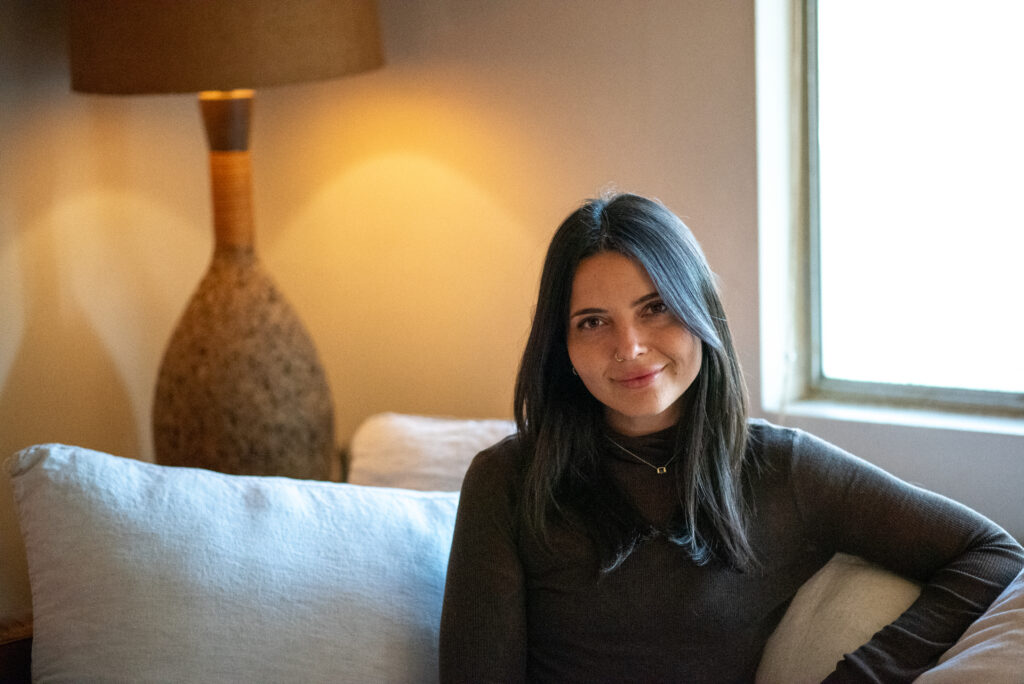
Breakthrough T1D had the opportunity to speak with YJMT founder Laura Pavlakovich about what motivated her to start her nonprofit, and her hopes for the expansion into Canadian communities. 

Tell us a little bit about yourself 

I’ve lived with type 1 diabetes for nearly my entire life, and I’ve found that the mental toll can often be heavier than the physical. My background is in photojournalism, a path that took me all over the world and ignited my passion for storytelling and human connection. In 2016, I began combining these two worlds – photography and T1D – to share the stories of our community. That work eventually grew into You’re Just My Type, where we now focus on building mental-health-centered, peer-led spaces for those living with this condition. 

What made you start You’re Just My Type? 

You’re Just My Type grew out of realizing how much peer support and in-person community were missing in the Type 1 space. While the photo project began in 2016, it evolved into a formal organization in 2021 when I hosted our first in-person mental health event. 

I kept thinking about what I wished I had growing up; diabetes camp was a lifesaver, but it only existed for one week a year. I wanted that support to be a year-round reality. Since 2021, we’ve hosted over 50 free events across multiple cities. It became clear that people don’t just need better tools—they need each other. 

What makes you excited about the YJMT and Breakthrough T1D Canada partnership? 

We hear from people in Canada all the time asking if we’ll ever bring You’re Just My Type there, so this partnership feels incredibly meaningful. Breakthrough T1D Canada is such a trusted and respected organization, and we share a fundamental belief that caring for people with type 1 means caring for their mental health, too. Partnering together makes it possible to reach more people and begin building community in new places in a thoughtful, sustainable way. 

Why do you think it’s important for people to understand about mental health and Type 1 diabetes? 

Type 1 diabetes is a 24/7 mental experience, even when it looks “under control” from the outside. People often think Type 1 is easy because, as a community, we’ve learned how to make it look easy. 

What they don’t see is the constant decision-making, the math, the planning, the sleepless nights, and the complete exhaustion that comes with managing a chronic illness every single day. Mental health support isn’t an optional “extra” in diabetes care; it is essential. 

Any further message you want to share with the Canadian T1D community? 

You’re not alone in this, even if it feels that way sometimes. You deserve spaces where you can be honest, imperfect, and fully understood. We are so excited to bring You’re Just My Type’s community-based events to Canada and build something alongside you. You belong here. 

Learn more about You’re Just My Type at: https://www.yourejustmytype.org/ and further announcements about upcoming events by following Breakthrough T1D Canada on their social media channels. 

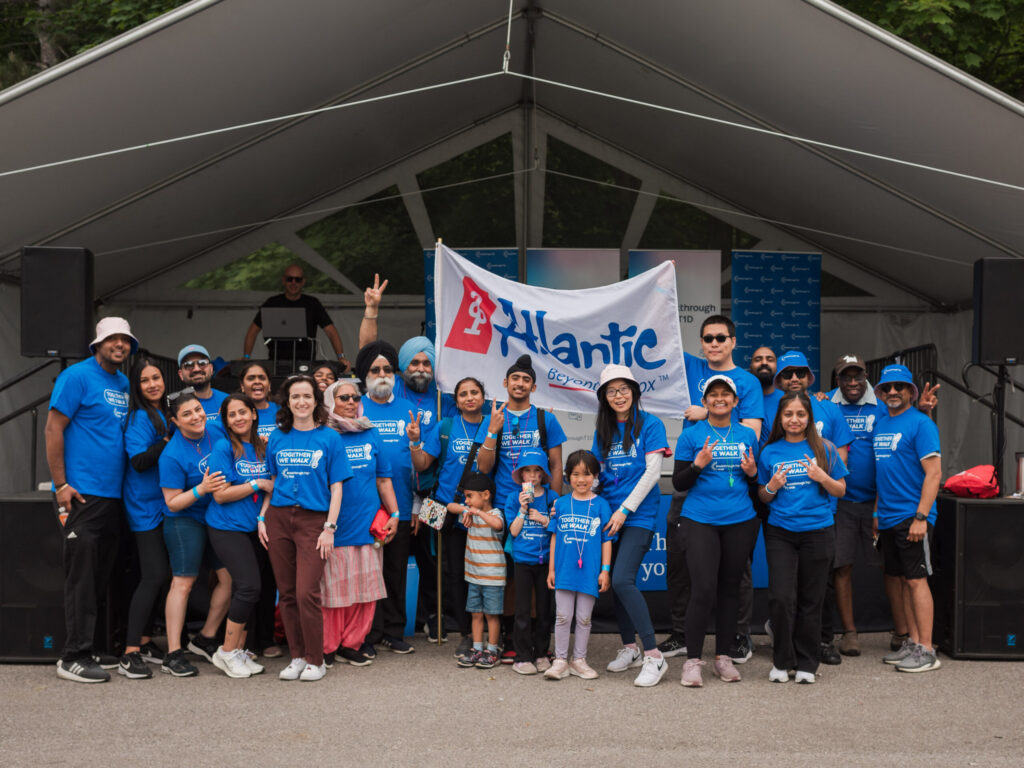
Celebrating our amazing volunteers

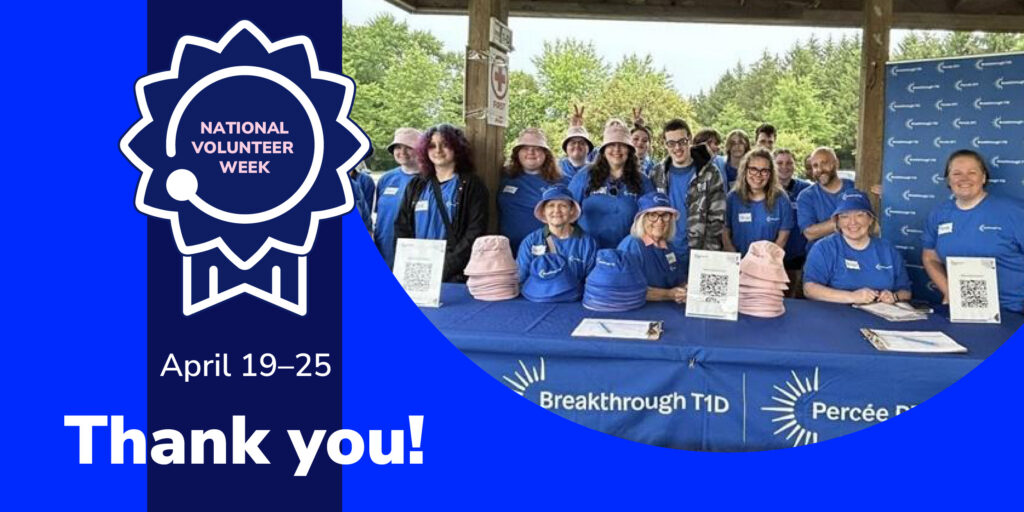
National Volunteer Week takes place from April 19 – April 25, 2026, as organizations across Canada take time to honour the volunteers who generously donate their time and talents to their communities and to causes meaningful to them. 

This year is particularly special as it’s International Volunteer Year, a year-long, nation-building celebration that provides a once-in-a-generation opportunity to recognize the incredible grassroots power of civic participation, further support Canada’s culture of volunteering, and celebrate volunteer stories.

The theme for International Volunteer Year is Ignite Volunteerism and asks us to inspire Canadians to reconnect with their communities through acts of service, community action, and reciprocal support. The Ignite Volunteerism campaign will serve as a celebration of Canada’s volunteers while inspiring a new generation of participation—creating a stronger, more resilient, and inclusive Canada for everyone.

This couldn’t be timelier for Breakthrough T1D Canada, and organization that has its foundation in grassroots volunteering and organizing, brought together by parents from across the country desperate to raise awareness and the profile of type 1 diabetes (T1D), and support research into cures.

Since 2022, it has been our honour and privilege to celebrate our amazing volunteers and their support of the T1D community through our Annual Volunteer Awards.

These Awards recognize individuals, volunteer committees and corporate organizations who have demonstrated incredible commitment and have put their heart and soul into supporting our collective mission of a world without T1D.

Congratulations to all our winners. You are the true spirit of Breakthrough T1D Canada, and we couldn’t be more grateful.

Our volunteers are the foundation of everything we do, and we are thrilled to share with you the 2025 Breakthrough T1D Canada Volunteer Award Winners.

Congratulations to all our Award Winners. To read more about them, please click HERE.

2025 Breakthrough T1D Canada Volunteer Awards

Peter Oliver Award for Volunteer Impact

National Volunteer of the Year

National Committee of the Year

National Advocate of the Year

National Fundraising Volunteer of the Year

National Corporate Partner of the Year

National Rookie Volunteer of the Year

Local Impact: Community Volunteers of the Year

Local Impact: Ambassador of the Year

Local Impact:  Business Partner of the Year

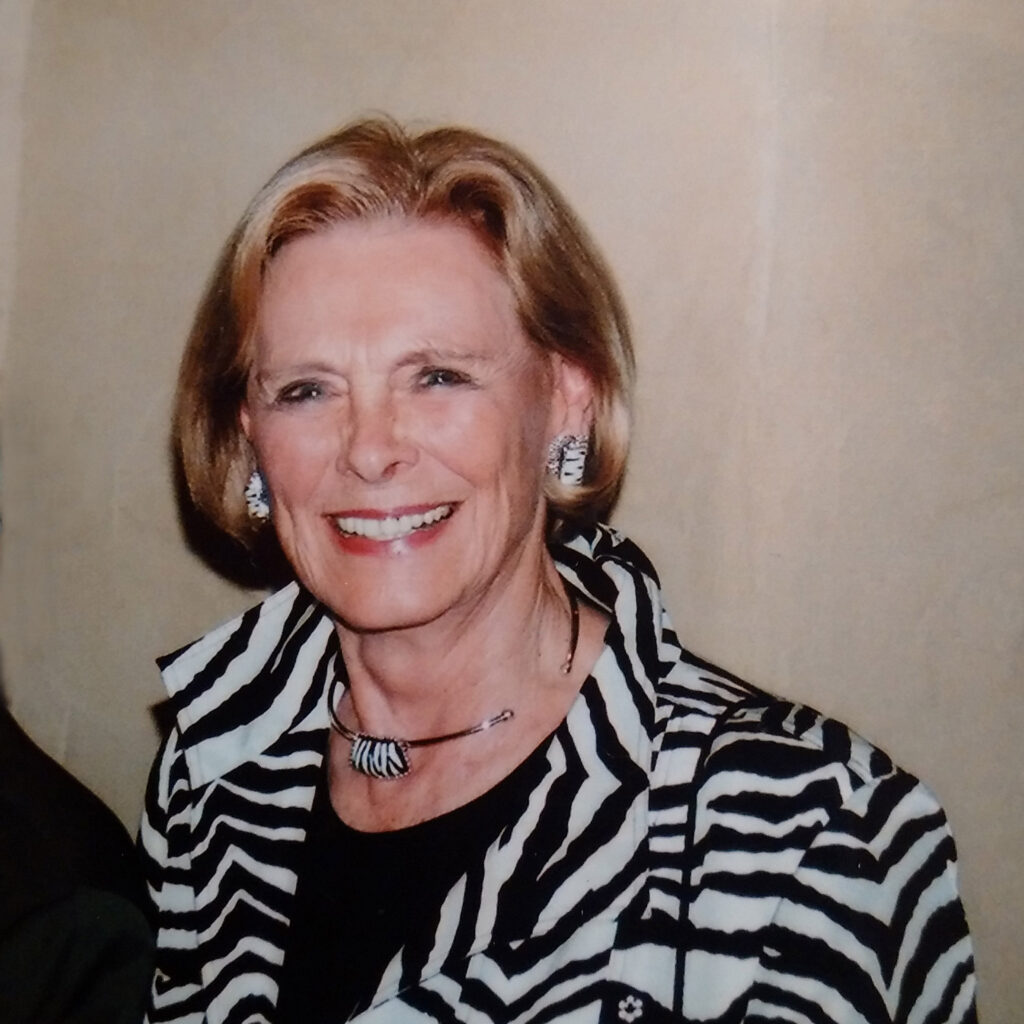
Remembering Tannis M. Richardson, a visionary leader for Breakthrough T1D 

Tannis M. Richardson, who created an incredible legacy of philanthropy and volunteerism in Manitoba and across Canada, died on April 13, 2026, at the age of 99.  

Breakthrough T1D is saddened by the loss of Tannis, a longtime champion for the type 1 diabetes (T1D) community who, with her late husband George T. Richardson, was pivotal to growing Breakthrough T1D in Winnipeg (then Juvenile Diabetes Foundation – JDF) and creating the annual A Starry Starry Night Gala in support of our mission. Tannis also lent her talents to Breakthrough T1D’s national and international boards. In 2021, she gave a transformational $1 million gift to fuel our global research in Canada and beyond. 

Tannis played a vital role in building a community of passionate volunteers to rally around T1D research in Manitoba and throughout Canada. She was especially proud of A Starry Starry Night Gala, which became one of the most memorable and impactful events in the region – raising more than $8 million in support of Breakthrough T1D over the past half century. She created a culture of awareness and inspired a legacy of support for T1D, leading to the research breakthroughs and accessibility wins we’ve celebrated over the last 50+ years. It was our honour to work closely with someone who lived their life guided selflessly by the principles of philanthropy. 

While she always led a life of service, it was the discovery that her daughter Pamela had T1D that found the family on the frontline of a battle they knew little about. Diagnosed at nine years old, Pamela and her family had to learn to manage a disease that was not well understood at the time, nor well supported by Manitoba’s and Canada’s healthcare system. Sadly, Pamela died at the age of 29 from complications of diabetes. 

Hoping to spare other families from heartbreaking tragedy, Tannis became devoted to raising awareness of T1D and ensuring adequate support for Manitobans living with the condition. Her nearly 50 years of commitment to Breakthrough T1D led to tremendous breakthroughs in cure research, T1D management, and access. In 2023, Manitoba stepped up as the gold standard province in Canada for diabetes device coverage by removing all age restrictions to provincial coverage of insulin pumps and continuous glucose monitors (CGM), bringing Tannis’s tenured advocacy efforts to fruition.

Breakthrough T1D is deeply grateful to Tannis for her visionary support and dedication that created an unparalleled legacy for the T1D community. She brought us closer to a world without T1D and helped make living with T1D more manageable for nearly 300,000 Canadians.  

We extend sincere sympathies to Tannis’s family and to all those whose lives she touched.  

Tannis shared about her life and legacy with Breakthrough T1D in 2021. Click here to read the blog.

In Memory of Krayna Golfman

Founding Member, Breakthrough T1D Canada 
Breakthrough T1D International Chancellor 

Breakthrough T1D Canada mourns the loss of Krayna Golfman, one of our founding members and a trailblazer in bringing the type 1 diabetes (T1D) movement to Canada. 

Krayna passed away peacefully on April 9, 2026. 

More than fifty years ago, Krayna helped bring to Canada an organization that had begun in the United States, transforming it into what would become Breakthrough T1D Canada. Working from her Montreal basement alongside other committed families, she played a pivotal role in establishing a national presence dedicated to accelerating research, improving care, and uniting the T1D community across this country. 

In the early 1970s, Krayna Golfman and Mitch Garfinkle each faced the life‑changing diagnosis of type 1 diabetes in their sons, David and Jimmy. At the time, little was understood about the disease, and research support was limited. Rather than accept the status quo, they joined with other families affected by T1D to build a Canadian organization grounded in action, urgency, and hope. 

A deeply proud mother, Krayna ensured her children grew up confident and fully engaged in life; playing sports, staying active, and learning to manage their diabetes day to day. That same resolve carried forward as her family grew. When her grandson was later diagnosed with T1D, Krayna’s commitment to advancing progress for future generations remained unwavering. She was equally proud of her role as a grandmother and great‑grandmother, cherishing family as both her motivation and her legacy. 

Behind the scenes, Krayna worked tirelessly to raise awareness and generate critical funding for T1D research, mobilizing the Montreal community through golf tournaments, galas, bike‑a‑thons, and countless grassroots initiatives that laid the foundation for long‑term impact. 

In recognition of her extraordinary leadership and enduring influence, Krayna was named a Breakthrough T1D International Chancellor, an honour reflecting the profound respect she earned across the global T1D community and the lasting significance of the work she helped establish in Canada. 

Krayna was deeply proud of what Breakthrough T1D Canada became. Over the past five decades, the organization she helped found has been at the forefront of major advances in T1D research and advocacy, contributing to improved care, access, and technologies that have extended both lifespan and quality of life for people living with T1D in Canada. 

Her legacy lives on through the progress she helped accelerate, the community she helped build, and her family, who remain closely and lovingly connected to this mission. 

As we remember Krayna, we honour a life defined by courage, leadership, and devotion to family. Breakthrough T1D Canada will continue her legacy by standing with the T1D community, advocating for equitable access to treatments and technologies, and funding the most promising research on the path toward cures. 

Our deepest sympathies are extended to her family, and to all those whose lives she touched. 

Gifts made in her memory will help carry forward the work she was so proud to help build. 

To learn more about Krayna’s remarkable life, please visit her obituary here.  

Memorial Gifts in Krayna’s Honour 

Finding her strength: Fitness coach Danica Doble shares in her own words

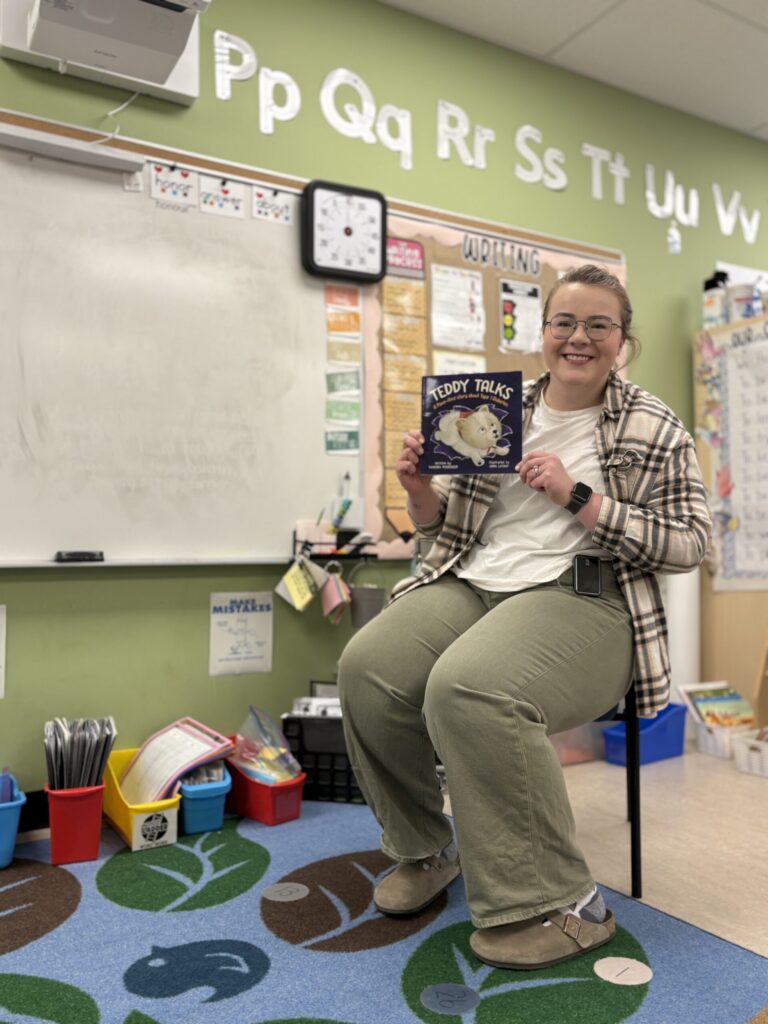
Danica Doble, a fitness coach and content creator who has been living with type 1 diabetes (T1D) since 2009 recently partnered with Breakthrough T1D Canada as a social media ambassador. She sat down with the organization to share more about her journey, and why she’s so open about how teenage struggles living with T1D empowered her to become a fitness trainer and passionate advocate for the T1D community.

Content warning: please note this piece discusses eating disorders

What do you remember about your T1D diagnosis?

I remember being a seven-year-old little girl and experiencing all of the vicious symptoms that come along with a type 1 diabetes diagnosis. It was a Monday night, and I was at gymnastics practice. Immediately after practice, my mom got a phone call from my doctor stating that I needed to go to the hospital because I had just been diagnosed with T1D. For the next five days, I spent eight hours in the hospital each day and my parents learned everything they could about T1D. Back in 2009, type one diabetes wasn’t talked about much, so my parents really didn’t know what to expect. I remember playing with all the toys that they provided in the hospital and thank goodness for my parents for being attentive, because I most definitely was not. I returned to normal life after those five days, not knowing what was happening to me, not knowing why my parents had to poke my finger and poke my arm every time I wanted to eat. However, as hard as that week was, that week is the reason that I’m who I am today.

Can you tell us a little about starting your fitness journey, after being an active teenager with T1D?

My fitness journey began in 2018; I was like every other teenager. I played sports. I hung out with my friends. I went to school. To be honest with you, I probably lived too much of a normal life. I neglected my blood sugars throughout my teen years and was definitely not focussed on diabetes management. I partied a little too much at times and had a little too much fun with my friends, however, I definitely don’t regret anything because not only did I experience life, but it also prompted me to start my fitness journey.

Although I was quite active as a competitive soccer player, my nutrition was really something that I neglected. After my trip to Europe in 2018, I had told myself that I just wanted to lose 5 pounds to feel better about myself. I quickly learned about calorie deficits and strength training and began doing things to an extreme. 5 pounds later turned into 50. During this time, I had not only lost too much weight but had also lost my period and had developed two eating disorders. It was at this point that I decided to become the healthiest and strongest version of myself. I put on about 20 to 30 pounds, much of it being muscle, and learned everything you could about working out and nutrition.

Can you share a little about your dual diagnoses and how you manage your binge eating disorder (BED) today

My binge eating lasted for about two years, and it was due to the fact that I had eaten so few calories for so long. There were many days when I felt so out of control with my eating and I would compensate these binges by doing hours worth of cardio the next day. It’s an incredibly vicious cycle and very, very difficult to get out of. After my binges, my blood sugars would be so incredibly high, and it would take them hours if not days to come down then the cycle would repeat itself. Today, I am proud to say that I have been free for five years. I started fueling my body properly and made sure that I was getting enough calories. Although I still struggle at times with overeating I no longer eat until I feel sick, which in my opinion is major progress.

How did you come to have food neutrality?
My relationship with food has been rocky over the years, but I am proud to say that my relationship with food is at an all-time high. I now understand that there are no good or bad foods and food is food. Some foods are more nutrient dense while other foods are less nutrient dense. However, that does not make one better over the other. Sometimes my body craves a chocolate cake while other times my body is craving a bowl of fruit. In my opinion, I believe that all food serves a significant purpose whether it’s food that makes your body feel good, or food that makes your soul feel good. While the way I physically feel matters, so do memories. I’ve come to realize that food will always be a massive part of celebrations and events, and when I’m 80 years old, I want to be able to look back on these memories and remember all of the laughs that were shared over good food, not how little I ate that day or how healthy I was during these events.

How does powerlifting help you feel empowered with managing your T1D, both physically and emotionally?

Weightlifting has done wonders for me not just physically, but emotionally too. Not only has it significantly helped my blood sugars, but it helped me in so many other aspects of my life. The empowerment I feel from weightlifting is like no other because it just really goes to show that you can do absolutely anything in your life, even with type 1 diabetes.

How do you use your social media platforms to connect with others in the T1D community

I started my social media platforms in 2022 to mainly focus on the fitness side of things however, after about a year, I wanted to do more. I wanted to make an impact for the T1D community and show people that living with it can have positives. I started my type one diabetes account by posting relatable content and bringing light to dark topics quickly. I was able to grow a substantial following on that account and created a community like no other! I’ve connected with hundreds, if not, thousands of people and it is something I will forever be grateful for. I get tons of messages from people telling me that I’ve helped them, when in reality they’ve helped me just as much.

What are you excited about partnering with Breakthrough T1D Canada?

I’m excited to partner with Breakthrough T1D Canada because of the incredible impact the organization has on the type 1 community. I believe that it’s so important to hear stories and experiences from other type 1s, so people know they’re not alone in their experience & journey.

Anything else you’d like to share with the Canadian T1D community?

I’d like to share with the community that as much as diabetes can suck sometimes, and be incredibly difficult, perspective is everything. Type 1 diabetes has connected me with so many amazing people, and it’s made me strong, courageous, and powerful!

Follow Danica on her IG account @deeabetes

In her own words: Stephanie Atkinson

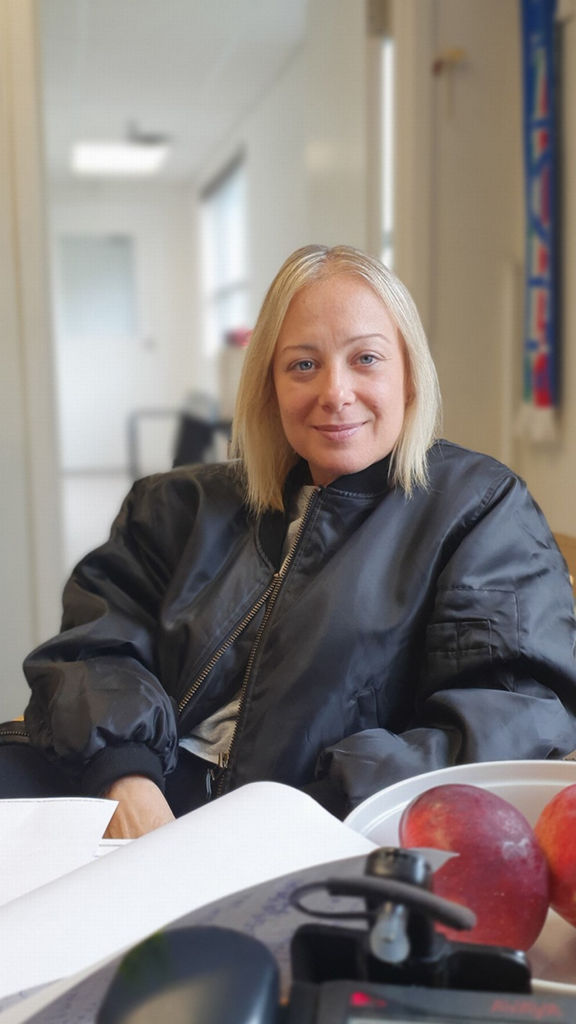
Stephanie Atkinson, a Montreal, QC based adult Breakthrough T1D Canada ambassador, sat down with the organization to discuss what drew her to volunteering and what it’s like to be diagnosed as a busy mother and businesswoman.

Tell us a little bit more about yourself

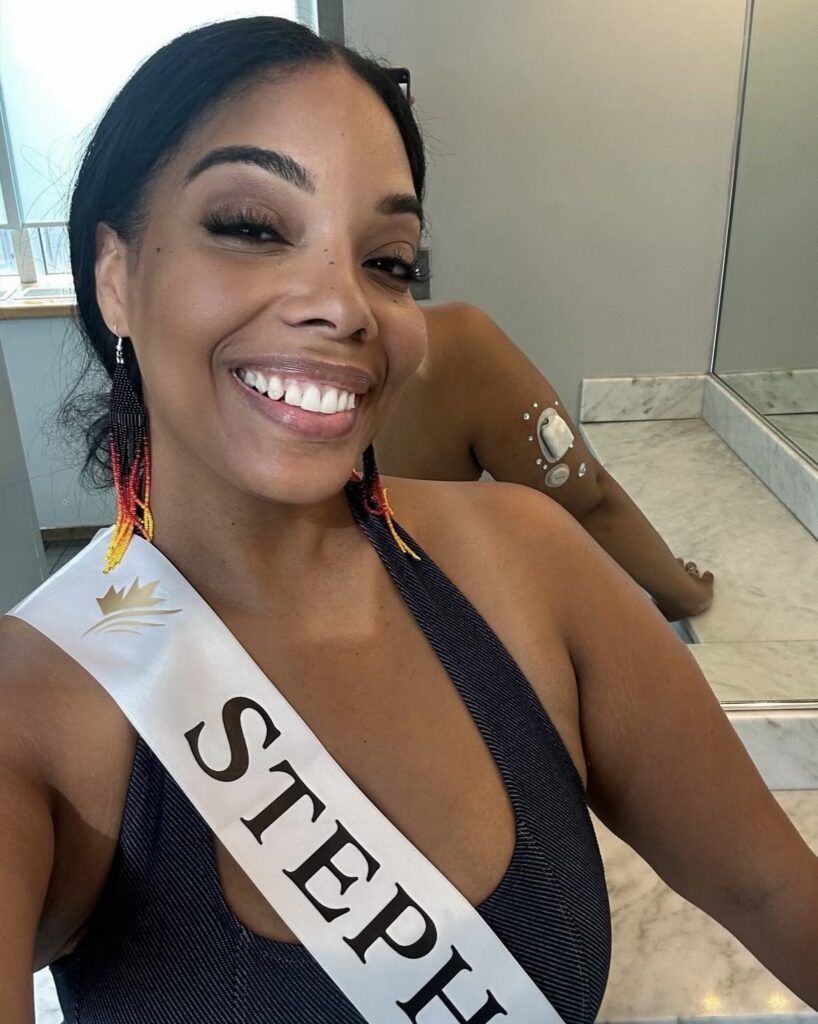
My name is Stephanie Atkinson. I’m a mom of four, a skin and beauty expert, founder of Mayfield Glow, and a recent finalist on the Miss Universe Canada stage.

Before anything else, I’m someone who has learned firsthand how fragile life can be — and how powerful resilience is.

I built my career helping women feel confident and cared for through skincare and wellness. But my own health journey shifted my purpose in a deeper way.

Standing on the Miss Universe Canada stage as one of the first finalists openly wearing two visible diabetes devices — an insulin pump and a continuous glucose monitor — wasn’t just about competing. It was about representation. It was about showing that living with a chronic illness does not disqualify you from showing up fully, boldly, and beautifully in the world.

Today, I use my platform to advocate for type 1 diabetes awareness, especially for adults diagnosed later in life, while balancing motherhood, entrepreneurship, and advocacy.

Can you share a little bit about your diagnosis? What do you remember?

Before my diagnosis, I was sick for many days, but it was during COVID and most clinics were closed, so accessing care felt nearly impossible. I was exhausted in a way that didn’t make sense. I now know I was experiencing all the classic “4 Ts” of type 1 diabetes — thirst, tiredness, toilet, and thinner. I was constantly thirsty, extremely fatigued, using the bathroom nonstop, and losing weight rapidly. My vision began to blur, I could barely walk, and deep down I knew something was very wrong — but as a mom, you push through.

When I finally got into a clinic, I was told I had a urinary tract infection. I remember saying I had never had one before, but I was told that strange things happen before turning 30. I left feeling dismissed, even though my body was telling me something much more serious was happening.

The next morning, everything changed.

I woke up to a police officer at my door doing a wellness check. My doctor had reviewed my results and realized I had been misdiagnosed — my blood work showed I was actually in diabetic ketoacidosis (DKA), a life-threatening emergency where the body begins breaking down fat for fuel because it cannot use glucose properly without insulin. Acid builds up in the bloodstream, and without immediate treatment, it can be fatal.

When I got to the hospital, things were still confusing. Initially, I was diagnosed with type 2 diabetes because I was an adult. But my condition worsened quickly, and I ended up in the ICU with severe DKA. I remember feeling like my body was shutting down. I was losing vision in my left eye, I couldn’t walk properly, and everything felt overwhelming and terrifying.

Later, after further testing, I was correctly diagnosed with type 1 diabetes.

I was 29 years old, a mother, and suddenly my entire life changed. I didn’t fit the stereotype people imagine when they think of Type 1 diabetes — and that experience is one of the main reasons I advocate so strongly today, especially for adults who are diagnosed later in life.

Over 70% of Canadian T1D diagnoses are in adults. How did you find the transition to your new normal?

The hardest part wasn’t just learning how to manage insulin — it was realizing how little support exists for adults diagnosed later in life. 

As a mother and entrepreneur, I had to quickly learn how to balance blood sugars, medical appointments, and new technology while still showing up for my family and my work. There’s a lot of education and community built around children diagnosed with Type 1, but adult diagnosis can feel isolating.

To be honest, there were many times I wished I had been diagnosed as a child. By the time I was diagnosed, I was already an adult, already a mom, already carrying so many responsibilities. A lot of guilt came with that — guilt about how my diagnosis might affect my family, guilt about slowing down, and guilt about having to suddenly prioritize my health in ways I never had before.

Over time, I learned that managing diabetes isn’t selfish — it’s necessary. I built a support system, connected with community, and learned to use technology as a tool for confidence instead of fear. That transition taught me how strong and adaptable we really are, and that being diagnosed later in life doesn’t mean you’re behind — it just means your journey looks different.

You went into DKA prior to your diagnosis. Are ketone levels and how they’re measured something you think about more now?

Absolutely. Once you’ve experienced DKA, awareness becomes second nature.

I pay close attention to how my body feels, especially when blood sugars are elevated or when I’m sick. I monitor ketones when needed and rely heavily on my diabetes technology for early warnings. It’s not about living in fear — it’s about understanding my body and staying proactive so I can avoid going through that experience again.

Why do you wear your diabetes devices so visibly?

The honest answer is that at first, I didn’t want to.

In the beginning, I was ashamed of my devices and tried to hide them as much as possible. As a woman working in beauty and wellness, I felt pressure to look polished and seamless, and I worried that people would only see my diagnosis instead of me.

What changed my perspective was my children.

One day, one of my kids came home from school excitedly telling me about a student in their fifth-grade class who wore a Dexcom and was having a diabetic emergency. Because my child was familiar with diabetes from watching me manage it every day, they recognized what was happening and were able to help alert an adult quickly.

That moment shifted something in me. I realized this was bigger than me. If more people saw these devices visibly — and understood what they were — it wouldn’t just help me feel more confident, it could help others too.

On the Miss Universe Canada stage, I made a conscious decision not only to wear my devices openly, but to bedazzle them. So many times, I hear, “But you don’t look sick.” And the truth is — Type 1 diabetes is an invisible illness. I wanted to bring joy and light to something that can feel heavy and misunderstood. If I was going to wear them, I was going to wear them proudly.

Visibility creates conversation. Conversation creates understanding. And understanding saves lives.

If someone sees me and feels less alone or more confident wearing their own devices, that makes it all worth it.

Is there anything else you wanted to share with the T1D community, particularly with others diagnosed as adults?

You did not cause this.

Being diagnosed as an adult can feel confusing and isolating because many people still believe type 1 diabetes only happens in childhood. When you’re diagnosed later in life, you’re often already carrying so many responsibilities — careers, families, and expectations — and it can feel like your world shifts overnight.

But your diagnosis does not change your value, your strength, or your future.

Give yourself permission to learn slowly, to ask for help, and to prioritize your health without guilt. Managing diabetes isn’t about being perfect — it’s about showing yourself grace and continuing to move forward. 

You can still chase your dreams. You can still show up boldly. You can still build a beautiful, full life. Type 1 diabetes is something I manage — it does not define or limit who I am.

***

Breakthrough T1D Canada thanks Stephanie for her efforts on behalf of the T1D community and for her important work as a peer support volunteer and advocate.

Guest post: What does a cure for type 1 diabetes (T1D) look like?

What does a cure for type 1 diabetes (T1D) look like?

Authors: Katie Bartel, Beth Miller, Tony Lucas, Benjamin Mammon, for The Breakthrough T1D Canucks For Kids Fund Centre of Excellence at UBC T1D Lived Advisory Group

That was the question that the Type 1 Diabetes Lived Experience Advisory Group attempted to answer through a recent anonymous survey.

The group quickly learned it’s not an easy puzzle to solve.

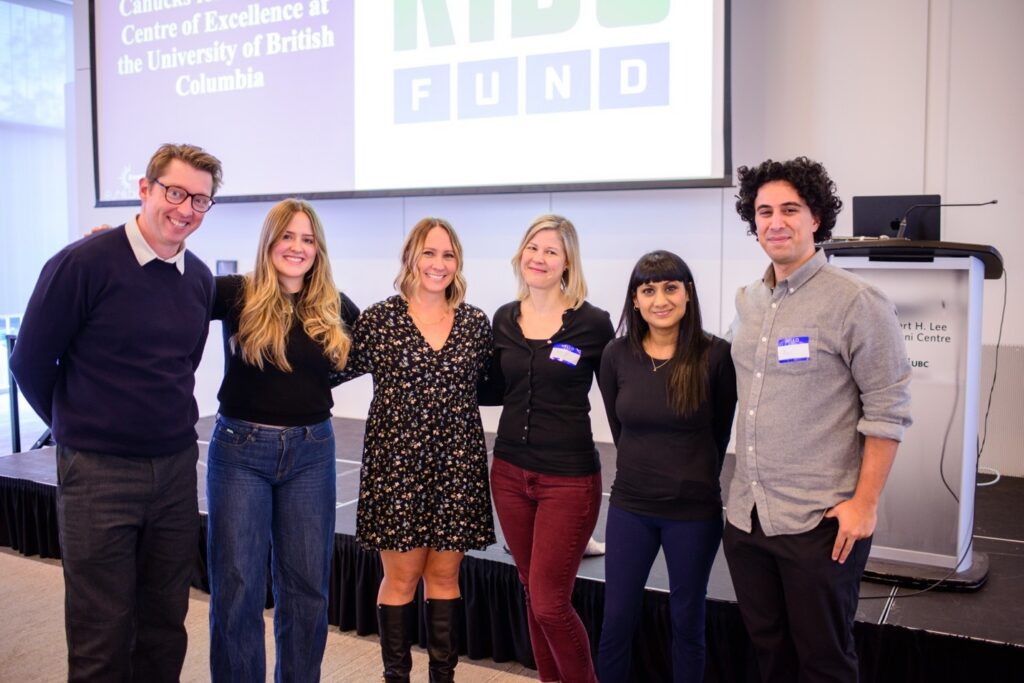
The Breakthrough T1D Canucks For Kids Fund Centre of Excellence at UBC T1D Lived Advisory Group has a key role at Centre outreach events and enabling dialogue between researchers and people living with T1D. The recent survey was done to gather information to inform these discussions and, in turn, the Centre’s cure-focused research program.

Of the 49 respondents, there were varying degrees of what a cure for T1D looks like – some want fully functioning insulin production, whereas others would be satisfied with a device-free lifestyle. Some respondents focused more on improved quality of life, while others struggled to put any kind of description to a T1D cure.

“Type 1 requires so much decision making on a daily basis that I cannot help but wonder what my brain will do with that space and time,” one participant commented. “Am I less likely to face decision fatigue? More likely to have more resilience to frustration… the potential is significant, but the ability to guess what that might be is difficult.”

It’s these types of responses that the Centre’s T1D Advisory Group believes is essential for researchers to know.

“If we don’t know what a cure looks like for people with type 1 diabetes, we can’t work towards it,” said Dr. Søs Skovsø, scientific project coordinator at the Centre, and Chair of the Advisory Group.

And that’s where the Advisory Group plays a role.

The Advisory Group is made up of eight members who either live with T1D or care for people living with T1D. The group’s objective is to integrate the voices of people with T1D into T1D research.

The Advisory Group developed a survey that was distributed through local T1D community networks and stayed open for one month. There were 49 respondents in total; 33% were caregivers and 67% lived with T1D. Most respondents lived in Canada – 53% in BC and 41% in other provinces. The remaining 6% lived internationally.

The main query of the survey was “What does a cure for T1D mean for you?”

Questions included rating the importance of restoring the body’s ability to produce its own insulin again, versus preventing the immune system from attacking insulin-producing cells. The survey asked about the importance of a cure being device free, as well as the significance of improvements to quality of life gained with the introduction of a cure.

51% of survey respondents responded that a cure involving stem cell therapy would be extremely important; 58% rated immune therapy as extremely important; and 40% rated being device-free as extremely important. And when asked about the most important benefit that a T1D cure could provide – improved mental health was rated higher than freedom from blood sugar checks, elimination of insulin dependence, and reduction of long-term health risks.

The question that was most surprising for Advisory Group members and researchers at the Centre was how confident respondents were that a cure would be found in their lifetime.

Responses varied: some were confident, others skeptical.

“The mixed response from the community doesn’t reflect the exciting work that’s going on at the Centre,” said Advisory Group member Beth Miller. “This highlights a need for better communication between the scientific community and the broader T1D community,” Miller added.

Skovsø agrees.

“Some people have lost hope for a cure, and at the same time others thinking that there’s a cure coming next year,” she said. “This means that the research community has to do a better job at communicating that a cure may not be available next year, but it is within reach.”

The Advisory Group’s survey is the first of its kind according to Dr. Bruce Verchere, one of the lead principal investigators at the Centre.

“This survey promises to increase the impact of T1D research in the Centre by helping researchers better understand the hopes and expectations of persons living with T1D, and how research could improve their lives,” said Verchere.

“What a cure looks like to a parent of a child with T1D, or to someone living with T1D for 30 years, or to a scientist is going to be different,” said Skovsø. “Hopefully this survey will help open minds that a cure is not single-sided; it’s multi-faceted.”

This survey was just the first step. A second quantitative survey is now being developed by the Advisory Group, in collaboration with the Centre research team, with the intent of reaching a wider audience and publishing the results in a scientific journal.

“It’s cool to see the work and conversations coming out of the Advisory Group trickle and spread into the science community,” said Skovsø. By publishing a larger study, “we can spark even more conversation and understanding.”

Faces of the $100M Campaign to Accelerate: Ramya’s story 

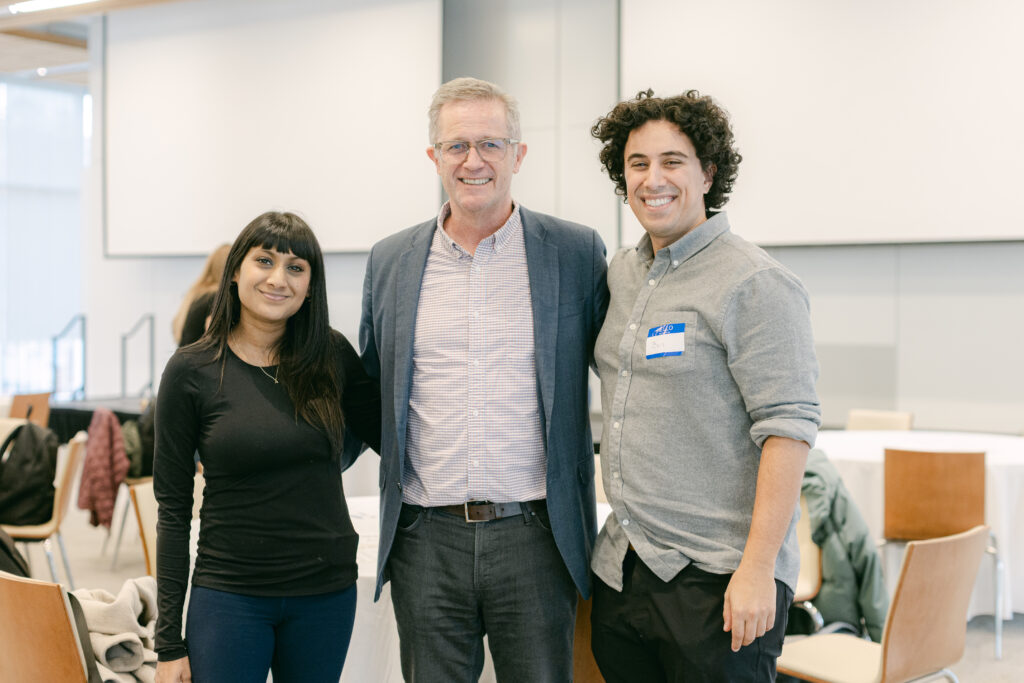
Ramya (left), Dr. Bruce Verchere, Co-Director at the Centre (middle), and Dr. Benjamin Mammon, another member of the T1D Lived Experience Advisory Group (right). Photo credit: Macy Yap

Type 1 diabetes stories help shape research 

Ramya Hosak was diagnosed with type 1 diabetes (T1D) at age 19 while attending university. Since then, she has been a devoted volunteer, helping others navigate the challenges of T1D and the steep learning curve that accompanies a life-altering diagnosis. 

As co-chair of the T1D Lived Experience Advisory Group at the Breakthrough T1D Canucks For Kids Fund Centre of Excellence at the University of British Columbia (UBC), her perspective helps guide the Centre’s research and connect the T1D community with the researchers advancing cures. Her voice is just one of many representing a diverse group of faces and stories, working with researchers to drive innovative therapies.  

Ramya’s passion is nonprofit work, specifically in social justice, community development, and equal access to healthcare. To better unite the T1D community in BC, she co-founded Young and T1, a local support group that helps young adults with T1D through the transition to adulthood. 

We asked Ramya to share the reasons behind her incredible volunteering and what T1D research means to her. 

Breakthrough T1D Canada: Can you tell us about your T1D diagnosis? 

Ramya: I was diagnosed in my second year of university. Super tired and barely able to keep my eyes open in the lecture hall, I was constantly chastising myself. “Don’t be a wimp, everyone else is struggling with midterms and finals, get it together and toughen up, Ramya,” I thought to myself as I chugged a litre of juice. 

But I kept getting weaker. Eventually, my parents dragged me to the hospital, practically carrying me to the ER. That’s when I found out, at 19 years old, that T1D can occur at any age, not just in childhood. Initially, I was relieved at the diagnosis that explained my recent exhaustion. Yet as time went on, questions arose that couldn’t be answered by medical professionals who hadn’t been in my position. My parents and friends assumed that as a responsible adult, I had things under control and was fine. 

But I wasn’t fine. I went from being a student who enjoyed an active social life, going out with my friends without a second thought, to suddenly having to be so careful. I felt a need to act like everything was fine and hide the toll that the invisible full-time job of T1D was having on me, mentally and emotionally.  

I stopped reaching out to my friends for fear of being seen as a complainer and not having a positive attitude. I went through a period of extreme depression, feeling like no one “got me.” But after graduating from university, I started getting better and began meeting others my age with T1D.  

Breakthrough T1D Canada: What drew you to participate in the Centre’s T1D Lived Experience Advisory Group? 

Ramya:  My undergraduate degree was in Health Sciences, and research has always held an interest for me, particularly as my mom is a cancer researcher. I’ve grown up hearing about her excitement, disappointments, and long days/nights that come along with being a researcher. I respect this work immensely, and to be able to work with researchers who are working so hard to find a cure for diabetes and bridge the gap for those living with T1D has always been very important to me. Similarly, I love the questions researchers ask me about living with T1D and helping them to understand why their hard work truly matters.  

Photo credit: Macy Yap

Breakthrough T1D Canada: How do you feel about the cure research happening at the Centre? 

Ramya:  Excited! Not just for me, but for the future generation! I truly believe a cure is in sight, and having had my first child recently (September 2025), the potential to eliminate T1D in the generations to come is such a wonderful thought.  

Breakthrough T1D Canada: What research excites you most? 

Ramya:  I find Dr. Megan Levings’ work on immune system regulation as it relates to T1D particularly interesting. I work at the Kidney Foundation of Canada and have seen her work in the transplant field come up as well. It’s exciting to see research in immunology having the potential to lead to additional breakthroughs in other health-related issues. 

Breakthrough T1D Canada: What are your hopes for the future of diabetes? 

Ramya:  My hope is that within the next generation, T1D markers can be identified in at-risk patients before disease onset or at early onset, and the correct therapies can indefinitely prevent it from fully taking place (by preserving remaining beta cell function, etc.).

“The real glory would be never having to carb-count, constantly be checking my blood levels and worrying about how every variable of life impacts my glucose numbers and therefore how I feel physically and emotionally throughout the day with this 24/7 invisible job. So much mental space would be freed up.”

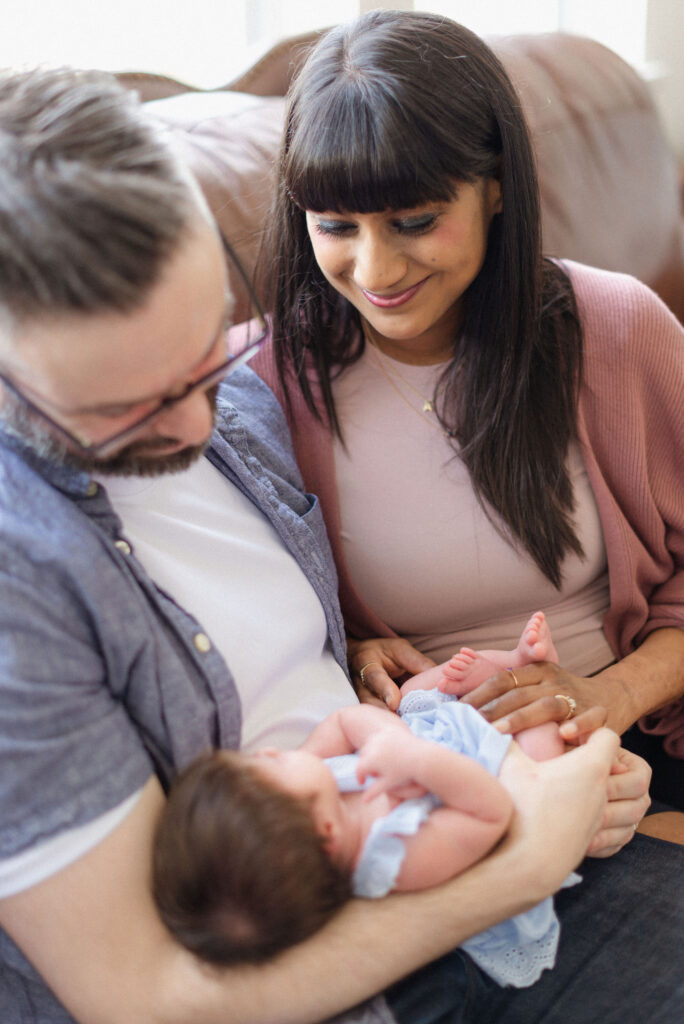
Ramya with her husband, Mark, who also lives with T1D (diagnosed at age 10), and their newborn daughter. 

Breakthrough T1D Canada: What prompted you to launch Young and T1

Ramya: Upon diagnosis, I started volunteering for Breakthrough T1D (then JDRF), and when working with youth ambassadors, it was so amazing to hear kids meet other kids who shared the same diagnosis. They told stories of bullying at school when their pumps were seen as strange, compared pump colours with each other, and it was just so normal. 

I really wanted a community that “got” what living with T1D in adulthood felt like. T1D gets lonely. I hear this a lot. Young people at this transition stage often feel uncomfortable speaking with their doctor or parents about complex issues that arise for an adult with T1D. Thirteen years ago, I did not realize what an awesome resource Young and T1 would be—for myself and now over 700 individuals in BC—for learning and sharing with one another.  

Through meeting folks with similar daily struggles, and living with my husband Mark, who also has T1D, I have learned that all bodies are different. One size does not fit all in T1D management, and getting as much information available to us as possible is important. By conveying our struggles and successes with one another, we all benefit from shared knowledge. 

— 

Breakthrough T1D Canada is grateful to Ramya for sharing her story and helping our researchers accelerate breakthroughs. Knowledge sharing is critically important not just among the T1D community but also among the researchers who will one day bring cures to the community.  

Breakthrough T1D oversees T1D research worldwide to ensure that teams are collaborating and sharing learnings. The Breakthrough T1D Canucks For Kids Fund Centre of Excellence at UBC is a prime example of that collaboration in action, with over 40 multidisciplinary researchers working together to tackle all angles of cure research.  

The Centre is a key pillar of our $100M Campaign to Accelerate, a national campaign with a global impact. Read about research highlights from year 4 of the Centre’s three interconnected research themes advancing cures here

Philanthropic donors are advancing promising cure research in BC and around the world. To learn more about these exciting projects or to make a leadership gift, please contact: 

Kim Lacombe, Chief Development Officer 

Donate | Donnez