Breakthrough T1D Canada’s Mental Health Strategy: an update of the past year

May is Mental Health Awareness month, an international movement dedicated to reducing stigma, providing education, and promoting mental health as a critical part of overall health and well-being.  The month highlights the need for community support, early intervention, and professional resources for those challenged by mental health issues. 

Having type 1 diabetes (T1D) affects a person’s emotional, social, and mental wellbeing throughout their lifetime, known collectively as psychosocial health. 

Research has shown that people with T1D are at higher risk of mental health disorders including depression, anxiety and disordered eating. These challenges are common in people with T1D and can be treated – but only with the right resources that address the correct gaps in healthcare specific to diabetes.

Launched in 2021, Breakthrough T1D takes a three-pronged approach to its Mental Health Strategy: 1) enabling knowledge generation through new research, 2) delivering a training program for mental health providers, and 3) developing both new and ongoing community supports.

Since then, we have seen significant progress in all three key areas, thanks to the generous support of donors, as well as partnerships with academia, other diabetes organizations, and community partners.

We are pleased to share the updates to this program that have taken place since May, 2025.
Mental Health + Diabetes Training Program
A training program specializing in type 1 and type 2 diabetes

We continued to deliver the Mental Health + Diabetes in both English and French, supporting registered mental health providers care providers to better understand the psychosocial impacts of diabetes.

This year, we developed a companion workbook to the e-learning that includes key takeaways from each module and includes thought-promoting questions. This workbook addresses feedback from learners that have completed the program, as this was a common request of participants.

We made updates and quality improvements to ensure the program remains relevant and evidence informed.

  • 678 mental health providers completed this training as of May 1st 2026

Mental Health + Diabetes Directory
A directory of mental health providers who have completed the Training Program

Mental health providers who complete our training program are eligible to join our Directory of trained providers, allowing the the diabetes community to more easliy find providers in their communities.

We were very pleased to see consistent and continued growth of the Directory and we continued to work to increase the visibility of trained mental health providers across Canada.

We completed ongoing reviews and maintenance of the Directory to ensure listings remain accurate and useful for people living with diabetes and their caregivers.

The Directory now includes trained mental health providers who can provide care in all provinces and territories (please note for the territories they are currently offering virtual appointments and are cross-listed with other provinces).

  • 244 mental health providers listed as of May 1, 2026

Stress Management and Resilience

Research updates
Current mental health research focuses on adolescents, young adults, and those facing care transitions or geographic barriers.

Projects funded in partnership with Brain Canada are developing and testing psychosocial interventions.

A randomized controlled trial, Teaching Adolescents with type 1 Diabetes Self-compassion (TADS) to reduce diabetes distress, led by Dr. Marie-Eve Robinson, Ontariodemonstrated that a mindful self‑compassion program significantly reduced diabetes distress, depression, anxiety, and disordered eating among youth. Full results from this completed study will be presented in 2026.

Dr. Tricia Tang, British Columbia uses a virtual care platform called REACHOUT to deliver peer‑led mental health support to adults with T1D across British Columbia. Participants in Dr. Tang’s recent trial showed reductions in diabetes distress and depressive symptoms, alongside increased perceived social support.

TECC-T1D3: Technology-enabled Comprehensive Care for young adults with Type 1 Diabetes and Diabetes Distress, a study led by Dr. Peter Selby, Ontario is using qualitative interviews to inform the design of a technology‑enabled care intervention for young adults experiencing diabetes distress, which is currently in the pilot phase.

Projects funded in partnership with CIHR address key life transitions and unmet psychosocial needs.

Aiming for Something Sweeter: Supporting Youth with Type 1 Diabetes During Transition from Pediatric to Adult Diabetes Care led by Dr. Sonia Butalia, Alberta is testing how to support youth transitioning from pediatric to adult diabetes care by integrating trained non‑medical transition coordinators into the health system.

Adaptation and Pilot Evaluation of a Digital Intervention Targeting the Psychosocial Needs of Individuals with Pregestational Diabetes: A Mixed-Methods Multi Phase Study led by Dr. Deborah Da Costa, Quebec is adapting the HealthyMoms digital platform to support the mental health needs of individuals with pre-gestational diabetes during pregnancy planning, pregnancy, and postpartum periods, with a trial planned for 2027.

Type 1 Diabetes, Exercise and Mentoring (TEAM) Trial: A randomized controlled pilot trial using peer mentorship to increase physical activity and quality of life in adolescents with type 1 diabetes led by Dr. Jon McGavock, Manitoba evaluates a peer‑mentorship model to increase physical activity, quality of life, and belonging among adolescents with T1D, with early feedback demonstrating meaningful benefits among participants.

Find Your CommuniT1D: Customized Virtual Peer Support for People Living with Type 1 Diabetes. Dr. Holly Witteman, Quebec established a robust team of individuals with lived and loved experience of T1D as well as digital health experts to create CommuniT1D. The program launched in summer 2025 and are currently recruiting participants that are being placed in small groups based on similar circumstances or needs. 

Updates on Community Grants
An incubator initiative designed to provide seed funding to organizations ready to transform innovative ideas into successful projects to support the mental health and wellness of the T1D community.

We held a virtual symposium for Community Grants in October 2025 where the leads shared their results and learnings to wrap up the 2023 grants.

Through their community grant support, the University of Montreal created videos in French with English subtitles about mental health and T1D, covering a range of important topics. These videos and more T1D specific mental health content are available on the Type 1 Better Support platform.

We also provided a top up grant to Connected in Motion, “Bridging the Gap: Mental Health Integration into Slipstream Programming,” wrapped up in February 2026, an extension and add on to the 2023 grant stream. With this support the organization built a new mental health hub: https://www.connectedinmotion.ca/mental-health-hub/, that expanded digital content and delivered mental health specific sessions at their virtual programming session. session.

The new Hub now brings together:

  • Community-written blogs and reflections on topics like burnout, identity, relationships, aging, and emotional resilience
  • Recorded virtual sessions exploring the mental side of living with type 1 diabetes
  • Community-created tools and gentle visual resources that support everyday well-being
  • Clear pathways to connect with others through events, groups, and additional supports

A 2026 funding opportunity has been announced and will be larger (up to $35,000 each) to allow for even more fulsome projects.
Expanded partnerships and community collaboration
Working with the community to provide outreach and further fill gaps in community resources and care

Breakthrough T1D was pleased to launch a new partnership with You’re Just My Type (YJMT to provide more peer support opportunities, both virtually and in-person.

This partnership will bring two in-person events and one virtual event throughout 2026 – May 30th in Vancouver, Toronto in the autumn, and a virtual event later in the year. These will be YJMT’s first-ever Canadian events and will help to strengthen peer connection and community-driven mental health support for adults living with T1D.

This partnership reflects a shared commitment to meeting people where they are with relatable, accessible mental health resources.

We also continue to collaborate with Diabetes Canada on our Training Program and Directory, and thank them for their ongoing efforts to increase awareness and engagement of these initiatives.
Caregiver Support
Recognizing an unaddressed need for parent and caregiver support.

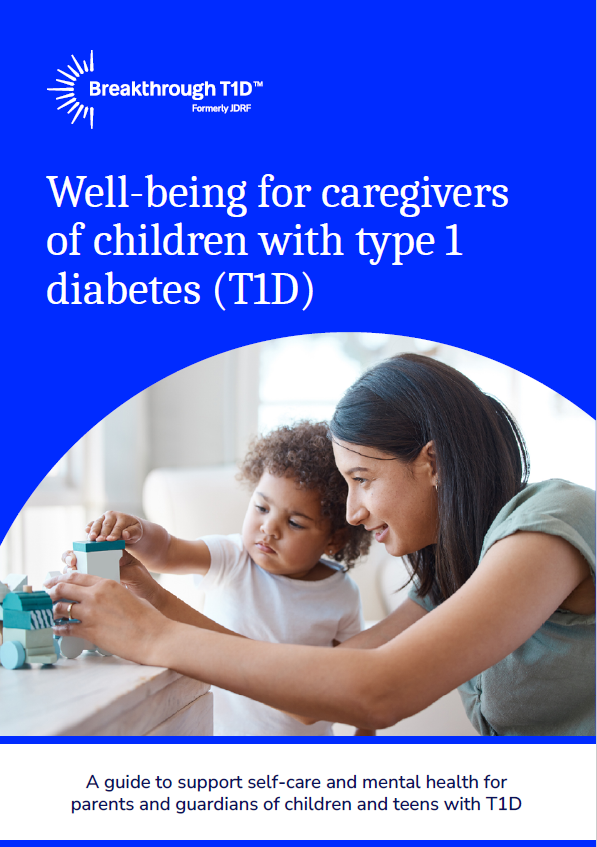
We have also released a new Caregiver Guide for parents and caregivers of children and adolescents living with T1D. Based on a guide produced by Breakthrough T1D Australia, and with input from Canadian mental health providers and people with lived experience of T1D, we are pleased to release the updated Canadian guide for our audience.

We had frequent feedback that caregiver support was a significant need for the T1D community, and the new guide acts as a practical, compassionate resource to support parents and caregivers of children and youth living with T1D.

The Caregiver Guide will be included in the Bag of Hope and Teen Care Kit in print and is also available online for download.

To further support T1D caregivers, we are planning virtual, interactive sessions for fall 2026. These facilitated sessions will aim to provide parents and caregivers of children and teens living with T1D with a supportive, interactive space to reflect on their experiences, build practical coping skills, and connect with others facing similar challenges.


Thank you to our community

Breakthrough T1D Canada remains enormously grateful for the support of our Mental Health Advisory Council, lead volunteers and philanthropic partners, including funding partners Brain Canada and CIHR, without whom our progress in this area would not be possible.

For more information on mental health supports, please visit the Directory at directory.breakthroughT1D.ca or our mental health resources page.

To keep informed of upcoming events with YJMT and the caregiver support sessions, please ensure you’re on our mailing list or follow our social media channels:
Facebook
Instagram
LinkedIn

New caregiver guide launched for parents and caregivers of children and youth with type 1 diabetes

There is a saying that many of us have heard soon after boarding a flight: “put your oxygen mask on first, before helping others,” a safety instruction when you’re on an airplane that acts as a metaphor for self-care. Simply put, it means taking care of your physical and emotional well-being before attempting to help others. Because if you don’t look after yourself first, it becomes much harder to look after anyone else.

For parents and caregivers of children and youth with type 1 diabetes (T1D) it can feel difficult to put your mask on first. After a diagnosis of T1D, the focus will inevitably be on your child first and getting them through that acute phase of fear and uncertainty, before learning to navigate your new normal as a family with T1D.

But it’s essential to also take care of your health and well-being, even during the period immediately following diagnosis. T1D is a lifelong disease that requires 24/7 management without time off and with no breaks, and it can be relentless. Continually being in a state of high alert without self-care can lead to chronic stress and caregiver burnout.

Published evidence tells us that anxiety, depression and distress are common among parents of children with T1D, especially among female caregivers, single parents, and those with lower income. Caregiving for a child with T1D can also disrupt sleep, employment and careers, which can all affect mental well-being. Moreover, caregiver mental health is closely linked to child outcomes and family functioning – meaning that family conflict and stress often point to more difficulty in diabetes self-management. But the good news is that caregiver mental health burden is not inevitable – it can be prevented or improved with the right help and support.  

Learning to recognize concerning effects on mental health and preventing them before they become serious is especially hard for parents of children with T1D, as they often feel their needs come secondary to those of their child’s.

“I felt overwhelmed by the complexity of managing the disease, along with a deep sadness for the carefree childhood I feared had been lost,” said Mina, a caregiver whose child was diagnosed at 10 years old.

Breakthrough T1D Canada heard from the community that there was a gap in caregiver support. Therefore, as part of its Mental Health Strategy, Breakthrough T1D Canada has launched a new Caregiver Guide to help address this underrepresented need.

Based on a guide produced by Breakthrough T1D Australia, and with input from Canadian mental health providers and people with lived experience of T1D, we are pleased to release the updated Canadian guide for our audience.

The Caregiver Guide is a thorough, chapter-based information guide that details the many different stages of caregiving, including:

  • The immediate aftermath of diagnosis
  • Transitional stages, (i.e. elementary school to middle school to high school)
  • When your child asserts independence in their T1D management
  • Impact on siblings
  • Different types of stress
  • Coping strategies
  • When to seek professional support and help, and much more.

We hope that it will be a useful, compassionate resource to help parents and caregivers of children and youth living with T1D. 

“The T1D community became an extraordinary source of support on our journey. Connecting with other families, social workers, and accessing the resources available through Breakthrough T1D made an enormous difference for our family. Today, my son is doing wonderfully—happy, healthy, and thriving while managing T1D—and we remain deeply grateful for the community that helped us get here,” says Mina.

The Caregiver Guide will be included in the Bag of Hope and Teen Care Kit in print and is also available online for download.

In fall 2026, to complement the Caregiver Guide, Breakthrough T1D is planning free, virtual, facilitated caregiver support sessions. These sessions will aim to provide parents and caregivers of children and teens living with T1D with a supportive, interactive space to reflect on their experiences, build practical coping skills, and connect with others facing similar challenges.

They will aim to translate key themes from the Caregiver Guide into practical, real-world reflection and discussion, encourage parents to seek help when needed, and to foster connections to mental health and peer supports.

The sessions will be in both English and French, with time for a question-and-answer period.

Putting your oxygen mask on first isn’t always easy, but it’s crucial that caregivers also prioritize their own health and well-being in order to best support a child with T1D. And Breakthrough T1D is here with resources to help support parents and other caregivers in their own personal journeys with T1D.

“In the hardest moments, what helped me most was realizing I didn’t have to do this alone… Asking for support is not a weakness, but a vital part of this journey,” says Miriam, whose child was diagnosed age 13.

To download a Caregiver Guide please click here: https://breakthrought1d.ca/community-support/caregiver-guide/

To keep informed of upcoming caregiver support sessions, please ensure you’re on our mailing list or follow our social media channels.

For more information on mental health supports for people living with T1D, please visit the Directory at directory.breakthroughT1D.ca or our mental health resources page

Diabetic ketoacidosis (DKA) and ketones 

Why they matter beyond a type 1 diabetes (T1D) diagnosis

Diabetic ketoacidosis (DKA) is one of the most serious, life‑threatening complications associated with T1D—yet it’s often associated with diagnosis and misunderstood and underrecognized among both people living with the disease and some healthcare providers. 

The good news is: armed with proper knowledge, DKA is largely preventable.  

What are diabetic ketoacidosis (DKA) and ketones? 

DKA starts because of a lack of insulin in the body – this is why it’s so often present at diagnosis, particularly in children. When a body doesn’t have enough insulin to allow cells to use glucose for energy, it turns to fat instead. This breakdown of fat produces ketones – acids that accumulate in the bloodstream. 

When ketone levels are too high, these acids rise and blood becomes acidic, leading to DKA. Once this process begins, it can escalate quickly and requires immediate attention. If not addressed, DKA will become a medical crisis that can result in further complications, and even death. 

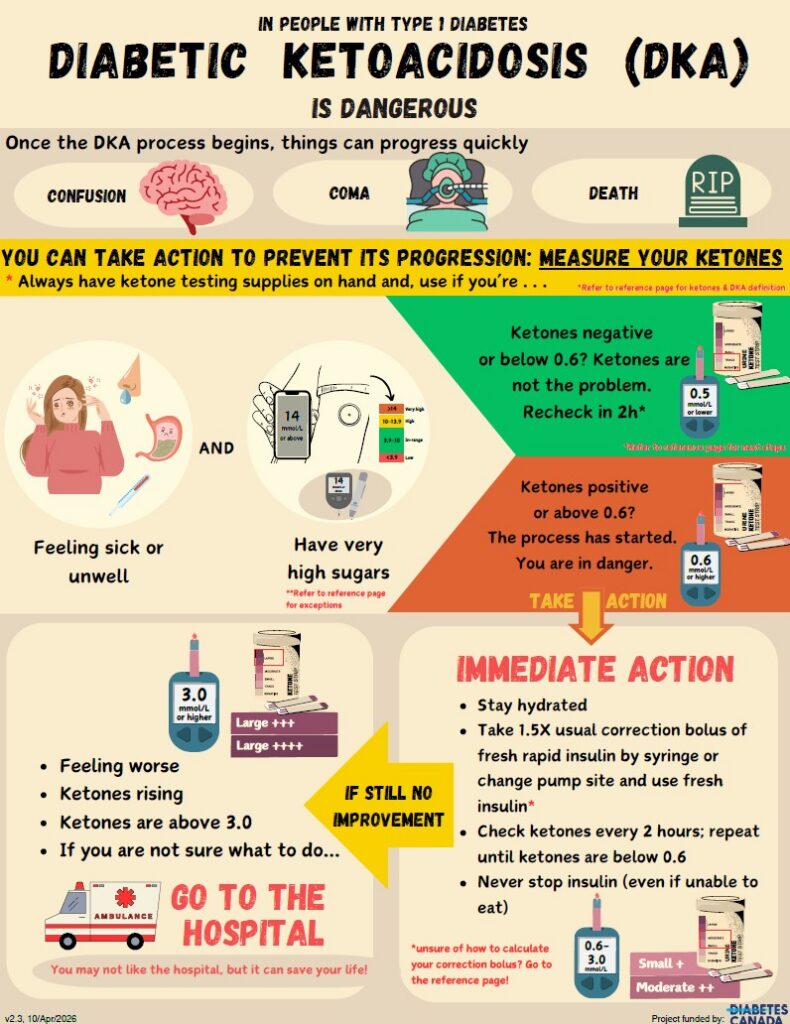
Fortunately, DKA does not typically present without warning. Part of T1D management is blood glucose testing, and testing for ketones should become standard when glucose is trending high

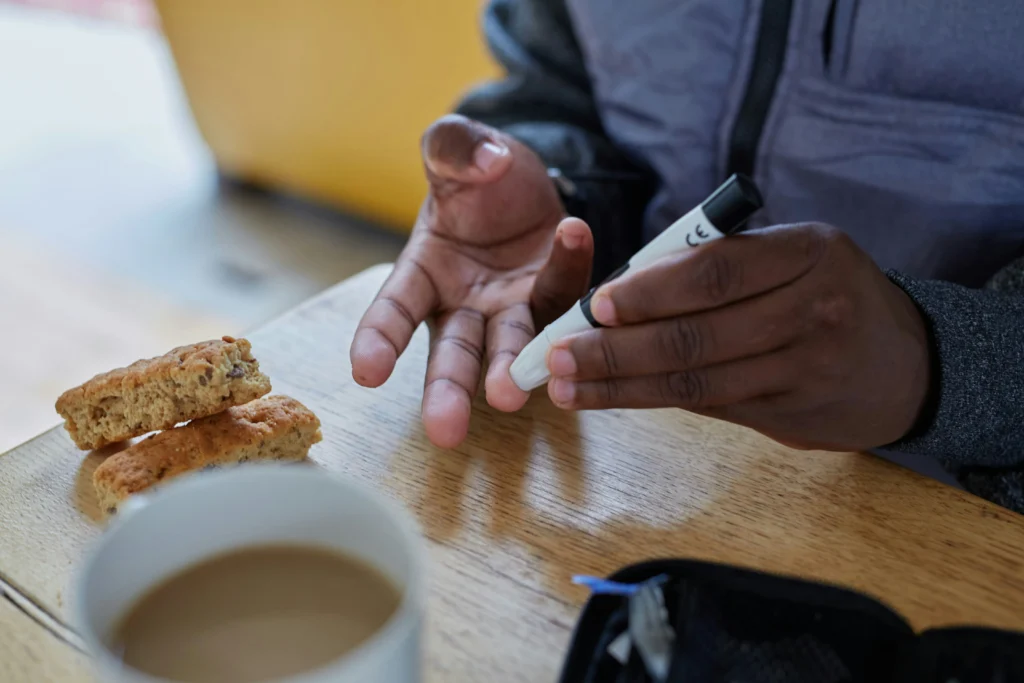
If someone with T1D feels sick or unwell, they should also test ketone levels, particularly if blood glucose levels are higher than normal. Ensure there are always unexpired ketone strips on hand, and check for ketone levels whenever blood glucose levels rise above 14.0 mmol/L. 

Note that DKA doesn’t only happen when blood glucose is high. DKA can also occur even when glucose levels are normal or only mildly elevated. This is particularly true for people taking certain SGLT‑inhibitor medications as an adjunct therapy, or following very low‑carbohydrate diets. 

When ketones are present, timely action can prevent dangerous progression. Ensure that you or your child keeps well-hydrated, take additional insulin correction doses as needed and monitor ketone levels every two hours to prevent elevated ketones from becoming DKA. But if symptoms worsen or ketones rise above 3.0 mmol/L, it is essential to immediately seek medical attention.  

Click HERE to download this infographic and print and post in a common area in your home.

Infographic is provided courtesy of Dr. Bruce Perkins (Lunenfeld–Tanenbaum Research Institute, Sinai Health) and collaborators.

Why awareness is so important 

Awareness of DKA, not just among the T1D community and healthcare professionals, but also the general public is a key tool to mitigating its incidence. And although DKA is more commonly thought to be an issue at diagnosis, the reality is that anyone with T1D is at risk, regardless of age and how long they’ve had T1D or how they manage it. And when it isn’t recognized early and addressed with urgency, it can become a medical crisis – a point at which it’s harder for the person with T1D to advocate for themselves. 

This underscores why better DKA awareness among not only the T1D community, but the public at large is so important. The right education and resources, access to tools, and consistent messaging can help to mitigate DKA risk in people living with T1D.  

Breakthrough T1D Canada, with support from Abbott, has launched a DKA and ketones awareness campaign to help achieve this.  

Preventing DKA includes having conversations about ketones, even if they can be scary and uncomfortable.  

And we want to hear from you:

We are looking for stories from our T1D community about your experience with ketones and DKA.   

  • Tell us about a time you, or a loved one, experienced DKA 
  • How do you incorporate monitoring ketones into your management of T1D? 
  • What symptoms do you feel when your ketones are high? 

Abbott will provide a donation to Breakthrough T1D for every story submitted, and your story may be included in a future blog post. 

Click HERE to share

Turning your experiences into real action 

With your help, we will turn stories into awareness and action. This means reinforcing early ketone testing when symptoms are present, and more importantly, ensuring equitable access to diabetes devices and supplies like ketone strips and any future monitoring technologies.  

Experiencing DKA when living with T1D is a preventable outcome with the right understanding, awareness and tools. 

And listening to the stories of people who have been there will help everyone better recognize the early warning signs of DKA – and can help save lives. 

A new step toward cures for type 1 diabetes in Canada

If you live with type 1 diabetes (T1D), or love someone who does, you know how much daily effort it takes to stay healthy and how urgently better treatments and cures are needed.

That’s why we want to share an important update.

Breakthrough T1D Canada has formally asked the federal government to partner with us to launch the Breakthrough T1D Network for Canada (BTNC) – a national effort designed to speed up the path to real, lasting treatments for T1D.

This proposal didn’t come out of nowhere. It was shaped over many months with input from dozens of stakeholders – researchers, clinicians, industry experts, policymakers, and members of the T1D community – all focused on one shared goal: making sure people in Canada can benefit from breakthrough therapies for T1D as soon as possible.

Why this matters for people living with T1D
Right now, some of the most promising T1D therapies in history are moving from the lab into human trials, including therapies designed to restore the body’s ability to make insulin.

But here’s the challenge: without coordination at a national level, Canada risks seeing those trials, expertise, and future treatments happen elsewhere, meaning Canadians could wait longer to access them.

The BTNC is about changing that.

It is designed to:
• Link expertise, ideas and efforts from across the country to reduce duplication and accelerate T1D research and innovation
• Bring T1D clinical trials to Canada faster
• Support more trial sites across the country
• Help ensure successful therapies are developed, tested, and delivered here at home

For the T1D community, that means earlier access to trials, clearer pathways to new therapies, and a stronger chance that life‑changing treatments reach people in Canada sooner.

What exactly is the Breakthrough T1D Network for Canada?
The BTNC is not a new building or a single research project.
It is a coordinated national network that would connect researchers, clinicians, hospitals, industry partners, and people living with T1D under one clear plan, with shared priorities, timelines, and standards.

In practical terms, the BTNC would:
• Actively manage a national portfolio of T1D research initiatives and trials
• Help trial sites launch and run studies more efficiently
• Support shared training, protocols, and knowledge‑sharing
• Work with partners to move successful therapies toward real‑world use

How this fits with Project ACT
If you’re familiar with Project ACT, this may sound aligned — and that’s intentional.

Project ACT is Breakthrough T1D’s global strategy to accelerate cell therapies as cures for T1D, by addressing not just science, but clinical trials, regulation, access, and health‑system readiness. The BTNC is a key part of how we’re achieving that strategy here in Canada. It focuses on making sure Canada has the systems, coordination, and partnerships needed to turn global progress into real access for people living with T1D here: not years later, and not somewhere else first.

Built with community and partner input
This proposal reflects conversations with dozens of stakeholders, including people from across the T1D research and innovation ecosystem. Their input helped shape a plan that is practical, realistic, and focused on results. We are grateful to the Stem Cell Network for their partnership and to the following organizations for their generous support of this stakeholder engagement work:

• Vertex Pharmaceuticals
• Sana Biotechnology
• Novo Nordisk Canada
• Allarta Life Science

Thanks to all those who participated in stakeholder consultations. Your willingness to share perspectives, ask hard questions, and keep the focus on people living with T1D helped strengthen this proposal and ensure it reflects real community priorities.

What happens next
The federal government is now considering our proposal.
If approved, this partnership would represent a significant step toward:
• Faster progress toward cures
• Stronger clinical trial opportunities in Canada
• A future where people living with T1D spend less time managing the disease and more time living their lives
• Global leadership for Canada in T1D research and trials

We’ll continue to keep you informed, and we’ll continue to advocate – alongside you – for a future without T1D.

Thank you for being part of this journey.

A historic moment for Quebecers living with type 1 diabetes: Looking back at the Autour du diabète de type 1 event

On March 17, at the Hilton Québec people from throughout the type 1 diabetes (T1D) community in Quebec gathered for an important advocacy event.

Jointly organized by Breakthrough T1D and Diabetes Québec, the Autour du diabète de type 1 event brought together for the first time in several years, Quebec diabetes organizations, as well as patients, clinicians, researchers, elected officials, and several industry partners.

More than just a gathering, the evening became a true collective call for justice, equity, and change—voiced together, in unity, and directed at decision‑makers within the Quebec government.

This atmosphere was warm and supportive, and reflected the diversity and strength of those in attendance:

  • Manon Lalonde and Anne‑Frédérique Simard, two women living with type 1 diabetes
  • Representatives from the medtech industry, including Abbott, Dexcom, Insulet, Medtronic, and Tandem, who came to express their support for the community
  • Staff members from Breakthrough T1D and Diabetes Québec
  • Members of parliament and key players within Quebec’s healthcare system

All were united around a clear objective: to end age‑based discrimination for insulin pump coverage in Quebec.

Heartwarming stories shared in support of an important cause

The central moment of the evening was unquestionably the conversation with Anne‑Frédérique Simard and Manon Lalonde—two individual life journeys but with one shared disease.

By sharing their stories, they brought the discussion back to what truly matters: human experience. With vulnerability and courage, they shared about:

  • Their diagnoses, one in childhood and the other in adulthood
  • The financial injustice faced when diabetes device coverage ends or is denied
  • The psychological impact of a living with T1D, a disease that is 24/7 with no breaks or time off
  • The immense burden created by unequal access to life‑sustaining and enhancing diabetes technologies

Their final message resonated deeply with the attendees:

“Access to insulin pumps should be a right, and their use a choice, regardless of the age at diagnosis.”

There was nothing more to add. Only to listen, and act.

A unified voice: organizations speaking together to advocate to Quebec’s provincial government

For the first time, there was public and powerful demonstration of unity among Quebec and national diabetes organizations with a shared goal.

Kim Hanson, Chief of External Relations, and Kim Lacombe, Chief Development Officer of Breakthrough T1D, represented the organization, and demonstrated their commitment to seeing through a change in the current inequitable access to insulin pump coverage in the province.

A particularly striking moment was the joint address by Kim Hanson and Susana Lazzaro, the new CEO of Diabetes Québec. Standing side by side, they delivered a powerful message: divisions no longer belong here, the community is united, the asks are clear: the time for change is now.

They reminded everyone of a simple truth that is sometimes forgotten: behind every administrative decision, every regulation, every delay, there is a person. There is a life affected.

And for people living with T1D, those decisions can mean the difference between more stable T1D management or unnecessary challenges. Patient choice is paramount, and every individual with T1D must be able to make their own decisions regarding their management.

Clear, essential, and urgent political asks

The presentation on advocacy priorities highlighted two requests:

  • That the Government of Quebec expand access to insulin pumps and their supplies for adults living with type 1 diabetes or latent autoimmune diabetes in adults (LADA)
  • That the Government of Quebec modernize RAMQ processes so approvals are faster, simpler, and ensure continuity of insulin therapy

The message was clear: Quebec can do better. And that Quebec must do better—as the only province in Canada that does not cover insulin pumps for people diagnosed with type 1 diabetes after the age of 18, this inequitable practice needs to change.

A resounding success—and a beginning, not an end

The evening concluded with a renewed spirit of mobilization and openness. Discussions were honest, human, sometimes emotional, but always driven by a shared vision: to build a Quebec where access to healthcare no longer depends on age.

The March 17 event planted something powerful. That the community is strong and that we know the solutions exist.

The next step is for Quebec to end age-based discrimination to diabetes technologies and provide every person living with type 1 diabetes with the tools they need to live fully, healthily and safely.

Closing thoughts

For everyone present that evening, a singular theme emerged: that collectively we witnessed a turning point, and this is a movement that goes beyond individual organizations.

Together, we started working towards needed change, and this event was only the beginning.

If you would like to add your voice to this important movement, you can support our advocacy efforts by signing the petition here.

Supporting mental health in adults living with type 1 diabetes

At Breakthrough T1D Canada, we know that living with type 1 diabetes (T1D) is about far more than managing blood glucose levels. Mental health is critical, and T1D affects a person’s emotional, social, and mental well-being throughout their lifetime. Beyond that, people with T1D are at higher risk of mental health disorders including depression, anxiety and disordered eating. These challenges are common among people with T1D and can be treated — but they are often underappreciated or undertreated because of gaps in care and support. Guided by community input, lived experience, and emerging research, our approach aims to raise awareness, reduce stigma, and expand access to meaningful mental health supports for people living with T1D across Canada.

While much of the public conversation around T1D focuses on children and youth, adults with T1D — the majority of the T1D population — face unique and often underrecognized challenges. From the constant cognitive load of daily decision-making to navigating work, relationships, caregiving responsibilities, and long-term health concerns, adults with T1D carry a significant mental and emotional burden. Feelings of burnout, isolation, anxiety, and diabetes distress are common, yet too often go unspoken or unsupported.

Last year, Breakthrough T1D Canada took an important step forward with the release of a video series on our website highlighting the lived mental health experiences of adults with T1D . The series created space for honest conversations and helped shine a light on stories that deserve to be heard.

Building on this momentum, we are excited to announce a new partnership with You’re Just My Type, a nonprofit dedicated to supporting the mental health of people living with T1D through in-person events, resources, and community-building. You’re Just My Type is unique in its focus on reaching underserved areas by hosting free community gatherings in cities across the United States, creating welcoming spaces where people living with T1D can connect, share, and feel understood — regardless of their differences. These gatherings foster understanding, belonging and resilience, by addressing the mental and emotion weight of diabetes.

This partnership will bring You’re Just My Type to Canada for the first time, recognizing the need for initiatives like this and our shared priorities in the importance of fostering social connection and bonding to improve mental well-being. With a proven track record, we know Canadian adults living with T1D will love the in-person and virtual opportunities to take part in these initiatives! Laura Pavlakovich, founder of You’re Just My Type and a person living with T1D was inspired to create the organization. Having lived with the condition for nearly her entire life, she found that the mental toll can often be heavier than the physical.

Laura’s background is in photojournalism, a path that took her all over the world and ignited her passion for storytelling and human connection. In 2016, she began combining these two worlds — photography and T1D — to share the stories of the T1D community. That work eventually grew into You’re Just My Type, where they now focus on building mental-health-centered, peer-led spaces for those living with this condition.

Looking ahead, hosted by YJMT in partnership with Breakthrough T1D will be free, in-person mental health events for adults with T1D, taking place in Vancouver on Saturday May 30, in Toronto later this year, and an online event in the fall. Follow Breakthrough T1D Canada and You’re Just My Type on social media for registration details and updates.

Together, we’re working to ensure no one faces the mental health challenges of T1D alone.

New partnership will connect Indigenous Canadians with type 1 diabetes to necessary resources and support

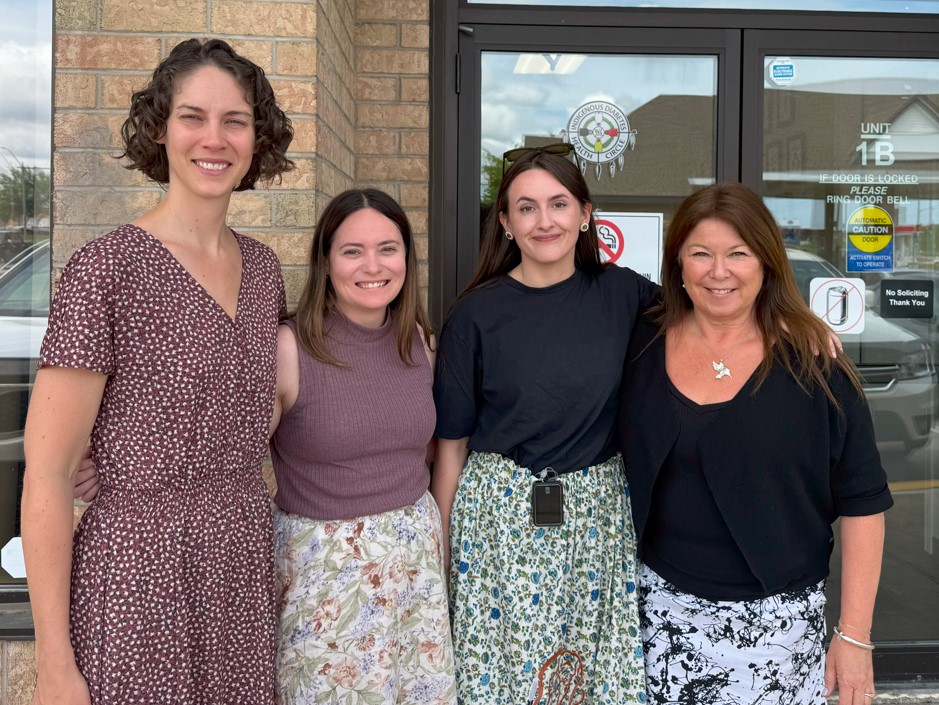
From left to right: Breakthrough T1D Canada staff members Lara Green and Lauren Germain, along with Justice Maki-Chambers and Roslynn Baird, Client Services Administrator, and Godrihwasido (Cayuga “Overseer”), Executive Director of IDHC respectively.

Breakthrough T1D Canada is partnering through a community grant to the Indigenous Diabetes Health Circle (IDHC) to help to address an unmet need with Canada’s Indigenous T1D community.

The grant will help support the development of community informed resources for Indigenous Canadians living with T1D.

Breakthrough T1D had the opportunity to speak with Justice Maki-Chambers, the lead on the project about how it came about and will roll out to improve support and health outcomes for Canada’s Indigenous T1D communities.

Tell us a little bit more about yourself

My name is Justice Maki-Chambers, and I’ve been working as an Eye Health Lead at IDHC for about 3 years. Our Eye Health program focuses on culturally informed approaches to diabetic retinopathy screening in Indigenous communities, in partnership with Vision Loss Rehabilitation Canada (VLRC). On a personal note, I was diagnosed with T1D when I was 16 years old, nearly 10 years ago. Like it is for most people, it was a hard adjustment. This shaped my passion for diabetes education and community-centered health education. Much of my work is grounded in building relationships, supporting self-determination in health, and making sure people have access to the tools they need to stay well.

How did you get involved with IDHC?

When I was working through my Public Health degree at Brock University, I frequently passed IDHC’s head office on my way to and from campus. I had remembered thinking “I am going to work there one day”. Years later, when I was nearing the end of my degree and needed a practicum, I reached out to see if there was any work I could do. Luckily for me, there was. This grew into a contract position within the Client Services Team, and then to a permanent position working on the Eye Health Screening Initiative. IDHC’s commitment to diabetes prevention and management, holistic wellness, and culturally grounded health education is something I’ve admired for a long time, and I am proud to now be a part of.  It’s been humbling to contribute to a space where everyone works so tirelessly to uplift Indigenous wellness and create meaningful, lasting change.

Tell us a little bit more about how the IDHC plans to use the community grant to forward the needs of Indigenous diabetes communities in Canada

IDHC has plenty of resources regarding type 2 diabetes, pre-diabetes and gestational diabetes. While these resources can still be beneficial for people living with T1D, there are still important differences to consider, and we would like to support Indigenous individuals living with T1D in the same capacity. We have also had an influx in requests for T1D specific education due to a higher rate of T1D diagnoses in the past few years. 

With this community grant, we have developed a Committee of Indigenous people with lived and loved experience to guide the project. We have been doing call outs to have others who live with T1D or are a caregiver of someone who has T1D be interviewed by our committee to hear what kind of resources are actually going to be useful. Once the interviews and surveys are complete, we will use them as a guide to create said resource. Ultimately, we are hoping to create a culturally grounded, accessible and practical and community-informed resource to better support Indigenous people and families living with T1D.

Any further message you want to share with the Canadian T1D community?

As we all know, living with T1D means constantly adapting, learning, and advocating for yourself and others in the T1D community, and this dedication does not go unnoticed. Everyone’s journey with T1D is a little different, but at the end of the day, we all deserve care that respects who we are, where we come from, and the strengths we carry. We deserve access, understanding, and resources that shift with us through our journeys. Chi Miigwech (Thank you) to everyone who has lived with diabetes and has fought for these resources and advancements to make our lives better and thank you to everyone who comes after us to continue this important work.

Surveys to help inform the development of these new materials and resources are available below:

Survey for Indigenous people living with T1D and their caregivers 

 https://soadi.wufoo.com/forms/s1nee8th050bbl5/ 
 
Survey for community health workers and healthcare providers with Indigenous patients living with T1D 

https://soadi.wufoo.com/forms/swkly7c1wvmhaz/

Valentine’s Day Treat Carb Counts

Do you prefer the sweetness of a Hershey’s kiss, or maybe you like the spice of a cinnamon heart? For most of us, we can grab a handful of Valentine’s Day candy without thinking about it. But for people living with type 1 diabetes (T1D) every snack, every meal, every piece of food eaten must first be calculated for carbs and sugar against the insulin they need to take – just to stay alive.

For newly diagnosed families, learning the calculations of carbs against insulin needs can be challenging at first, but with practice and consistency this should become easier over time. And even for people who have been living with T1D for decades, the sugar or carb counts of certain foods can vary, either by brand or a change to the product.

Always make sure to check the label carefully, and consider downloading an app, like Roche’s mySugr app, Diabetes M, or apps from your device manufacturers. Visit the website of the manufacturer of your device to find out more.

Carbs and Cals lets you take a photo of your meal, and the app searches its library of over 19,000 foods to give you the nutritional information you need.

MyFitnessPal app includes a database of over 14 million foods so you can find out nutritional information about what you’re eating, including the amount of carbs. It has a handy barcode scanner for ready-made products, and you can also add your own foods.

There is a free version and a paid version which has more features. The app is compatible with iOS and Android.

We always want the holidays to be fun for you, or a loved one with T1D, knowing that treats can still safely be enjoyed. It just requires a little extra work and knowing the carb levels of  favourite candies.

Remember also to factor in the portion of candy or chocolate you or your child eats to get a more accurate carb count.

  • Great Value Cinnamon Hearts (25 pieces) contains 15g total carbs, 15g net carbs, 0g fat, 0g protein, and 60 calories.
  • Hershey Kiss (1 piece) contains 3g total carbs, 2.8g net carbs, 1.5g fat, 0.4g protein, and 27 calories.
  • Hershey’s Reese’s Peanut Butter Cup (1 package – each 1.5 OZ – 2 cups – 2 1/8″ diameter per cup) contains 23g total carbs, 21.7g net carbs, 12.8g fat, 4.3g protein, and 216 calories.
  • Jellybeans (10 piece) contains 28g total carbs, 28g net carbs, 0g fat, 0g protein, and 113 calories
  • Compliments Jujubes (8 candies) contains 33g total carbs, 33g net carbs, 0g fat, 0g protein, and 130 calories.

(values found at https://www.carbmanager.com/)

For a more detailed list of Valentine’s candies and their carb counts, thank you to our friends at Waltzing the Dragon for this Valentine Treat Carb Guide (https://waltzingthedragon.ca/diabetes/nutrition-excercise/valentines-day-candy-chocolate-carb-counting-tips/)

Donate | Donnez