From Beta Cells to Bicycles


The Breakthrough T1D Canucks For Kids Fund Centre of Excellence at the University of British Columbia launches new podcast for the type 1 diabetes (T1D) community

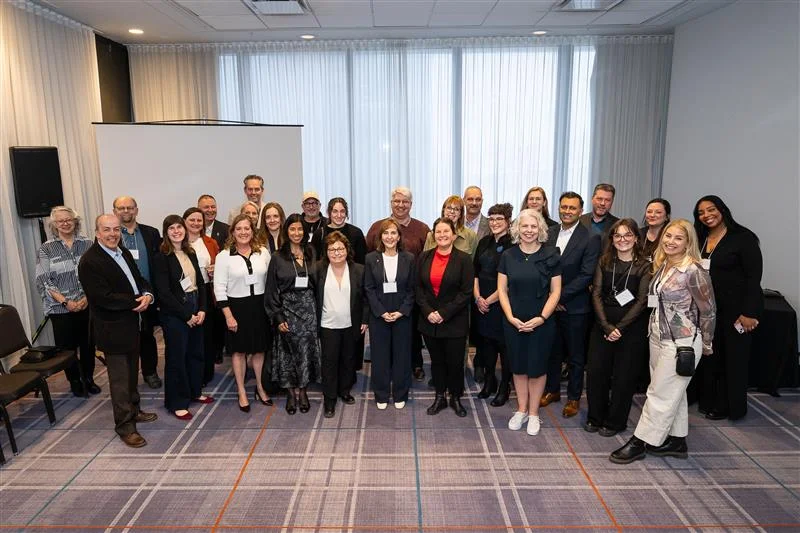
The Breakthrough T1D Canucks For Kids Fund Centre of Excellence at the University of British Columbia (Centre of Excellence) unites the expertise of global research leaders and partnerships in industry, health care, government, and academia towards a singular goal: curing T1D. The Centre creates an environment for sustained multidisciplinary collaboration between three key sites – UBC’s Life Sciences Institute, BC Children’s Hospital Research Institute (BCCHRI), and Vancouver General Hospital (VGH) – allowing for rapid progress and efficient translation of discoveries in the lab to clinical solutions for people living with T1D.

Part of their work also focuses on knowledge translation and supporting lived experience, including The Breakthrough T1D Canucks For Kids Fund Centre of Excellence at UBC T1D Lived Advisory Group which has a key role at Centre outreach events and enabling dialogue between researchers and people living with T1D.

To augment this and launched in early 2026, the Centre of Excellence teamed up with BC Diabetes Research Network’s (BCDRN) popular podcast From Beta Cells to Bicycles for a special series dedicated to the Centre of Excellence. From Beta Cells to Bicycles is a series focusing on research, community engagement, and collaboration.

Streamed on Simplecast, each episode features a brief introduction by Krista Lamb, science communicator. Krista specializes in turning complex medical science into compelling stories that will help listeners and readers understand why this science truly matters in their lives.

“We are thrilled to share with the public, and especially those with lived experience with T1D, some of the exciting research activities and advances going on in the Breakthrough T1D Canucks for Kids Fund Centre of Excellence at UBC. The Centre has become a hub of excellence in T1D research, training, and knowledge sharing. We learn much through our interaction with persons with lived experience and the insight that they share, and hope this podcast captures for you the promise and challenges of T1D research going on in the Centre, as we work hard towards the development of new cell, gene, and molecular therapies for persons living with and at risk for T1D,” says Dr. Bruce Vechere, one of the Centre of Excellence’s co-research leads.

Content and Episode Themes 
Five episodes have been released, each centered on key themes:

  • Episode 1: Co-Leadership in Research—discussing shared leadership models with Drs. Megan Levings and Bruce Verchere, focusing on partnership, team synergy, and the Centre of Excellence’s collaborative approach to developing insulin protection strategies.
  • Episode 2: Voices of Experience—exploring meaningful engagement and co-design with diverse voices in health research, featuring guests Lindsay Pallo, Ben, Ramya, Beth.
  • Episode 3: From Lab to Life—highlighting translational work by Drs. Francis Lynn and James Johnson on cellular therapies for T1D, emphasizing outreach, fundraising, and public benefit.
  • Episode 4: Navigating Translation—addressing balancing innovation and ethics in research translation, with insights from Drs. Megan Levings and Timothy Kieffer.
  • Episode 5: Research Reflections—featuring Breakthrough T1D Canada’s Chief Scientific Officer and President and CEO, Dr. Sarah Linklater and Jessica Diniz reflecting on lessons learned from participatory and team-based research, and future directions for the Centre of Excellence, and stem cell cure-based research in Canada, and globally.

In their episode of From Beta Cells to Bicycles, Sarah and Jessica explain why Breakthrough T1D Canada invests in team‑based, multidisciplinary research rather than in individual labs, as progress in T1D research requires collaboration across beta cell biology, immunology, bioengineering, and clinical translation research. The Centre of Excellence model provides sustained, flexible funding that helps to mitigate the ‘stop‑start’ nature of traditional individual grants and helps research teams move discoveries more quickly from the lab toward real‑world impact.

The discussion also explores the lessons learned since the Centre of Excellence’s launch, including the importance of strong partnerships, meaningful engagement with people with T1D lived experience, and training the next generation of researchers.

They also discussed promising advances in disease‑modifying therapies, like Tzield, while cautioning against unrealistic timelines and stressing the need to pair scientific breakthroughs with advocacy for equitable diabetes device access and coverage.

The episode concludes with optimism about the future of Canadian T1D research, the work of the Breakthrough T1D Canucks for Kids Fund Centre of Excellence, and a shared belief that the future will offer multiple therapeutic options tailored to the diverse needs of people living with type 1 diabetes.

We thank Breakthrough T1D Canucks for Kids Fund Centre of Excellence for allowing us to be guests on From Beta Cells to Bicycles.

Listen to all five episodes here: https://diabetes-from-beta-cells-to-bicycles.simplecast.com/ 

A Canadian pediatric first for type 1 diabetes

For the first time in Canada, Tzield (teplizumab) has been administered to children* – two  patients at BC Children’s Hospital with early-stage type 1 diabetes (T1D).

This milestone matters because it shows real progress toward something the T1D community has waited decades to see – treatments that can change the course of the disease, not just manage it.

Tzield is designed to delay progression of T1D in people who show early signs of the disease but do not yet need insulin. Clinical studies show it can delay the onset of insulin-dependent diabetes by a median of about two years in eligible adults and children.

For families, that time matters. It can mean fewer medical emergencies and more time to prepare for what comes next.

Further promising news out of the United States is that the FDA has approved Tzield for children aged one year and above with stage 2 T1D. In Canada, Tzield is currently approved for age 8 and above. You can read Sanofi’s press release here.

Why this matters beyond two patients

The fact that Tzield has now been given to children in Canada is an encouraging sign that more people are beginning to benefit from the first disease‑modifying therapy for T1D. While access remains limited, it signals a shift toward earlier action – before insulin is needed – rather than waiting for diagnosis.

A small number of adults have already received the drug since it was approved by Health Canada in 2025. What’s new – and meaningful – is that children are now beginning to benefit as well.

How can Canadians benefit from Tzield?

To be eligible for Tzield, one has to be identified through screening as having early stage T1D. Screening for T1D identifies the presence of certain autoantibodies, which can mean someone is at high risk of developing type 1 diabetes.

In Canada, family members of someone with type 1 diabetes can be screened through TrialNet (for first- and second-degree relatives anywhere in Canada) and by FEDERATE-Can (for first-degree relatives in Quebec). However, only 10-15% of newly diagnosed individuals have a family history, so familial screening alone will miss over 85% of new cases.

Those without a first or second degree relative with T1D can discuss www.uncovert1d.ca with their healthcare providers for more options.

Although approved as a therapy by Health Canada, in January Canada’s Drug Agency has announced a recommendation not to reimburse Tzield.

Breakthrough T1D Canada will continue to invest in early-detection research and advocate for better access to screening and disease-modifying treatments.

*The medication teplizumab was provided by the pharmaceutical company Sanofi as part of their patient support program.

Diabetic ketoacidosis (DKA) and ketones 

Why they matter beyond a type 1 diabetes (T1D) diagnosis

Diabetic ketoacidosis (DKA) is one of the most serious, life‑threatening complications associated with T1D—yet it’s often associated with diagnosis and misunderstood and underrecognized among both people living with the disease and some healthcare providers. 

The good news is: armed with proper knowledge, DKA is largely preventable.  

What are diabetic ketoacidosis (DKA) and ketones? 

DKA starts because of a lack of insulin in the body – this is why it’s so often present at diagnosis, particularly in children. When a body doesn’t have enough insulin to allow cells to use glucose for energy, it turns to fat instead. This breakdown of fat produces ketones – acids that accumulate in the bloodstream. 

When ketone levels are too high, these acids rise and blood becomes acidic, leading to DKA. Once this process begins, it can escalate quickly and requires immediate attention. If not addressed, DKA will become a medical crisis that can result in further complications, and even death. 

Fortunately, DKA does not typically present without warning. Part of T1D management is blood glucose testing, and testing for ketones should become standard when glucose is trending high

If someone with T1D feels sick or unwell, they should also test ketone levels, particularly if blood glucose levels are higher than normal. Ensure there are always unexpired ketone strips on hand, and check for ketone levels whenever blood glucose levels rise above 14.0 mmol/L. 

Note that DKA doesn’t only happen when blood glucose is high. DKA can also occur even when glucose levels are normal or only mildly elevated. This is particularly true for people taking certain SGLT‑inhibitor medications as an adjunct therapy, or following very low‑carbohydrate diets. 

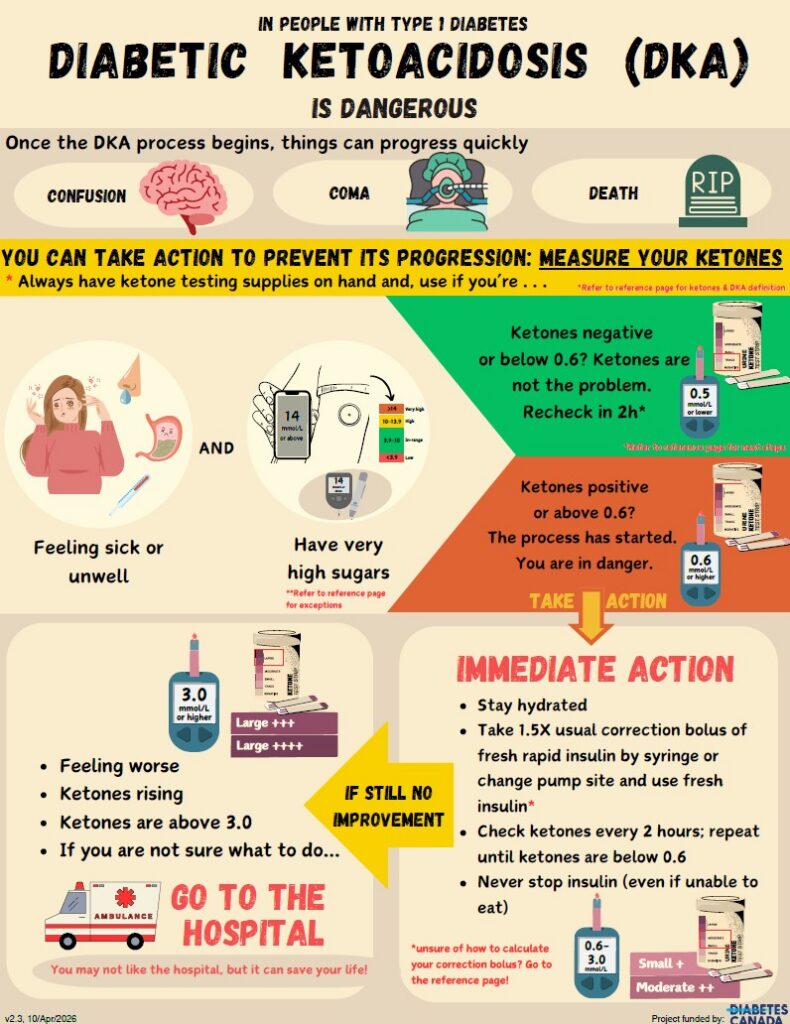
When ketones are present, timely action can prevent dangerous progression. Ensure that you or your child keeps well-hydrated, take additional insulin correction doses as needed and monitor ketone levels every two hours to prevent elevated ketones from becoming DKA. But if symptoms worsen or ketones rise above 3.0 mmol/L, it is essential to immediately seek medical attention.  

Click HERE to download this infographic and print and post in a common area in your home.

Infographic is provided courtesy of Dr. Bruce Perkins (Lunenfeld–Tanenbaum Research Institute, Sinai Health) and collaborators.

Why awareness is so important 

Awareness of DKA, not just among the T1D community and healthcare professionals, but also the general public is a key tool to mitigating its incidence. And although DKA is more commonly thought to be an issue at diagnosis, the reality is that anyone with T1D is at risk, regardless of age and how long they’ve had T1D or how they manage it. And when it isn’t recognized early and addressed with urgency, it can become a medical crisis – a point at which it’s harder for the person with T1D to advocate for themselves. 

This underscores why better DKA awareness among not only the T1D community, but the public at large is so important. The right education and resources, access to tools, and consistent messaging can help to mitigate DKA risk in people living with T1D.  

Breakthrough T1D Canada, with support from Abbott, has launched a DKA and ketones awareness campaign to help achieve this.  

Preventing DKA includes having conversations about ketones, even if they can be scary and uncomfortable.  

And we want to hear from you:

We are looking for stories from our T1D community about your experience with ketones and DKA.   

  • Tell us about a time you, or a loved one, experienced DKA 
  • How do you incorporate monitoring ketones into your management of T1D? 
  • What symptoms do you feel when your ketones are high? 

Abbott will provide a donation to Breakthrough T1D for every story submitted, and your story may be included in a future blog post. 

Click HERE to share

Turning your experiences into real action 

With your help, we will turn stories into awareness and action. This means reinforcing early ketone testing when symptoms are present, and more importantly, ensuring equitable access to diabetes devices and supplies like ketone strips and any future monitoring technologies.  

Experiencing DKA when living with T1D is a preventable outcome with the right understanding, awareness and tools. 

And listening to the stories of people who have been there will help everyone better recognize the early warning signs of DKA – and can help save lives. 

Celebrating our amazing volunteers

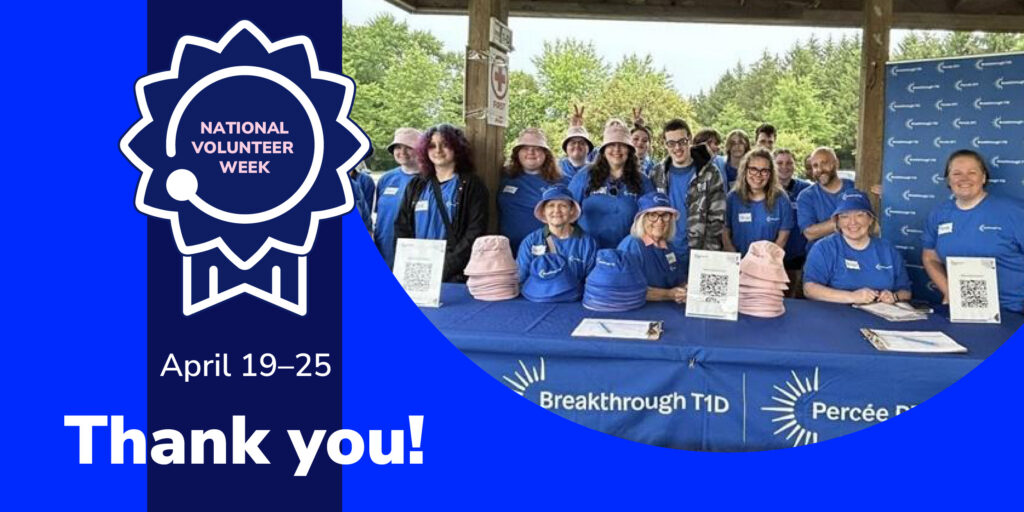
National Volunteer Week takes place from April 19 – April 25, 2026, as organizations across Canada take time to honour the volunteers who generously donate their time and talents to their communities and to causes meaningful to them. 

This year is particularly special as it’s International Volunteer Year, a year-long, nation-building celebration that provides a once-in-a-generation opportunity to recognize the incredible grassroots power of civic participation, further support Canada’s culture of volunteering, and celebrate volunteer stories.

The theme for International Volunteer Year is Ignite Volunteerism and asks us to inspire Canadians to reconnect with their communities through acts of service, community action, and reciprocal support. The Ignite Volunteerism campaign will serve as a celebration of Canada’s volunteers while inspiring a new generation of participation—creating a stronger, more resilient, and inclusive Canada for everyone.

This couldn’t be timelier for Breakthrough T1D Canada, and organization that has its foundation in grassroots volunteering and organizing, brought together by parents from across the country desperate to raise awareness and the profile of type 1 diabetes (T1D), and support research into cures.

Since 2022, it has been our honour and privilege to celebrate our amazing volunteers and their support of the T1D community through our Annual Volunteer Awards.

These Awards recognize individuals, volunteer committees and corporate organizations who have demonstrated incredible commitment and have put their heart and soul into supporting our collective mission of a world without T1D.

Congratulations to all our winners. You are the true spirit of Breakthrough T1D Canada, and we couldn’t be more grateful.

Our volunteers are the foundation of everything we do, and we are thrilled to share with you the 2025 Breakthrough T1D Canada Volunteer Award Winners.

Congratulations to all our Award Winners. To read more about them, please click HERE.

2025 Breakthrough T1D Canada Volunteer Awards

Peter Oliver Award for Volunteer Impact

National Volunteer of the Year

National Committee of the Year

National Advocate of the Year

National Fundraising Volunteer of the Year

National Corporate Partner of the Year

National Rookie Volunteer of the Year

Local Impact: Community Volunteers of the Year

Local Impact: Ambassador of the Year

Local Impact:  Business Partner of the Year

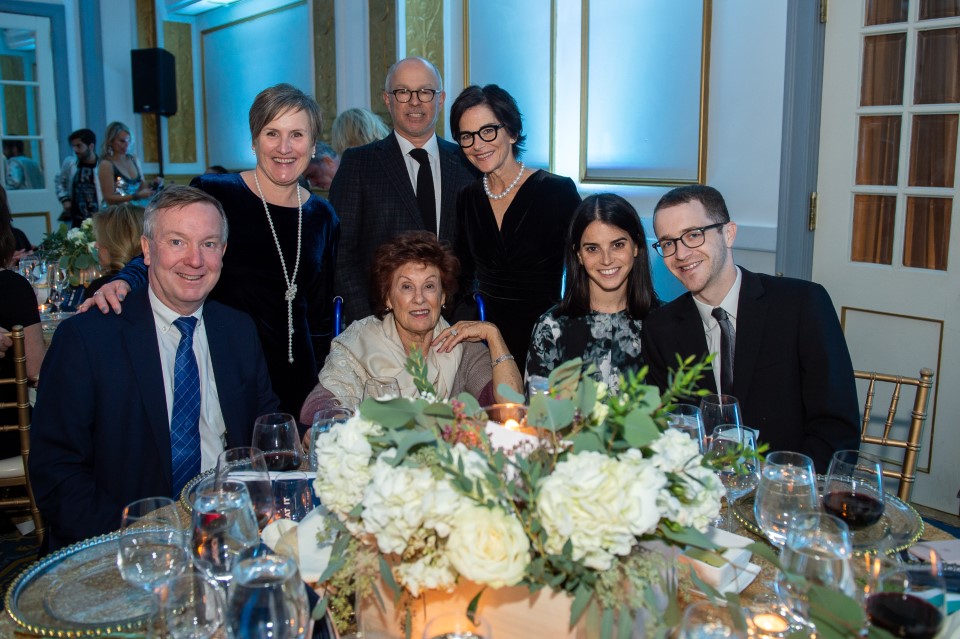
Remembering Tannis M. Richardson, a visionary leader for Breakthrough T1D 

Tannis M. Richardson, who created an incredible legacy of philanthropy and volunteerism in Manitoba and across Canada, died on April 13, 2026, at the age of 99.  

Breakthrough T1D is saddened by the loss of Tannis, a longtime champion for the type 1 diabetes (T1D) community who, with her late husband George T. Richardson, was pivotal to growing Breakthrough T1D in Winnipeg (then Juvenile Diabetes Foundation – JDF) and creating the annual A Starry Starry Night Gala in support of our mission. Tannis also lent her talents to Breakthrough T1D’s national and international boards. In 2021, she gave a transformational $1 million gift to fuel our global research in Canada and beyond. 

Tannis played a vital role in building a community of passionate volunteers to rally around T1D research in Manitoba and throughout Canada. She was especially proud of A Starry Starry Night Gala, which became one of the most memorable and impactful events in the region – raising more than $8 million in support of Breakthrough T1D over the past half century. She created a culture of awareness and inspired a legacy of support for T1D, leading to the research breakthroughs and accessibility wins we’ve celebrated over the last 50+ years. It was our honour to work closely with someone who lived their life guided selflessly by the principles of philanthropy. 

While she always led a life of service, it was the discovery that her daughter Pamela had T1D that found the family on the frontline of a battle they knew little about. Diagnosed at nine years old, Pamela and her family had to learn to manage a disease that was not well understood at the time, nor well supported by Manitoba’s and Canada’s healthcare system. Sadly, Pamela died at the age of 29 from complications of diabetes. 

Hoping to spare other families from heartbreaking tragedy, Tannis became devoted to raising awareness of T1D and ensuring adequate support for Manitobans living with the condition. Her nearly 50 years of commitment to Breakthrough T1D led to tremendous breakthroughs in cure research, T1D management, and access. In 2023, Manitoba stepped up as the gold standard province in Canada for diabetes device coverage by removing all age restrictions to provincial coverage of insulin pumps and continuous glucose monitors (CGM), bringing Tannis’s tenured advocacy efforts to fruition.

Breakthrough T1D is deeply grateful to Tannis for her visionary support and dedication that created an unparalleled legacy for the T1D community. She brought us closer to a world without T1D and helped make living with T1D more manageable for nearly 300,000 Canadians.  

We extend sincere sympathies to Tannis’s family and to all those whose lives she touched.  

Tannis shared about her life and legacy with Breakthrough T1D in 2021. Click here to read the blog.

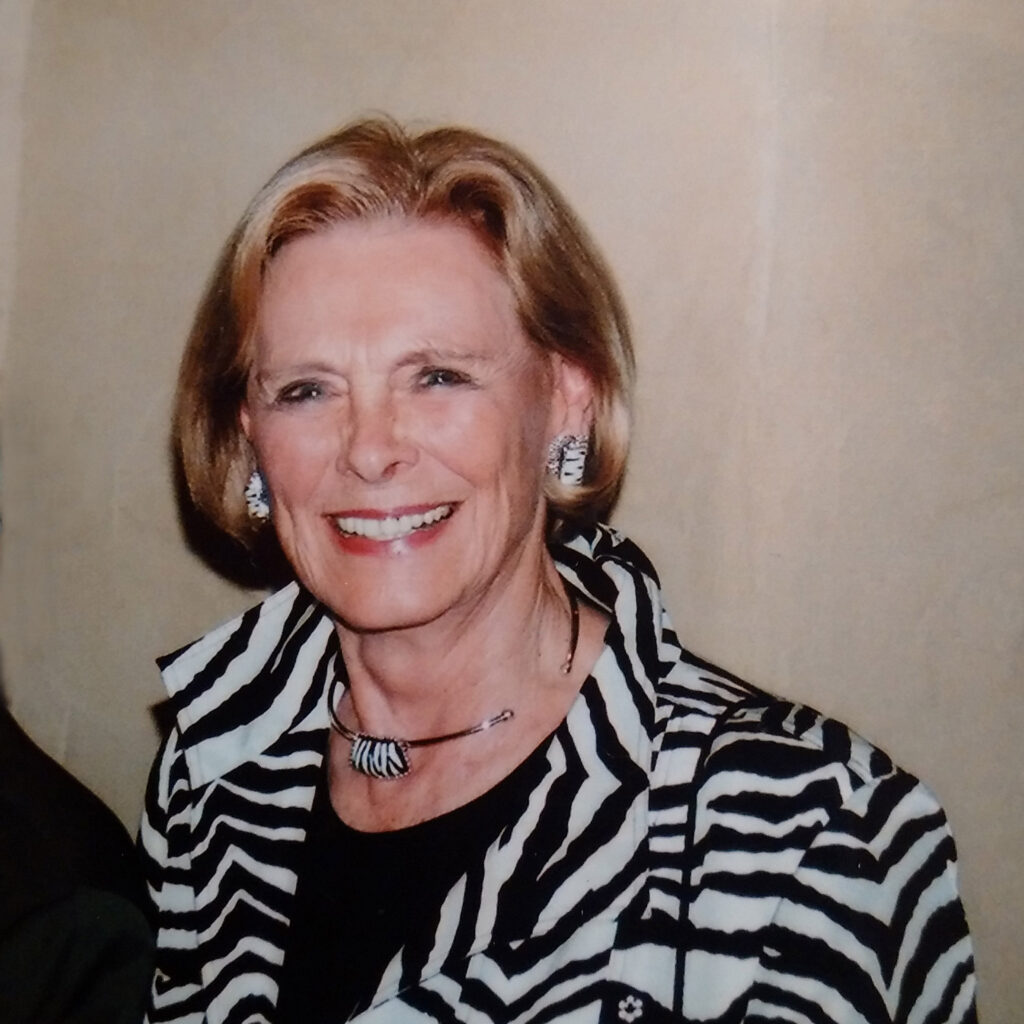
In Memory of Krayna Golfman

Founding Member, Breakthrough T1D Canada 
Breakthrough T1D International Chancellor 

Breakthrough T1D Canada mourns the loss of Krayna Golfman, one of our founding members and a trailblazer in bringing the type 1 diabetes (T1D) movement to Canada. 

Krayna passed away peacefully on April 9, 2026. 

More than fifty years ago, Krayna helped bring to Canada an organization that had begun in the United States, transforming it into what would become Breakthrough T1D Canada. Working from her Montreal basement alongside other committed families, she played a pivotal role in establishing a national presence dedicated to accelerating research, improving care, and uniting the T1D community across this country. 

In the early 1970s, Krayna Golfman and Mitch Garfinkle each faced the life‑changing diagnosis of type 1 diabetes in their sons, David and Jimmy. At the time, little was understood about the disease, and research support was limited. Rather than accept the status quo, they joined with other families affected by T1D to build a Canadian organization grounded in action, urgency, and hope. 

A deeply proud mother, Krayna ensured her children grew up confident and fully engaged in life; playing sports, staying active, and learning to manage their diabetes day to day. That same resolve carried forward as her family grew. When her grandson was later diagnosed with T1D, Krayna’s commitment to advancing progress for future generations remained unwavering. She was equally proud of her role as a grandmother and great‑grandmother, cherishing family as both her motivation and her legacy. 

Behind the scenes, Krayna worked tirelessly to raise awareness and generate critical funding for T1D research, mobilizing the Montreal community through golf tournaments, galas, bike‑a‑thons, and countless grassroots initiatives that laid the foundation for long‑term impact. 

In recognition of her extraordinary leadership and enduring influence, Krayna was named a Breakthrough T1D International Chancellor, an honour reflecting the profound respect she earned across the global T1D community and the lasting significance of the work she helped establish in Canada. 

Krayna was deeply proud of what Breakthrough T1D Canada became. Over the past five decades, the organization she helped found has been at the forefront of major advances in T1D research and advocacy, contributing to improved care, access, and technologies that have extended both lifespan and quality of life for people living with T1D in Canada. 

Her legacy lives on through the progress she helped accelerate, the community she helped build, and her family, who remain closely and lovingly connected to this mission. 

As we remember Krayna, we honour a life defined by courage, leadership, and devotion to family. Breakthrough T1D Canada will continue her legacy by standing with the T1D community, advocating for equitable access to treatments and technologies, and funding the most promising research on the path toward cures. 

Our deepest sympathies are extended to her family, and to all those whose lives she touched. 

Gifts made in her memory will help carry forward the work she was so proud to help build. 

To learn more about Krayna’s remarkable life, please visit her obituary here.  

Memorial Gifts in Krayna’s Honour 

A new step toward cures for type 1 diabetes in Canada

If you live with type 1 diabetes (T1D), or love someone who does, you know how much daily effort it takes to stay healthy and how urgently better treatments and cures are needed.

That’s why we want to share an important update.

Breakthrough T1D Canada has formally asked the federal government to partner with us to launch the Breakthrough T1D Network for Canada (BTNC) – a national effort designed to speed up the path to real, lasting treatments for T1D.

This proposal didn’t come out of nowhere. It was shaped over many months with input from dozens of stakeholders – researchers, clinicians, industry experts, policymakers, and members of the T1D community – all focused on one shared goal: making sure people in Canada can benefit from breakthrough therapies for T1D as soon as possible.

Why this matters for people living with T1D
Right now, some of the most promising T1D therapies in history are moving from the lab into human trials, including therapies designed to restore the body’s ability to make insulin.

But here’s the challenge: without coordination at a national level, Canada risks seeing those trials, expertise, and future treatments happen elsewhere, meaning Canadians could wait longer to access them.

The BTNC is about changing that.

It is designed to:
• Link expertise, ideas and efforts from across the country to reduce duplication and accelerate T1D research and innovation
• Bring T1D clinical trials to Canada faster
• Support more trial sites across the country
• Help ensure successful therapies are developed, tested, and delivered here at home

For the T1D community, that means earlier access to trials, clearer pathways to new therapies, and a stronger chance that life‑changing treatments reach people in Canada sooner.

What exactly is the Breakthrough T1D Network for Canada?
The BTNC is not a new building or a single research project.
It is a coordinated national network that would connect researchers, clinicians, hospitals, industry partners, and people living with T1D under one clear plan, with shared priorities, timelines, and standards.

In practical terms, the BTNC would:
• Actively manage a national portfolio of T1D research initiatives and trials
• Help trial sites launch and run studies more efficiently
• Support shared training, protocols, and knowledge‑sharing
• Work with partners to move successful therapies toward real‑world use

How this fits with Project ACT
If you’re familiar with Project ACT, this may sound aligned — and that’s intentional.

Project ACT is Breakthrough T1D’s global strategy to accelerate cell therapies as cures for T1D, by addressing not just science, but clinical trials, regulation, access, and health‑system readiness. The BTNC is a key part of how we’re achieving that strategy here in Canada. It focuses on making sure Canada has the systems, coordination, and partnerships needed to turn global progress into real access for people living with T1D here: not years later, and not somewhere else first.

Built with community and partner input
This proposal reflects conversations with dozens of stakeholders, including people from across the T1D research and innovation ecosystem. Their input helped shape a plan that is practical, realistic, and focused on results. We are grateful to the Stem Cell Network for their partnership and to the following organizations for their generous support of this stakeholder engagement work:

• Vertex Pharmaceuticals
• Sana Biotechnology
• Novo Nordisk Canada
• Allarta Life Science

Thanks to all those who participated in stakeholder consultations. Your willingness to share perspectives, ask hard questions, and keep the focus on people living with T1D helped strengthen this proposal and ensure it reflects real community priorities.

What happens next
The federal government is now considering our proposal.
If approved, this partnership would represent a significant step toward:
• Faster progress toward cures
• Stronger clinical trial opportunities in Canada
• A future where people living with T1D spend less time managing the disease and more time living their lives
• Global leadership for Canada in T1D research and trials

We’ll continue to keep you informed, and we’ll continue to advocate – alongside you – for a future without T1D.

Thank you for being part of this journey.

A historic moment for Quebecers living with type 1 diabetes: Looking back at the Autour du diabète de type 1 event

On March 17, at the Hilton Québec people from throughout the type 1 diabetes (T1D) community in Quebec gathered for an important advocacy event.

Jointly organized by Breakthrough T1D and Diabetes Québec, the Autour du diabète de type 1 event brought together for the first time in several years, Quebec diabetes organizations, as well as patients, clinicians, researchers, elected officials, and several industry partners.

More than just a gathering, the evening became a true collective call for justice, equity, and change—voiced together, in unity, and directed at decision‑makers within the Quebec government.

This atmosphere was warm and supportive, and reflected the diversity and strength of those in attendance:

  • Manon Lalonde and Anne‑Frédérique Simard, two women living with type 1 diabetes
  • Representatives from the medtech industry, including Abbott, Dexcom, Insulet, Medtronic, and Tandem, who came to express their support for the community
  • Staff members from Breakthrough T1D and Diabetes Québec
  • Members of parliament and key players within Quebec’s healthcare system

All were united around a clear objective: to end age‑based discrimination for insulin pump coverage in Quebec.

Heartwarming stories shared in support of an important cause

The central moment of the evening was unquestionably the conversation with Anne‑Frédérique Simard and Manon Lalonde—two individual life journeys but with one shared disease.

By sharing their stories, they brought the discussion back to what truly matters: human experience. With vulnerability and courage, they shared about:

  • Their diagnoses, one in childhood and the other in adulthood
  • The financial injustice faced when diabetes device coverage ends or is denied
  • The psychological impact of a living with T1D, a disease that is 24/7 with no breaks or time off
  • The immense burden created by unequal access to life‑sustaining and enhancing diabetes technologies

Their final message resonated deeply with the attendees:

“Access to insulin pumps should be a right, and their use a choice, regardless of the age at diagnosis.”

There was nothing more to add. Only to listen, and act.

A unified voice: organizations speaking together to advocate to Quebec’s provincial government

For the first time, there was public and powerful demonstration of unity among Quebec and national diabetes organizations with a shared goal.

Kim Hanson, Chief of External Relations, and Kim Lacombe, Chief Development Officer of Breakthrough T1D, represented the organization, and demonstrated their commitment to seeing through a change in the current inequitable access to insulin pump coverage in the province.

A particularly striking moment was the joint address by Kim Hanson and Susana Lazzaro, the new CEO of Diabetes Québec. Standing side by side, they delivered a powerful message: divisions no longer belong here, the community is united, the asks are clear: the time for change is now.

They reminded everyone of a simple truth that is sometimes forgotten: behind every administrative decision, every regulation, every delay, there is a person. There is a life affected.

And for people living with T1D, those decisions can mean the difference between more stable T1D management or unnecessary challenges. Patient choice is paramount, and every individual with T1D must be able to make their own decisions regarding their management.

Clear, essential, and urgent political asks

The presentation on advocacy priorities highlighted two requests:

  • That the Government of Quebec expand access to insulin pumps and their supplies for adults living with type 1 diabetes or latent autoimmune diabetes in adults (LADA)
  • That the Government of Quebec modernize RAMQ processes so approvals are faster, simpler, and ensure continuity of insulin therapy

The message was clear: Quebec can do better. And that Quebec must do better—as the only province in Canada that does not cover insulin pumps for people diagnosed with type 1 diabetes after the age of 18, this inequitable practice needs to change.

A resounding success—and a beginning, not an end

The evening concluded with a renewed spirit of mobilization and openness. Discussions were honest, human, sometimes emotional, but always driven by a shared vision: to build a Quebec where access to healthcare no longer depends on age.

The March 17 event planted something powerful. That the community is strong and that we know the solutions exist.

The next step is for Quebec to end age-based discrimination to diabetes technologies and provide every person living with type 1 diabetes with the tools they need to live fully, healthily and safely.

Closing thoughts

For everyone present that evening, a singular theme emerged: that collectively we witnessed a turning point, and this is a movement that goes beyond individual organizations.

Together, we started working towards needed change, and this event was only the beginning.

If you would like to add your voice to this important movement, you can support our advocacy efforts by signing the petition here.

Supporting mental health in adults living with type 1 diabetes

At Breakthrough T1D Canada, we know that living with type 1 diabetes (T1D) is about far more than managing blood glucose levels. Mental health is critical, and T1D affects a person’s emotional, social, and mental well-being throughout their lifetime. Beyond that, people with T1D are at higher risk of mental health disorders including depression, anxiety and disordered eating. These challenges are common among people with T1D and can be treated — but they are often underappreciated or undertreated because of gaps in care and support. Guided by community input, lived experience, and emerging research, our approach aims to raise awareness, reduce stigma, and expand access to meaningful mental health supports for people living with T1D across Canada.

While much of the public conversation around T1D focuses on children and youth, adults with T1D — the majority of the T1D population — face unique and often underrecognized challenges. From the constant cognitive load of daily decision-making to navigating work, relationships, caregiving responsibilities, and long-term health concerns, adults with T1D carry a significant mental and emotional burden. Feelings of burnout, isolation, anxiety, and diabetes distress are common, yet too often go unspoken or unsupported.

Last year, Breakthrough T1D Canada took an important step forward with the release of a video series on our website highlighting the lived mental health experiences of adults with T1D . The series created space for honest conversations and helped shine a light on stories that deserve to be heard.

Building on this momentum, we are excited to announce a new partnership with You’re Just My Type, a nonprofit dedicated to supporting the mental health of people living with T1D through in-person events, resources, and community-building. You’re Just My Type is unique in its focus on reaching underserved areas by hosting free community gatherings in cities across the United States, creating welcoming spaces where people living with T1D can connect, share, and feel understood — regardless of their differences. These gatherings foster understanding, belonging and resilience, by addressing the mental and emotion weight of diabetes.

This partnership will bring You’re Just My Type to Canada for the first time, recognizing the need for initiatives like this and our shared priorities in the importance of fostering social connection and bonding to improve mental well-being. With a proven track record, we know Canadian adults living with T1D will love the in-person and virtual opportunities to take part in these initiatives! Laura Pavlakovich, founder of You’re Just My Type and a person living with T1D was inspired to create the organization. Having lived with the condition for nearly her entire life, she found that the mental toll can often be heavier than the physical.

Laura’s background is in photojournalism, a path that took her all over the world and ignited her passion for storytelling and human connection. In 2016, she began combining these two worlds — photography and T1D — to share the stories of the T1D community. That work eventually grew into You’re Just My Type, where they now focus on building mental-health-centered, peer-led spaces for those living with this condition.

Looking ahead, hosted by YJMT in partnership with Breakthrough T1D will be free, in-person mental health events for adults with T1D, taking place in Vancouver on Saturday May 30, in Toronto later this year, and an online event in the fall. Follow Breakthrough T1D Canada and You’re Just My Type on social media for registration details and updates.

Together, we’re working to ensure no one faces the mental health challenges of T1D alone.

Update on clinical trials to study the efficacy of baricitinib as a disease-modifying therapy for T1D

UPDATE: March, 2026 

Two new Phase 3 clinical trials to study the efficacy of baricitinib as a disease-modifying therapy for T1D. 

Baricitinib is a JAK inhibitor that interferes with signaling pathways critical to both immune cells and beta cells. This drug has the potential to extend the “honeymoon period” of T1D, meaning that it could preserve remaining insulin-producing beta cells earlier in disease progression. More beta cells mean better blood sugar management—and potentially reduced long-term complications. 

Following very promising results from a Breakthrough T1D-funded Phase 2 study of baricitinib in newly diagnosed individuals with T1D in Australia (see full study write up and results below), Eli Lilly and Company are now launching two new Phase 3 clinical trials. These new international trials will include locations in Canada – click the links below to find out where the studies are recruiting: 

BARICADE-DELAY 

  • Purpose: To determine if baricitinib can delay the onset of clinical stage 3 T1D in people who are at high risk 
  • Eligibility: Must be between one and 36 years old and be in stage 2 T1D 
  • Primary outcome: Time to diagnosis of stage 3 T1D 
  • Learn more about BARICADE-DELAY
  • Provinces recruiting: BC and AB

To learn more about the trials and eligibility: BARICADE-DELAY

BARICADE-PRESERVE 

  • Purpose: To determine if baricitinib can preserve beta cell function in people with newly diagnosed T1D 
  • Eligibility: Must be between one and 36 years old and diagnosed with stage 3 T1D within the last 100 days 
  • Primary endpoint: C-peptide preservation (a measure of insulin production) 
  • Provinces recruiting: BC, AB, ON, QC

To learn more about the trials and eligibility: BARICADE-PRESERVE

***

Insulin, administered either by pump or multiple daily injection, remains the only available treatment for type 1 diabetes (T1D). Breakthrough T1D is aiming to change that and move beyond insulin by accelerating the development of medicines that prevent, delay, or reverse T1D by targeting the autoimmune response, beta cells, or both. Supporting studies that explore how drugs may preserve beta cell function is key to our disease-modifying therapies portfolio.

In a Breakthrough T1D-funded clinical trial, published in the renowned New England Journal of Medicine , Thomas Kay, M.B.B.S., Helen Thomas, Ph.D., and others demonstrated that baricitinib—a small molecule that blocks Janus Kinase, which is critical to signaling pathways within both immune cells and beta cells in T1D—preserved beta cell function in the disease.

The BANDIT study investigated the use of baricitinib, a treatment already approved by Health Canada for other autoimmune diseases like rheumatoid arthritis, in newly diagnosed T1D individuals. This JDRF-funded study was funded by JDRF and JDRF Australia and conducted at St. Vincent’s Institute of Medical Research in Australia. The study was conducted after years of research by Thomas Kay and others, as well as important work by JDRF advocating for Eli Lilly to provide the baricitinib for the study.

Study Overview

  • Participants were between 10 and 30 years old and began taking baricitinib within 100 days of diagnosis
  • Participants either received baricitinib or a placebo drug
  • The study ran for 48 weeks, and results were analyzed at 12, 24, 36 and 48 weeks
  • The primary outcome was average C-peptide (a measure of how much insulin is still being made by a person’s own beta cells) following a standard meal at week 48
  • Secondary outcomes were HbA1c (average glucose level over a 2–3-month period), insulin use, and continuous glucose monitor (CGM) measures

Results

In 60 newly diagnosed children and young adults, baricitinib:

  • Preserved insulin production, as estimated by C-peptide
  • Improved blood-glucose variability (blood glucose levels were more stable) and time-in-range (the percentage of your day within your set blood glucose targets), using a CGM
  • Decreased the requirement for external insulin
  • Was well-tolerated by the participants

The effect of baricitinib was achieved using a single daily oral tablet, and it’s the first immunotherapy trial to suggest a benefit on CGM measures. (Verapamil, a once-a-day tablet approved for blood pressure management , also preserved beta cell function, but without improvement in CGM measures or insulin requirement.)

What comes next?

Currently, baricitinib is approved for the treatment of rheumatoid arthritis in adults in Canada. It is not however a Health Canada approved therapy for people with T1D. Breakthrough T1D has multiple lines of inquiry to make sure that this and other disease-modifying drugs get to the hands of people with T1D . There are several clinical trials that Breakthrough T1D is exploring to see if baricitinib can be effective if used in conjunction with other therapies, such as Tzield™ (teplizumab-mzwv) or verapamil.

What does this mean for people with T1D?

These promising results show that this drug can extend the honeymoon period (the phase in early type 1 diabetes development where the body is still producing some of its own insulin), but more studies are needed before it can become available to the T1D community. As this drug is already approved for use in rheumatoid arthritis (RA) in Canada, the path to its potential use in T1D may be more rapid. Studies that explore the use of disease-modifying drugs, such as baricitinib orustekinumab, in another Breakthrough T1D-funded trial currently recruiting in Canada, are key to helping Breakthrough T1D address the autoimmunity behind T1D.

This treatment is not currently available in Canada for people with T1D, but Breakthrough T1D Canada will share further updates and results as they become available.

Cell therapy first: transplanted islets working without immuno-suppressives

On Jan 7, 2025 (Sweden)Sana Biotechnology released significant clinical data: the first person with type 1 diabetes (T1D) who received deceased donor islets engineered to evade the immune system is producing insulin without immunosuppression.

UPDATE: March, 2026

At the Advanced Technologies & Treatment for Diabetes international conference held in Barcelona, Spain Per-Ola Carlsson, M.D., Ph.D., presented updated results from a Sana’s clinical trial involving a novel cell therapy approach designed to help transplanted islet cells evade immune attack via gene editing while continuing to produce insulin.

 After 60 weeks, the single participant has reported no severe or unexpected adverse events, meeting the trial’s primary safety endpoint. At 14 months after transplantation, the participant continued to produce detectable C-peptide, indicating that the transplanted cells remained alive and functional.

Researchers also observed that C-peptide levels temporarily declined after about one year, likely due to beta cell exhaustion, but subsequently recovered. This is an encouraging signal that the transplanted cells may be capable of regaining function.

While still very early, these findings provide important proof of concept that gene-edited, immune-evasive islet cells can survive and function in a person with T1D. If confirmed in larger studies, this approach could help move the field closer to cell therapies that work without long-term immune suppression—a major goal for the future of T1D cures.


UPDATE: June 23, 2025
Sana Biotechnology presented updated data on June 23, 2025 at the six-month follow up timepoint. The single patient dosed with hypoimmune donor islets continues to produce insulin in response to a mixed meal tolerance test (MMTT) without the use of immunosuppressants. 

The details

This is a big step for cell-based therapies for potentially curing T1D. Sana’s first-in-human study consists of allogeneic islets, meaning they are derived from an external source, which in this case is the pancreases of deceased donors. These islets were engineered to avoid recognition by the immune system (hypoimmune) and were implanted intramuscularly into a person with T1D. After four weeks, circulating C-peptide increased, meaning that the beta cells are alive, healthy, and producing insulin—all without the need for immunosuppression and no safety issue. This is the first evidence of engineered islets successfully avoiding immune destruction.

What this means for the T1D community

While this is an incredibly promising step forward for the T1D community, to have allogenic cells survive without the use of immunosuppressants, this trial relied on deceased donor cells, of which there will never be enough to provide to everyone living with T1D.  The trial was done in a single participant and is reporting only 4-weeks of data – this is a proof-of-concept study that is promising but very preliminary.

What’s next: lots to look forward to

Breakthrough T1D believes that the best chance for T1D cures lies in stem cell-based therapies since deceased donor islets are in short supply, while stem cell-derived islets can be produced at scale. Engineering cells to evade immune attack is a new path forward to protect the insulin-producing beta cells and avoid the use of immunosuppressants. Most importantly, this technology is being studied to apply to stem cell-based therapies, which is a scalable solution for many more people with T1D. This hypoimmune technology moves us closer to the possibility of having enough immune-evading cells for everyone with T1D.

Another trial is in progress testing a similar approach (CRISPR) in Canada – https://clinicaltrials.breakthrought1d.ca/clinical-trial/NCT05565248

While this approach will take significant time, effort, and money, every day we take another step toward a possible life-changing T1D cure. 

Breakthrough T1D’s Role

The primary objective of Breakthrough T1D’s beta cell replacement efforts is to place insulin-producing cells into people with T1D without the use of immunosuppressants. Breakthrough T1D strongly supports the development of stem cell-based therapies that do not require broad immunosuppression and Breakthrough T1D International based out of the US recently launched an initiative to accelerate this faster than ever (Project ACT – Accelerate Cell Therapies). To contribute to the advancement of these game-changing therapies, the T1D Fund: A Breakthrough T1D Venture invested in Sana recognizing that their hypoimmune engineering technology held significant promise for T1D cell therapies. We look forward to seeing how the trial progresses.

New partnership will connect Indigenous Canadians with type 1 diabetes to necessary resources and support

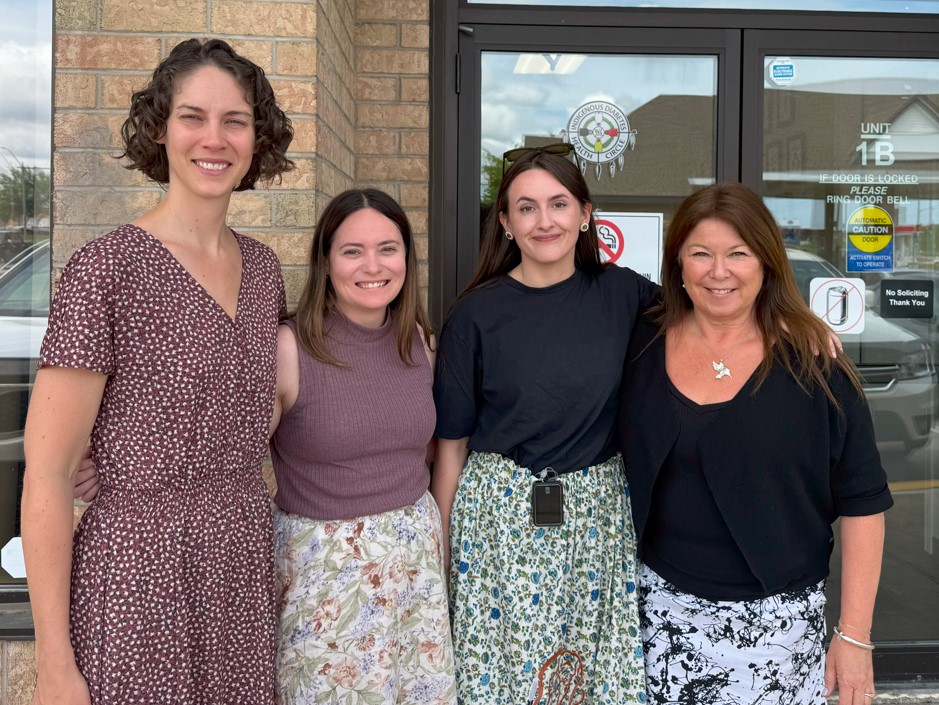
From left to right: Breakthrough T1D Canada staff members Lara Green and Lauren Germain, along with Justice Maki-Chambers and Roslynn Baird, Client Services Administrator, and Godrihwasido (Cayuga “Overseer”), Executive Director of IDHC respectively.

Breakthrough T1D Canada is partnering through a community grant to the Indigenous Diabetes Health Circle (IDHC) to help to address an unmet need with Canada’s Indigenous T1D community.

The grant will help support the development of community informed resources for Indigenous Canadians living with T1D.

Breakthrough T1D had the opportunity to speak with Justice Maki-Chambers, the lead on the project about how it came about and will roll out to improve support and health outcomes for Canada’s Indigenous T1D communities.

Tell us a little bit more about yourself

My name is Justice Maki-Chambers, and I’ve been working as an Eye Health Lead at IDHC for about 3 years. Our Eye Health program focuses on culturally informed approaches to diabetic retinopathy screening in Indigenous communities, in partnership with Vision Loss Rehabilitation Canada (VLRC). On a personal note, I was diagnosed with T1D when I was 16 years old, nearly 10 years ago. Like it is for most people, it was a hard adjustment. This shaped my passion for diabetes education and community-centered health education. Much of my work is grounded in building relationships, supporting self-determination in health, and making sure people have access to the tools they need to stay well.

How did you get involved with IDHC?

When I was working through my Public Health degree at Brock University, I frequently passed IDHC’s head office on my way to and from campus. I had remembered thinking “I am going to work there one day”. Years later, when I was nearing the end of my degree and needed a practicum, I reached out to see if there was any work I could do. Luckily for me, there was. This grew into a contract position within the Client Services Team, and then to a permanent position working on the Eye Health Screening Initiative. IDHC’s commitment to diabetes prevention and management, holistic wellness, and culturally grounded health education is something I’ve admired for a long time, and I am proud to now be a part of.  It’s been humbling to contribute to a space where everyone works so tirelessly to uplift Indigenous wellness and create meaningful, lasting change.

Tell us a little bit more about how the IDHC plans to use the community grant to forward the needs of Indigenous diabetes communities in Canada

IDHC has plenty of resources regarding type 2 diabetes, pre-diabetes and gestational diabetes. While these resources can still be beneficial for people living with T1D, there are still important differences to consider, and we would like to support Indigenous individuals living with T1D in the same capacity. We have also had an influx in requests for T1D specific education due to a higher rate of T1D diagnoses in the past few years. 

With this community grant, we have developed a Committee of Indigenous people with lived and loved experience to guide the project. We have been doing call outs to have others who live with T1D or are a caregiver of someone who has T1D be interviewed by our committee to hear what kind of resources are actually going to be useful. Once the interviews and surveys are complete, we will use them as a guide to create said resource. Ultimately, we are hoping to create a culturally grounded, accessible and practical and community-informed resource to better support Indigenous people and families living with T1D.

Any further message you want to share with the Canadian T1D community?

As we all know, living with T1D means constantly adapting, learning, and advocating for yourself and others in the T1D community, and this dedication does not go unnoticed. Everyone’s journey with T1D is a little different, but at the end of the day, we all deserve care that respects who we are, where we come from, and the strengths we carry. We deserve access, understanding, and resources that shift with us through our journeys. Chi Miigwech (Thank you) to everyone who has lived with diabetes and has fought for these resources and advancements to make our lives better and thank you to everyone who comes after us to continue this important work.

Surveys to help inform the development of these new materials and resources are available below:

Survey for Indigenous people living with T1D and their caregivers 

 https://soadi.wufoo.com/forms/s1nee8th050bbl5/ 
 
Survey for community health workers and healthcare providers with Indigenous patients living with T1D 

https://soadi.wufoo.com/forms/swkly7c1wvmhaz/

Donate | Donnez