Clinical trial on GLP-1RA (tirzepatide) to begin in Canada

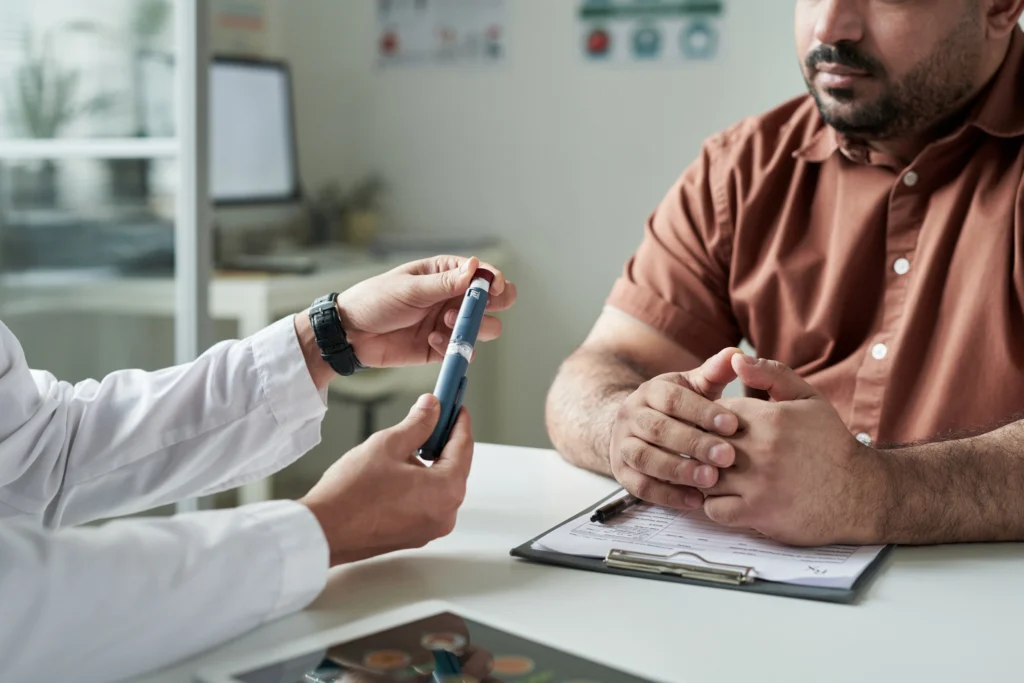
Image of a doctor and a patient in a consultation with no faces showing. Doctor holding a spring-loaded lancing device

A new Breakthrough T1D-funded clinical trial led by Drs. Ahmad Haidar and Melissa-Rosina Pasqua (McGill University), is exploring whether tirzepatide, a commonly used medication for type 2 diabetes, can improve automated insulin delivery (AID) systems.

What is tirzepatide?

Tirzepatide is a type of adjunct-to-insulin therapy for diabetes called GLP-1RAs, short for   glucagon-like peptide-1 (GLP-1) receptor agonist. GLP-1RAs allows the pancreas to better respond to GLP-1 hormone signals that are released after eating. This hormone helps to manage blood glucose and weight gain by suppressing the release of glucagon, stimulating insulin production (in non-T1D individuals), and slowing the rate at which the stomach empties thereby reducing appetite and increasing the sensation of being full.

Tirzepatide is currently approved by Health Canada for use in type 2 diabetes (Mounjaro) and weight management (Zepbound) but is currently not approved for use with T1D.

What is Dr. Haidar’s trial examining?

Drs. Haidar and Pasqua’s Breakthrough T1D-funded trial will examine if tirzepatide can help improve glucose management for people with T1D using Automated insulin delivery (AID) systems.

AID (or hybrid closed loop) systems consist of an insulin pump and continuous glucose monitor (CGM) that are connected via an algorithm to automatically adjust insulin delivery based on blood glucose levels. However, most current systems are still considered “hybrid” because users must manually count carbohydrates and deliver insulin boluses before meals. This step remains one of the most burdensome parts of diabetes management.

This new study aims to take the next step forward: enabling fully closed-loop insulin delivery, where the system manages glucose control entirely on its own, without requiring users to announce meals or count carbohydrates. The trial will assess if tirzepatide can help achieve this goal.

How will tirzepatide replace or reduce meal announcements and carb counting?

With current AID systems, meal-time insulin dosing remains necessary because of a mismatch in timing:

  • Glucose from food enters the bloodstream quickly
  • Insulin delivered under the skin acts more slowly

This delay leads to post-meal (post-prandial) spikes in blood glucose levels if meal boluses are not given in advance. Tirzepatide works to address the timing mismatch by:

  • Slowing gastric emptying which delays how quickly glucose enters the bloodstream
  • Supressing glucagon (a hormone that raises blood glucose) which will help reduce post-meal spikes
  • Reducing appetite which lowers food intake and daily insulin requirements

Together, these effects may reduce the mismatch between food absorption and insulin action, making it easier for an automated system to maintain stable glucose levels without manual intervention.

Clinical trial details

A Clinical Trial Using Tirzepatide to Help Adults with Type 1 Diabetes Automatically Control Their Blood Sugar (TZP) is estimated to run in Montreal from 2026 to 2029.

The study will involve 105 adults using the Tandem Control-IQ technology, a commercial AID system. In the initial study stage, all participants will use the pump in its hybrid mode, which still requires users to manually give themselves insulin bolus doses before meals. In the final weeks of the study, participants taking tirzepatide will switch to a fully automated (“closed loop”) mode, where the system manages insulin delivery without these manual meal boluses.

This study will be conducted in collaboration with the Institut de recherches cliniques de Montréal (IRCM) (Rémi Rabasa-Lhoret, MD, PhD) and the University of Bern (Lia Bally, MD, PhD; Christoph Grani, MD, PhD; and Maricel Peters, MD, PhD).

To learn about other clinical trials you may be eligible to participate in: Breakthrough T1D – Clinical Trials

How does this study align with clinical practice

Recently updated Clinical Practice Guidelines released by Diabetes Canada recommend that adjunctive therapies may be considered in adults with T1D, based on shared decision-making with the care provider. 

The same updated guidelines also recommended that insulin be delivered ideally by an insulin pump integrated with a continuous glucose monitor (CGM) in an AID system and that these devices be offered to all individuals with T1D, provided they are willing to wear the device and operate it.

Spotlight on Dr. Patrick MacDonald: Expanding global knowledge of human islets

Image of Dr. Patrick MacDonald
Dr. Patrick MacDonald

To cure type 1 diabetes (T1D), we need to do two things: we need to address the autoimmune response that damages insulin-producing beta cells, and we need to replace lost beta cells to restore the ability to produce insulin.

Beta cells are found in clusters of multiple cell types in the pancreas. These clusters are called the islets of Langerhans – or islets for short.  In order to understand how to protect and replace islets, we need to know as much about ‘healthy’ islets as possible and why they are destroyed in someone with T1D.  Since islets can’t be studied within the body and islets can’t be donated by a living donor, researchers rely greatly on islets that are isolated from cadaveric pancreas donors.

Dr. Patrick MacDonald of the University of Alberta is a world leader in coordinating global islet samples and data for researchers, while fostering national training opportunities. Dr. MacDonald directs the Alberta Diabetes Institute (ADI) IsletCore, the world’s largest ‘single source’ of human pancreas research tissue.

“Our goal with the ADI IsletCore, and other efforts we are involved in, is to elevate diabetes and transplantation research across Canada and internationally. With human research tissue we feel it is essential to share experimental results widely, to honour the selfless gifts of organ donors and to benefit the entire diabetes community,” says Dr. MacDonald.

ADI IsletCore in Canada

ADI IsletCore isolates and ships islets and pancreas tissue to a network of nearly 200 research labs around the world.  With nearly 50 pancreas donors in 2025, they were able to distribute almost 7 million islet equivalent cells to researchers, bringing their grand total to 75 million islet equivalents distributed to date. This translates into over 300 scientific papers crediting ADI IsletCore for research support.

Islet database

With support from the Breakthrough T1D-CIHR Partnership to Defeat Diabetes, Dr. MacDonald and his team have developed a groundbreaking online database cataloguing the molecular, cellular, and physiological functions of islets from human organ donors acquired through ADI IsletCore.

HumanIslets.com allows researchers worldwide to explore islet function, proteins, and pathways comparing between donors with and without diabetes. They have leveraged this work for an additional $1.8M of funding including a Breakthrough T1D International grant for $750k to expand the platform to include stem cell-derived islets and integrate AI and machine learning into the analysis.

Dr. MacDonald’s research has significantly advanced cure research for T1D by integrating massive datasets from hundreds of human donors and making this resource publicly accessible.

International collaboration

Dr. MacDonald is now sharing his expertise internationally through collaboration on development of islet distribution centres.

In April 2026, Australia launched its first national Breakthrough T1D-funded islet distribution centre, which is critical given Australia’s remote location and need to collect local tissue for research. Dr. MacDonald is advising on this important new islet centre, that will further improve both global collaboration and our understanding of human islets.

In addition to his partnership in Australia, Dr. MacDonald is also collaborating on islet distribution programs in Michigan, USA and Sweden to further support a worldwide connected research network. He has recently published a paper in Diabetologia about coordinating global efforts to advance islet research through shared resources.

Training emerging leaders

Not only does Dr. MacDonald oversee IsletCore and run an active research lab, he also co-founded, and was the initial leadership group chair of, the Canadian Islet Research and Training Network (CIRTN). The CIRTN is a world-leading islet research and training network in Canada that looks to build upon Canada’s reputation for excellence in islet biology research by facilitating the exchange of information and ideas with in-person and virtual scientific meetings, enhancing mentorship and trainee career development, and promoting engagement and collaboration amongst islet researchers in Canada and worldwide. Breakthrough T1D has been pleased to collaborate with CIRTN to co-fund four cohorts of trainees. Dr. MacDonald’s work is a crucial piece of the puzzle understanding stem-cell derived islets and demonstrates the power of global collaboration, a key tenet of Breakthrough T1D’s research strategy. His contributions are getting us closer to being able to produce these cells at scale and to Canadians with T1D.

JDRF commissions cost effectiveness study to demonstrate real quality of life value of diabetes technologies

JDRF’s #AccessForAll advocacy campaign aims to make type 1 diabetes (T1D) technology affordable and accessible for all Canadians living with the disease. With support from the T1D community, JDRF seeks to increase public and private coverage technologies such as continuous glucose monitors (CGM) and flash glucose monitors (Flash GM). The goal is to reduce the out-of-pocket costs for these technologies and improve access for Canadians with T1D. 

To support our advocacy for expanded public coverage, JDRF commissioned a study to examine glucose monitoring systems (flash glucose monitoring, continuous glucose monitoring and self-monitoring of blood glucose) and their population level impact on diabetes related complications, mortality, and cost effectiveness of each of techniques in adults with type 1 diabetes (T1D) in Canada.

An estimated 300,000 people in Canada live with T1D. Living with T1D means managing the disease through frequent checking of blood glucose levels, regular infusions of insulin, either by injection or through an insulin pump, and carefully adjusting each dose to balance against carbohydrate consumption and activity levels.

For years, the only way to measure blood glucose was through frequent and often painful finger-prick tests, and insulin needed to be administered through multiple daily injections. More recently, however, diabetes devices like advanced glucose monitors, like CGMs and Flash GM along with insulin pumps have offered more options for managing diabetes and more accurate readings.

Recently, JDRF commissioned a study to examine the population level impact on diabetes related complications, mortality and cost effectiveness of each of these three glucose monitoring techniques in adults with T1D in Canada. The study used a Markov cost-effectiveness model (a probability-based model that models the probability or chance of transitioning between states and their associated costs) and Canadian epidemiologic and economic data for adults aged 18-64 years with T1D.

The study found the following: 

Self-Monitoring of Blood Glucose (SMBG) is an approach whereby an individual pricks their finger, measuring their blood glucose manually using a glucose meter.

Average annual per person costs: $2,019

After 20 years, if all 180,000 Canadians aged 18-64 living with T1D use the traditional finger-prick method, an estimated 11,200 people would remain free of complications and there would be an estimated 89,400 deaths, at a total cost of $12.2 Billion.

A continuous glucose monitor (CGM) works through a tiny sensor inserted under the skin. The sensor measures the glucose level and provides a continuous reading.

Average annual per person costs: $3,930

Universal coverage of CGM would increase the number of people living free of complications by an estimated 7,400 and decrease mortality by an estimated 11,500.

A Flash glucose monitor (Flash GM) measures the glucose level through sensors and provides a blood glucose reading when the user scans the device over the sensor.

Average annual per person costs: $2,540

Universal coverage of Flash GM would allow an estimated 3,400 more people to live without chronic complications of T1D and prevent approximately 4,600 deaths.

Universal use of CGM and/or Flash GM in Canada for the T1D population would reduce complications and death at a cost-effectiveness threshold of $50,000/ Quality adjusted life-years (QALY). QALY is a generic measure of disease burden, including both the quality and the quantity of life lived. It is commonly used in health economic evaluations to measure the cost-effectiveness of medical interventions and is the standard measure of quality of life in cost-effectiveness models.  A value of 1 corresponds to one person living one year in perfect health; and a value of 0 is assigned when a person has died.

Quality Adjusted Life-Years (QALY):

Use of CGM and/or Flash GM over SMBG for the T1D population:
  • Leads to fewer complications such as:
Severe Hypoglycemia
Diabetic Ketoacidosis
Micro- or Macrovascular complications
  • Reduces long-term costs associated with hospitalization
  • Leads to improved mortality rates
  • Are at a much lower cost-effectiveness threshold than the acceptable threshold of $50,000/QALY ($35,017 QALY and $17,488 QALY respectively)

The study demonstrates that universal adoption of CGM and Flash devices would be anticipated to lead to a significant reduction in risk of developing severe hypoglycemia (a severe event where a person often loses consciousness due to low blood glucose), diabetic ketoacidosis (a severe event where a person has high levels of blood glucose and ketones in their blood.  These often require hospitalization) and micro- or macrovascular complications (chronic complications that affect the smaller blood vessels such as retinopathy, nephropathy, and neuropathy.  They can also lead to other severe complications like kidney disease, blindness, etc.) Macrovascular complications affect more major blood vessels which includes heart attack, coronary artery disease, etc.

Therefore, funding these devices is more cost-effective compared to traditional finger-prick methods, and while the cost of funding CGM and Flash GMs are higher in the near-term, they generate significant long-term cost savings due to lower costs of complications, potential hospitalization, and additional medical interventions.

Moreover, access to these devices brings users greater peace of mind and provides more accurate blood glucose measurements. T1D self-management is facilitated by these technologies through real-time readings that help to improve overall blood glucose (HbA1C) and time in target range (TIR). Better self-management and glucose control also help to relieve some of the anxiety that surrounds the disease. It allows people with T1D to better plan exercise, meals, and rest and greatly improves overall quality of life.

CGM and Flash GM devices are extremely cost-effective compared to traditional finger-prick methods. To learn more about Access for All and how to advocate in your community, please visit https://breakthrought1d.ca/advocacy/access-for-all/

JDRF ambassador Sébastien Sasseville takes on the Race Across America in latest of endurance races

Sébastien was diagnosed with type 1 diabetes (T1D) in 2002. He made a commitment to himself then that T1D would never keep him from living life to the fullest, and he has followed through on that promise to himself. Since then, Seb has run across Canada, climbed Mt Everest, and participated in a number of the world’s hardest endurance races. On June 28th, 2021, he started a ride across Canada Canada in support of universal access to diabetes devices for all Canadians living with the disease. And this past June, he took on The Race Across America, or RAAM, an ultra-distance road cycling race held across the United States known to be the toughest in the world.

JDRF had the chance to connect with Seb and ask about his experience with RAAM.

What made you decide to pursue this race, and so close after riding across Canada?

“When I came back from the ride across Canada, I was tired, but I was happy and proud about what I had accomplished. There is always a recovery phase, it’s part of the deal that there is some suffering involved, Before during and after. Just a very small part of it. I don’t like to suffer more than anyone else, but it’s not the part I focus on – it’s what I learn, the impact, how I grow, that is the appeal. When you look at it from that angle, it’s tough not to continue doing these things.

RAAM is a much tougher ride, physically and mentally. People get hung up on it being shorter than the ride across Canada, but the course is far more demanding. It’s a lot more climbing, and it has a cutoff, it’s a race. So, it has a different context. And you have twelve days maximum to complete it. There is no margin of error. You must be on your bike 20-22 hours a day. 12 days of 1-2 hours of sleep. It’s the toughest ultra-cycling event in the world.”

This is an extremely intensive undertaking for anyone but competing in race of this kind while managing your diabetes adds another layer of challenge and complexity. How did that impact the race for you?

“It had a huge impact, and a big issue was the lack of cell phone reception – that was a massive surprise. We thought we would lose reception every once in a while, but the course goes through very remote areas throughout the course. That’s a safety thing so you aren’t riding on highways, it’s a set course. We ended up days without coverage, or very spotty coverage. The impact was that I was planning on checking my blood glucose on my watch, but that goes through the internet.  I couldn’t get it on my phone -so my team couldn’t see my blood glucose readings in real-time. So, we didn’t expect not having the data. And this impacted how I controlled my diabetes.

And honestly – it was a big source of frustration. A lot of people who don’t understand T1D believe – oh you have a CGM (continuous glucose monitor), and insulin pump – so you’re fixed. And some people think I must be different. That diabetes must be easier for me because I do these kind of endurance events. I’m not. I’m like everybody. I go through the same challenges. And I hate it sometimes. I try and embrace it as much as I can. But I’m human like everyone else. And if it slows me down, I tell myself that this is my life and journey. But it takes up time and space in your head and body. And it impacts everything.

There was a pharmacist there (at the RAAM), who probably understood it the most. And he came up to me almost every day, to say how amazing he thought it was that I was competing in this race and have T1D. Although it felt good, it was a reminder that most people don’t have his knowledge and don’t understand what we have to go through every single day.

But I must say – it was still far better than last year (the ride across Canada). Because we learned a lot from last year. These types of races are never going to be easy. So, you have to adapt.

Type 1 diabetes is the one thing that slowed me down the most during this race. And I’m immensely proud that I was even on the starting line. It’s by qualification or invitation only.  I was the only Canadian. To race, to race strong, to finish, to finish 12 out of 33 who started, that’s a very strong performance.”

How would you describe your endurance sport as a metaphor for living with T1D?

“I hear a lot from people, when they learn about what I do that ‘It’s so out there, it’s hard to relate’ We were fully aware of it – a year ago when I started looking for sponsorship and funding, I did wonder how to connect this with the larger world outside of the T1D community, because it’s so outside the realm of most people’s experience (living with diabetes).

But for me, it’s such a parallel for life managing diabetes. One rider, a team of 10 people, working 24/7. It’s like with T1D, it’s the team that supports, the team that takes all the decisions. They prepare the bike and fix all the issues. It really is a collective effort and success. You can’t even get through day 1 without the team.

I relate this to how living with diabetes really takes a community too. None of us do this completely on our own.”

Do you see yourself continuing to pursue these types of high intensity endurance sports?

“I don’t plan on stopping. I don’t ask people when they play golf when they are going to stop. It’s something they love. I’m aware that isn’t a typical kind of life, but I have so much fun, I learn so much, I grow so much. I’m not an adrenaline chaser. I won’t jump out of a plane. But these I will keep doing as long as I can. They are life-enriching experiences. I finished, but at the end of the day – whether you finish or not, it’s a very rich experience. The team becomes like your family. We created something very special. I was a very magical and powerful experience. So, I plan to continue doing these things for a long time.”

Any final thoughts?

“We need a cure. There are people like me who live well with diabetes, and we all need to live a fulfilled life before there is a cure. We do need to live in the now. But the fact of the matter is that this is tough to live with. And there were bad diabetes days. And it slowed me down. I know a lot about type one and exercise, it’s my job and I keep it as well-managed as possible. And even still, I have highs, I have lows. I hate it sometimes. My reality is the same as others with this disease.

This is why I am an ambassador for JDRF. Because I want to be part of the cure.”

Follow his journey on Instagram

COVID-19 and type 1 diabetes (T1D) – an update

JDRF is committed to providing the T1D community with the most up-to-date and relevant information about the ongoing COVID-19 pandemic and its impact on those living with the disease.

As of January 2022, Canada is once again amid what appears to be the worst wave of the pandemic, with the emergence of the Omicron variant. This is not the place we imagined we’d be in the beginning of 2022, nearly a year after the vaccine rollout began and two years into the pandemic. It is a time of understandable uncertainty, fear, and frustration.

While we are undoubtedly exhausted and experiencing pandemic fatigue, until the rate of COVID-19 cases declines, we must continue to take every precaution to try our best to prevent exposure for both ourselves and those in our communities.

We recommend getting boosted (a third vaccine dose) if you haven’t already. There are also approved vaccines for children between 5- 11 years old.

Having T1D doesn’t increase the risk of contracting any of the COVID-19 virus variants, but people with T1D – particularly adults – do have an increased risk of serious outcomes if they develop the disease. And Omicron is exceedingly contagious.

Like other COVID variants, Omicron can also be transmitted when a person is asymptomatic or pre-symptomatic, so even if you are feeling fine, it is important to always follow these guidelines to protect yourself and those around you.

Important steps to take to limit exposure

COVID-19 is airborne. This means that tiny virus particles can linger in the air after being exhaled by someone who is infectious. Make sure whenever you leave the house and will be in an indoor setting to have a very well-fitting mask. Ideally, wear an N95 mask which can filter out up to 95% of microbes. If you can’t find an N95, double masking with a medical grade surgical mask (the blue masks you can find at pharmacies) with a tightly fitting cloth mask on top can work nearly as well as an N95. An effective way to check if the mask is tight enough is to wear glasses after you have put on your mask(s) and exhale forcefully. If the glasses fog up, this means air is escaping from the sides or top of the mask. Adjust accordingly until the seal is tight.

This image has an empty alt attribute; its file name is Hygiene-03.png

Maintain strict hygiene. Wash your hands every time you come home, or after handling/opening a delivery/package etc.

This image has an empty alt attribute; its file name is Lung-Icon-01-2.png

Good ventilation is essential in an indoor setting. Prolonged exposure to aerosolized particles, which are heavier in indoor spaces with low ventilation, significantly increases your risk of being exposed to COVID-19. If possible, avoid spending time indoors anywhere that is not your household, and do not go anywhere without a well-fitted face covering.

Minimize your social interactions and trips outside the house, if possible, and try to avoid busy times or crowds when you do. Always maintain social distancing from non-household members, including while outdoors. Wear masks whenever you are spending time with anyone who is not in your immediate household. This includes receiving deliveries etc.

What should I do if someone in my family with T1D tests positive, or I test positive and have T1D?

If you have COVID-19 symptoms, please contact your healthcare professional. There is a shortage of PCR tests across Canada (nasal swab performed by a healthcare professional and tested at a lab). If you have access to rapid antigen tests, and that test shows you are positive, consider that a confirmed infection. You should then follow public health guidelines on isolation (these differ by province) until you are recovered and symptom-free.

Important steps to take when COVID-19 positive with T1D

COVID-19 elevates the risk of diabetes ketoacidosis (DKA). It is essential to more closely monitor your blood glucose levels and ketones. Making sure you are eating and drinking enough when sick is a challenge. Try and ensure you are eating a balance of protein and carbs and drinking plenty of liquids, even if it’s hard.

Additionally, you are likely taking over the counter medications to help manage your symptoms. Decongestants for congestion and cough can raise blood glucose levels. Suspension (or liquid) medication and cough drops frequently contain sugar.

Some fever reduction medications can be hard on the kidney and liver (like acetaminophen found in Tylenol) and should be taken with caution if you have kidney complications. Aspirin in large doses can lower blood glucose levels. Ibuprofen (found in Advil) can increase the hypoglycemic effect of insulin.

All of this can further complicate blood glucose management.

If you use a continuous glucose monitor (CGM), flash glucose monitor or finger sticks, checking your blood glucose level every few hours can help you better notice any unusual changes. You may also require more insulin. If you can, make sure you have an extra supply on hand.

As well, be extra vigilant checking for ketones (a sign that the body is using fat and muscle for energy, instead of sugar). DKA requires immediate medical attention. An added challenge is the symptoms of DKA can feel flu-like, as do the symptoms of COVID-19. If you notice increased and rapid breathing, and a fruity or sweet smell emanating from the body – this is a sign that the body is trying to rid itself of ketones.

If you or a loved one with T1D do end up needing to go to the hospital, here is more information on how to best prepare. https://breakthrought1d.ca/t1d-and-covid-19/hospital-visits-during-covid-19/

For more tips on maintaining more consistent blood sugar readings: https://breakthrought1d.ca/covid-19-and-t1d-together-we-can-keep-our-community-safe/

This has been an ongoing time of intense stress. Please ask for help, either from family, trusted friends or a professional if you are overwhelmed. Trying to manage your diabetes along with protecting yourself and your loved ones from COVID-19 is not easy. Speak to your healthcare provider or support network about accessing additional resources and help.

2021 Wrap Up

2021 was a year of strength and we believe that 2022 will be one of hope.

Canadians are resilient, and though this pandemic continues to challenge, the tenacious spirit of the JDRF community never wavered. As a result, JDRF was able to progress our important work in supporting the research that will bring us closer to a cure, while improving the lives of people affected by T1D today.

Thanks to the generosity of donors, JDRF had a ground-breaking year in 2021 – funding more dollars to research, building new strategic partnerships, continuing to support newly diagnosed families and sharing the latest updates impacting our T1D Community.

As well, 2021 marked the 100th anniversary of the discovery of insulin in Canada. Together, as we commemorated this meaningful milestone, raising awareness for type 1 diabetes (T1D), – we more importantly – recognized the urgent need to accelerate towards a cure.

Some highlights over the past year included:

  • The launch the $100M Campaign to Accelerate and raise nearly 50% of our goal in 1.5 years!
  • The launch the first JDRF Centre of Excellence in Canada at UBC, exclusively focused on a cure for T1D
  • The beginning of the work to address critical gaps in mental health care for the T1D community by launching our new Mental Health and T1D Strategy
  • Secure improved T1D device coverage in Saskatchewan, British Columbia, Manitoba and Ontario
  • Advocating the federal government to renew their commitment to the JDRF-CIHR Partnership to Defeat Diabetes, matched by JDRF donors for a $30 million investment, and expand access to the Disability Tax Credit  
  • Supporting two industry-wide challenges in the commercial real estate and wealth management sectors that brought $4.2 million to our JDRF-CIHR Partnership
  • Expanding our JDRF Bag of Hope® program by introducing new, age-appropriate No Limits Care Kits for teens and adults newly diagnosed with T1D
  • Rallying communities across the country in support of JDRF through Walk, Ride, Virtual Galas and other unique fundraisers
  • In Cell Replacement:
    • Vertex announced promising results of its stem cell-based therapy, originally developed by JDRF-funded researcher Douglas Melton.
    • JDRF-funded ViaCyte and CRISPR Therapeutics are launching a Canadian clinical trial of the first gene-edited cell replacement therapy for T1D.
  • In Disease-Modifying Therapies:
    • JDRF-funded researchers are performing advanced clinical trials on a drug called ustekinumab, already approved to treat other autoimmune diseases, that could help slow and halt the progression of T1D
  • In Treatments to Improve Lives:
    • JDRF is funding several studies to reduce the risks and impacts of hypoglycemia, as well as other studies to mitigate T1D complications such as kidney complications and diabetic eye disease
  • In Screening:
    • JDRF launched a Universal Childhood T1D Screening Project in Israel that could provide the basis for similar general population screening worldwide
    • JDRF is helping to facilitate screening for relatives of those with T1D at Sick Kids Hospital via TrialNet

To read more about research updates, please visit www.jdrf/ca/blog to see stories about even more incredible progess that took place over the last year in T1D research and development.

Despite the challenges brought by the continued pandemic, JDRF is more committed than ever to doing all we can to accelerate life-changing breakthroughs for everyone affected by T1D.

One hundred years ago, Canada discovered insulin. With the power of our JDRF community, we believe that Canada can cure diabetes.

Exciting news: stem cell-based treatments producing insulin in participants with type 1 diabetes

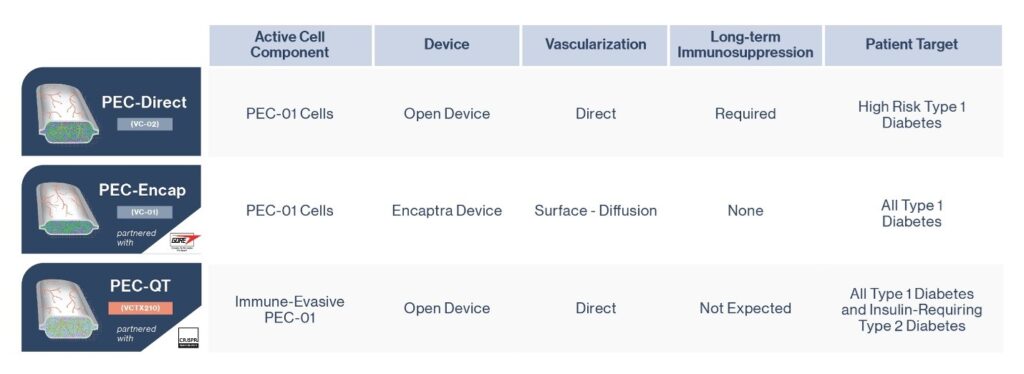
*Image taken from viacyte.com/pipeline/

A significant focus of JDRF is funding the most promising research that could lead to potential cure therapies for type 1 diabetes (T1D).

ViaCyte, a cell replacement company long supported by JDRF, has three separate stem cell replacement therapy products in development, all with the aim of reducing or eliminating the need for external insulin for people with T1D.

Researchers look for ways to use stem cells as a renewable source of insulin-producing cells which, when transplanted, would replace the beta cells that are destroyed in a person with T1D, allowing them to produce insulin again. This would lessen or eliminate the amount of external insulin required by someone living with T1D (either by injection, pen, or pump) for months or even decades.

The biggest challenges to stem cell replacement therapy are identifying the appropriate stem cell source (i.e., pancreatic cells, or liver cells) and ensuring that they both function well and will not be rejected by the recipient’s immune system. Much like a transplanted organ – most stem cell replacement therapies require immunosuppressing medications to prevent rejection.

Updates on ViaCyte Clinical Trials

PEC-Encap (VC-01™; see middle figure) was ViaCyte’s first product including a stem-cell derived precursor that once implanted in humans has demonstrated that they will mature into beta cells that produce insulin.

The company’s second technology, PEC Direct (VC-02™; see top figure), has now been the subject of two papers that report the preliminary results of its clinical study, which involved an international team of clinicians and researchers including several at the University of Alberta and at the University of British Columbia’s Faculty of Medicine and Vancouver Coastal Health (VCH).

The UBC-VCH study is part of larger international clinical trials led by ViaCyte, which is also studying the effectiveness of cell-replacement therapy on participants in sites across Canada, the U.S. and Belgium.

One of the new papers reports on 15 trial participants studied at the Vancouver site. At the start of the UBC-VCH study, each participant had several ViaCyte cell-containing devices implanted just below the skin. Each device, thin as a credit card, contained millions of lab-grown cells that originally came from a single stem cell line. These cells had been trained to mature into insulin-producing beta cells.

Six months after implantation, the cells had not only survived but successfully matured into insulin-producing beta cells, which helped the trial participants to sense blood sugar levels and release insulin when needed.

This study used levels of C-peptide (released into the blood as a byproduct of insulin production) to measure insulin produced by the implanted cells. The researchers found C-peptide levels rose after patients ate a meal—evidence of normal beta cell function. This is significant as external insulin (either received via injection, pump or pen) does not generate C-peptide.

Participants also spent 13 per cent more time in target blood sugar range and some were able to reduce the amount of insulin they injected.

The insulin produced through the implanted cells was not enough for participants to forgo external insulin altogether, but the cells did survive and maintain function a full year post-transplantation. This demonstrates the potential for durability of this kind of cell replacement therapy, and may ideally prevent frequent implantation, which must be done surgically. Importantly, the trial did not reveal any safety concerns.

This research was supported by funding from JDRF Canada, as well as Canada’s Stem Cell Network, Vancouver Coastal Health Research Institute, Canadian Institutes of Health Research, ViaCyte Inc. and California Institute for Regenerative Medicine.

What does this mean for people with T1D?

These studies offer hope and cautious optimism about cell replacement therapy as a possible pathway to a T1D cure.

“Our findings demonstrate the incredible potential of this stem cell-based treatment. With further research, this treatment could one day eliminate dependence on insulin injections and transform the management of Type 1 diabetes,” said the study’s senior author Dr. Timothy Kieffer, professor in UBC faculty of medicine’s departments of surgery and cellular and physiological sciences, who was recently appointed as ViaCyte’s chief scientific officer.  

The next step is researchers need to determine what cells are optimal for transplantation, and the best transplantation site. There also needs to be further study on how long the cells work effectively, remain safe, whether ta greater number of cells is required for long-term insulin production, and whether it is possible to eliminate immunosuppressive therapy.

A third ViaCyte cell replacement product including a gene-edited stem cell source, VCTX210, developed in partnership with CRISPR Technologies, was recently approved for clinical trial by Health Canada. Unlike the PEC-Direct product used in the newly published results, this product would not require immunosuppression – a key next step on the cell replacement roadmap. (See Figure 3)

Read more here: breakthrought1d.ca/exciting-news-about-new-health-canada-approved-clinical-trials/

The ViaCyte clinical trials are one of several potential cell replacement cures therapies JDRF supports globally, as part of its overall research strategy.  Read more about it here: breakthrought1d.ca/research/

Nancy Tout’s Story

When Nancy Tout pursued her passion for science with a PhD in Immunology, she didn’t realize just how much her work and personal life would intersect. Her son Alex was two years old when Nancy and her husband noticed his insatiable thirst and frequent urination. Though Nancy had studied autoimmune diseases and knew the signs and symptoms of type 1 diabetes (T1D), she didn’t suspect her son was living with the condition. But a trip to the doctor revealed his diagnosis, changing their lives forever.

“He was a toddler and therefore couldn’t articulate how he felt, so there was a lot of guesswork and calculation,” Nancy recalls. “I would weigh all his food and always had a calculator on hand to determine a safe range of carbs. I remember him looking up at us when we had to hold him steady to give him the needles. He was such a trooper.”

Shortly after Alex’s diagnosis, the Tout family reached out to JDRF. This was the start of a nearly 20-year volunteer relationship that has flourished thanks to the family’s incredible commitment to JDRF’s mission. This has included involvement in our Walk to Cure Diabetes, lobbying the government for device coverage, and supporting JDRF research.

“We jumped in with both feet and I think we’ve done probably every volunteer gig with JDRF,” Nancy says. “JDRF’s mission to treat, prevent and cure type 1 diabetes through research really resonated with me.”

“A cure just takes one breakthrough in the lab”

Now in his twenties, Alex is living provinces away and managing his diabetes thanks to advances in technology since his diagnosis – many made possible by JDRF-supported research and advocacy efforts, and by Nancy and her family.

When Nancy and her husband uprooted from Guelph and moved to Edmonton in 2019, she made one call right away. Within a month, she was touring Dr. James Shapiro’s lab, where he works tirelessly on stem cell research into a cure for T1D.

“A cure just takes one breakthrough in the lab,” Nancy says. “And to have Dr. Shapiro open his doors to me and show me the place where the Edmonton protocol was born was really nice.”

Nancy is most excited about JDRF’s beta cell replacement research, which she believes will lead to a cure in her son’s lifetime. Until that cure is found, she is happy to support research that improves lives today, like the artificial pancreas that greatly reduces the constant burden of checking blood sugar and dosing with insulin. Her son uses the world’s first hybrid closed-loop insulin delivery systems and this helps ease Nancy’s mind as Alex begins a new chapter with a demanding but rewarding career that includes shiftwork.

Her desire to affect change both now and in the future is why she gives to JDRF in several strategic ways. She donates annually to ongoing research initiatives, and she has also made a gift in her Will.

“When we sat down with our financial planner and were asked: ‘What are the most important things to you?’ JDRF was at the top of the list,” Nancy says. “JDRF has changed our lives forever and we want to ensure they can change others’ lives for years to come.”

Nancy believes that making a gift in her Will now as opposed to in her retirement years is a smart way to ensure that everything is taken care of well in advance. With her two children nearly finished their post-secondary education and financially independent, she felt it was time.

She also recognizes that others are not as fortunate as her family. Having in-depth knowledge of autoimmune diseases and access to good health care and technology helped her son navigate living with the disease and avoid the complications that can be all too common with T1D. Nancy and her family want nothing more than for T1D research to make life easier for everyone with T1D today – and lead to an eventual cure.

“Leaving this gift in our Will was a no-brainer for us. We hope that other families supported by JDRF consider the impact they can make by doing the same. The money is going to be well-spent, and that makes me proud and happy to be part of.”

To learn more, please fill out a request for information, or contact:

Leanne Scott
National Manager, Annual Giving
1.877.287.3533
plannedgiving@jdrf.ca
Charitable Number: 111897 6604 RR0001

Back to School and Hypoglycemia

Starting a new grade, new school or beginning university can be very stressful even without having diabetes, particularly during the COVID pandemic.  Many students went to school virtually last year so this autumn may be the first time going to school in person in over a year. 

No matter the grade, getting back into the school routine requires a lot of preparation and planning.  It is always good to have a plan that includes emergency numbers along with insulin plan info, and how to treat low and high blood sugar levels. 

In a perfect world, all school teachers and staff would understand how to manage T1D. Since this isn’t always the case, communication is key.  It is important to educate teachers on T1D before school begins.  Providing information to the school and classmates on T1D management, especially recognizing the signs of hypoglycemia, will help kids feel comfortable returning to school and importantly will keep them safe and healthy, no matter what the school day brings.

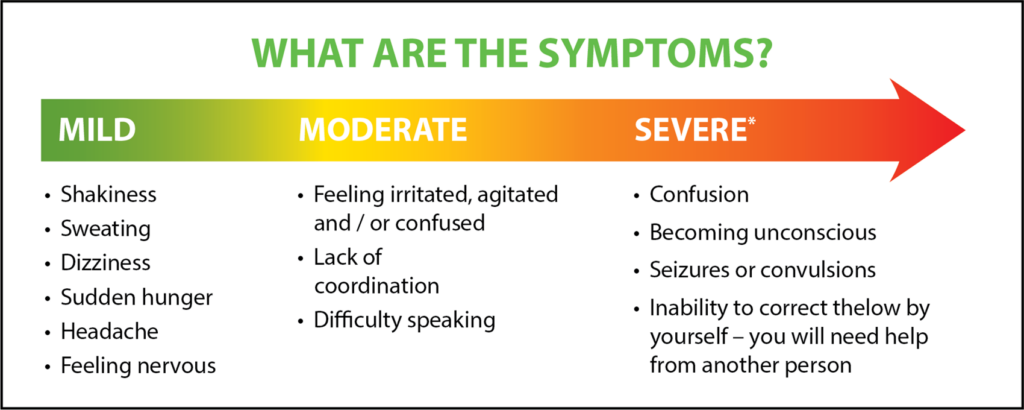
Here’s some information on causes and signs of hypoglycemia.

Low blood sugar can be caused by1:

  • Changes to eating patterns such as skipping or delaying meals
  • More exercise or activity than usual, or exercising for a long time without eating a snack or adjusting insulin before exercise
  • Too much insulin or a change in the time taking insulin
  • Stress (presentations, tests, exams, etc.)
What are the symptoms chart


It is important always to BE PREPARED!

In case blood sugar levels fall below 4 mmol/L, school staff should be provided in advance with fast-acting glucose (e.g. Dex4 tablets, gels, and liquids).  If teachers notice a difference in behaviour related to the signs of low blood sugar or children feel warning signs of hypoglycemia, blood glucose should be checked immediately and treat low blood sugar promptly if needed. If a blood glucose meter is not available but low blood sugar is suspected, treat right away.

Treatment options include1:

Afterwards, wait 15 minutes, then check blood sugar again. If blood sugar cannot be tested, monitor the child closely to ensure symptoms of hypoglycemia improve. 

As low blood sugar can happen at anytime, it is important to be prepared.  Dex4 Glucose products help raise glucose levels FAST. 

Dex4 Glucose products are:

  • Fast-acting
  • Pre-measured so you know exactly how much glucose you are consuming
  • Fat-Free
  • Caffeine, gluten, cholesterol free
  • Great-tasting flavours

Additional Resources:

The Diabetes Hope Foundation supports mentorship programs for youth.  Buddy systems are available, for more information visit www.diabeteshopefoundation.com/mentor-biographies

1 Canadian Diabetes Association Clinical Practice Guidelines Expert Committee. Canadian Diabetes Association 2013 Clinical Practice Guidelines for the Prevention and Management of Diabetes in Canada. Can J Diabetes 2013;37(suppl 1):S1-S212.

Disclaimer:

Information in this article is provided for informational purposes only and is not a substitute for professional medical advice.

Join the Blue Balloon Challenge

This summer, Medtronic® is challenging Canadians to take the Blue Balloon Challenge to raise awareness of how difficult it is to balance the ups and downs of life with type 1 diabetes (T1D).

People living with T1D have to make 300 or more decisions every day to keep their blood sugar levels in check. This includes making choices about everything they eat, drink, how much exercise to do, how long to sleep and so much more. There is never a break, and it is always there, often invisible to others

That’s what prompted Medtronic to launch this challenge, asking people to try and complete everyday tasks while holding a balloon in the air. The balloon is a metaphor that is meant to demonstrate the complexity of life with T1D.

Challenge yourself and your friends and family! Film yourself doing an everyday activity while keeping a blue balloon up in the air to highlight the constant balancing act that is living with T1D. Then post it on social media using the #blueballoonchallenge and #JDRFCanada.

Consider tagging 3 (or more!) friends to do the challenge too.

OPTIONAL: Tag @MedtronicDiabetesCanada on your post and have a chance to be featured on the Medtronic Diabetes Canada social channels as a featured post!

We look forward to seeing your photos and videos and sharing them on our JDRF social platforms.

JDRF thanks Medtronic Diabetes Canada for including us and Diabetes Canada as partners in the Blue Balloon Challenge and helping to raise funds and awareness of T1D across the country.

Check out the Blue Balloon Challenge video from Medtronic here.

Thank you, to everyone.

The 2021 Sun Life Walk to Cure Diabetes for JDRF brought together Canadians from coast to coast to unite and raise funds to accelerate the pace of type 1 diabetes (T1D) research.

We’re so excited to have had members of the community come together in our brand new, Virtual Walk Environment, mingle with friends old and new, explore our sponsor fair, and check out the Walk grounds as if you were there in person! 

Because of your incredible support, you helped raise over $2.37 million for critical funds that will support cutting edge research and meaningful community programming.  A HUGE thank you!    

By joining the Walk, you helped support breakthroughs that get us closer to a cure. You brought us closer to turning type one into type none. Together, we made a difference. 

We would like to express our sincere gratitude to our sponsors, who helped make the Walk a success, allowing us to raise critical funds needed for T1D research. With their support, we were also able to offer an incredible day filled with entertainment, special guests, inspirational stories, and resources for T1D families. 

Thank you to everyone for your incredible support. We can’t wait to see you next year. 


Onsite

Ypsomed

Patchabetes

BMO JDRF Mastercard

Pizza Hut

Dex4

MedicAlert


Family Videos

Academy of Learning

Sentinel Storage/
Access Storage

Sentinel Storage

Cosmo Club

Capital GMC Buick/Capital Ford Lincoln/Universal 


Corporate Champions

Alberta Milk

Cavendish Farms

Gateman Milloy 

Redhead Equipment Limited

Walmart 

Barrhaven Optometric Centre

Diabetes Care Guelph

Harvard Developments

Riverview

Bedford Lions

Dura Construction

Middleton and District Lions Club

Sask Lotteries

Connect1d Canada aims to accelerate T1D research

Connect1d Canada is a digital platform that allows those living with type 1 diabetes (T1D) to easily learn about T1D research happening across Canada, and contribute to research in the areas that matter most to them. The platform also allows researchers to easily engage people living with T1D, enabling rapid recruitment of diverse people from across Canada into research studies. 

The overall goal is to accelerate T1D research by boosting enrolment into T1D clinical studies of diverse group of participants. Too often, clinical studies stall because appropriate participants can’t be found—that slows down the research process and delays access to potential treatments for everyone living with T1D. And one of the most common reasons people don’t participate in a research study is because they didn’t know about it.  

The platform also addresses some of the major barriers that exist in T1D research, including awareness and understanding of available research projects and which ones need participants By providing this direct link between people living T1D and researchers focused in this area, more people living with T1D become aware of opportunities, and research teams have access to a more diverse representation of the community. 

“I am proud of Canada’s community of people with diabetes, and its community of dedicated researchers,” says Dr. Bruce Perkins, an endocrinologist and the Director of the Leadership Sinai Centre for Diabetes in Toronto. “Connect1d Canada boosts interaction between them, so that together we can reach our common goal to meaningfully transform the lives of those living with T1D.”  

Perkins, who himself lives with T1D, is co-leading the scientific arm of the program with Dr. Peter Senior, an endocrinologist and Senior Scientist with the Alberta Diabetes Institute. They are joined in this by Kate Farnsworth, who is a co-lead on the project and the parent of a child with T1D.  

Connect1d Canada was co-designed by people living with T1D and researchers, ensuring that the needs and wants of both groups were incorporated. It is an opt-in registry, which means that any Canadian adult with T1D can choose to share their information with research teams. Those participating control how their information is shared and with whom.  

Extensive consultation with the T1D community, as well as having those with the condition at the table, is something the program team sees as critical to its success. “When we originally brought our ideas to those living with T1D, they made it clear that what we were suggesting did not add sufficient value for them,” says Senior. “That opened up the dialogue that continues to this day, as we have made it a priority not only to have people with diabetes and those who care for them consulted, but to have them completely embedded into our planning and development.” 

As such, the Connect1d Canada team is developing a Community Advisory Committee that will provide guidance from the T1D community as the project grows and develops. It is clear to all involved that this project cannot be successful without all stakeholders fully invested. 

For Farnsworth, this consultation is another essential ingredient to true community engagement. “For too long research has failed to have the voice of those living with type 1 diabetes at the table, or people felt they were being represented in a tokenistic way,” she says. “This led to projects that failed because they were not appropriate for the community, often after millions of dollars had been invested. With Connect1d Canada we want to make sure people with T1D are front and centre in every aspect.” 

Currently, there are multiple studies posted on the Connect1d Canada website. Canadians with T1D can register their interest in specific projects, fill in research surveys and subscribe to receive updates about new projects that may be of interest to them.  

With funding from JDRF Canada and support from Diabetes Action Canada, in partnership with the UHN’s eHealth Innovations, this project presents a digital solution to a longstanding and complex problem.  

Register for Connect1d Canada now! 

Interested in joining the Community Advisory Committee? Apply here! 

Donate | Donnez